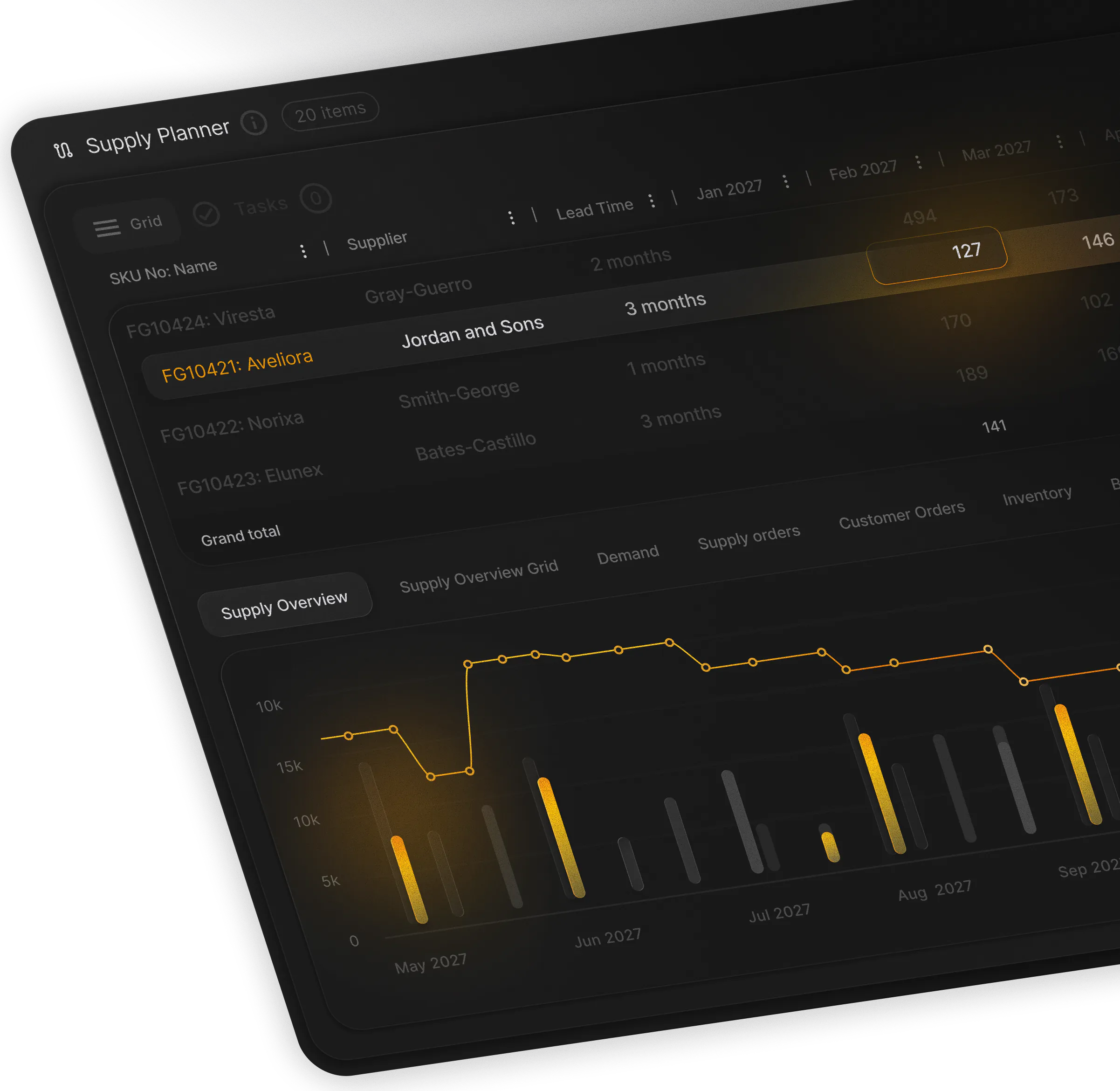


Active pharmaceutical ingredients and excipients are among the most expensive materials used in pharmaceutical manufacturing. A single forecasting error or poorly timed production run can result in thousands of dollars in wasted raw materials.
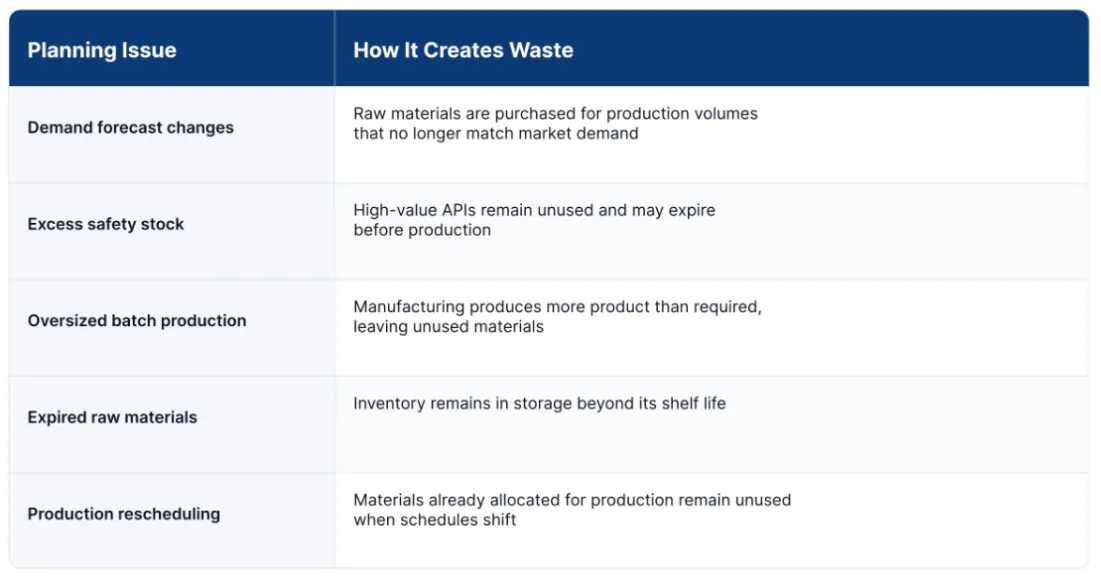
Yet most material loss does not begin on the manufacturing floor. In most cases, the root cause appears much earlier in the planning cycle. Several planning gaps frequently drive these losses:
-
Demand forecasts change after materials are ordered
-
Production schedules are staying fixed while demand shifts
-
Limited inventory visibility across sites
-
Batch sizes exceeding real production needs
These small misalignments often remain invisible until materials expire or excess batches sit unused in storage.
Many mid-market pharmaceutical manufacturers still rely on spreadsheets or disconnected planning tools, which limit visibility across procurement, production, and inventory. Reducing waste requires tighter coordination between demand planning, procurement, and manufacturing schedules.
This raises an important operational question for planning teams: how can manufacturers minimize API and excipient waste through better supply chain planning?
Why API and Excipient Waste Occur in Pharmaceutical Manufacturing
Pharmaceutical production operates under strict regulatory controls, fixed batch sizes, and validated manufacturing processes. These constraints limit flexibility once production begins.
Most material waste occurs before manufacturing even starts. It originates from planning decisions that create mismatches between supply and demand.
Many mid-market pharmaceutical companies still rely on spreadsheets to manage these decisions. Excel-based planning often struggles to maintain a single view of inventory, demand signals, and production schedules.
As a result, planners frequently over-order APIs or excipients to avoid stockouts. This practice protects service levels but increases waste.
The Hidden Cost of API and Excipient Waste
Material waste affects more than direct production costs. It also increases environmental impact, operational complexity, and regulatory risk.
APIs often require energy-intensive synthesis and purification steps. Discarded materials represent wasted energy consumption and unnecessary environmental footprint.
Excipient waste introduces additional operational challenges. Many excipients have strict storage requirements and limited shelf lives. Improper inventory rotation can result in large quantities of unusable materials.
Waste also complicates:
-
Batch record documentation
-
Deviation investigations
-
Environmental reporting
-
Waste disposal compliance
Reducing waste, therefore, improves both operational efficiency and sustainability performance.

Planning Failures That Drive Material Waste
Waste often appears to be a manufacturing issue, but the root cause is often planning fragmentation. Three planning gaps commonly drive API and excipient waste.
Demand Forecast Instability
Demand signals in pharmaceutical markets shift frequently due to:
-
Regulatory approvals
-
Tender outcomes
-
Market launches
-
Inventory corrections from distributors
If planners commit raw materials too early, production plans quickly fall out of alignment with actual demand. Without structured demand planning, material procurement often overshoots requirements.
Production Scheduling Constraints
Pharmaceutical manufacturing typically runs on fixed batch sizes. Equipment validation and cleaning procedures restrict flexible scheduling.
If planners cannot rebalance schedules quickly, they often produce larger-than-needed batches. Excess material may remain unused until it expires.
Inventory Visibility Gaps
Disconnected systems often prevent planners from seeing real inventory levels across multiple facilities. This creates duplicate procurement orders or unnecessary safety stock.
Improving visibility across the supply chain can immediately reduce raw material overstocking.

Operational Planning Strategies That Reduce Waste
Operational planning plays a central role in reducing API and excipient waste across production and procurement processes. Material loss often results from small misalignments between demand forecasts, production schedules, and raw material procurement.
Improving coordination across these planning functions allows pharmaceutical manufacturers to reduce excess inventory, prevent material expiration, and produce batches closer to real market demand.
Several operational planning strategies consistently reduce API and excipient waste.
Integrated Demand and Production Planning
Demand planning must directly inform production schedules. Planners should align:
-
Forecast updates
-
Procurement timelines
-
Manufacturing lead times
A rolling planning horizon helps adjust production plans before raw materials are committed.
Shelf-Life Aware Inventory Planning
APIs and excipients have different storage conditions and expiry windows.
Effective planning systems track:
-
Remaining shelf life
-
Storage requirements
-
Lot-level inventory
This prevents materials from aging in storage while new inventory arrives.
Flexible Batch Planning
While validated processes require fixed batch parameters, planners can still optimize batch timing. Batch sequencing should consider:
-
Current demand
-
Inventory levels
-
Upcoming expiry dates
Producing smaller validated batches more frequently often reduces material loss.
Forecast Timing and Raw Material Commitment
One of the most common causes of API and excipient waste is ordering raw materials before demand signals stabilize. Procurement decisions often happen months before production begins, especially when APIs have long supplier lead times.
If demand forecasts change after materials are committed, manufacturers may be left with excess inventory that cannot be consumed before expiration. This risk increases when planning cycles do not regularly reassess procurement decisions against updated demand projections.
Planning teams can reduce this risk by aligning procurement timing with forecast confidence. Materials should be committed only when demand signals reach a stable threshold and production schedules are unlikely to change significantly.
Closer coordination between demand planning and procurement reduces the risk of excess material orders while maintaining production continuity.
Aligning Procurement With Production Planning
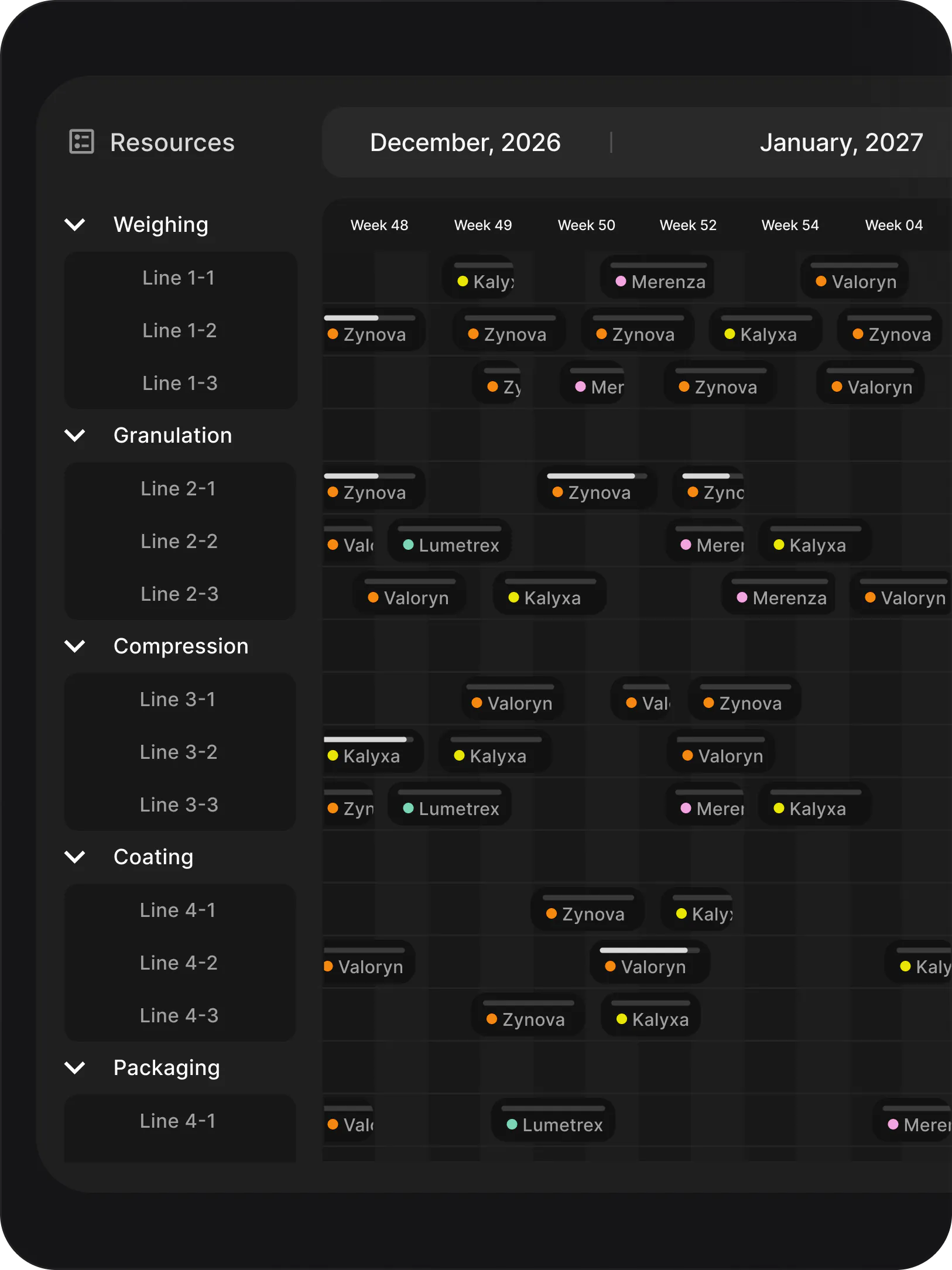
Material waste frequently occurs at the interface between procurement and production planning. Procurement teams often procure APIs with long lead times.
However, manufacturing schedules may change before those materials are consumed. Coordination across teams reduces these mismatches.
Key practices include:
-
Shared demand forecasts across procurement and planning teams
-
Coordinated reorder points for high-value APIs
-
Supplier agreements that support smaller delivery quantities
-
Transparent inventory tracking across manufacturing sites
This coordination ensures raw materials arrive closer to actual production needs.
Planning Systems That Improve Raw Material Visibility
Planning complexity increases as product portfolios expand. Many mid-market pharmaceutical companies manage dozens of SKUs across multiple dosage forms.
Manual planning systems struggle to maintain consistent decisions across this complexity. Modern planning platforms improve visibility across:
-
Demand forecasts
-
Raw material inventories
-
Production schedules
-
Procurement commitments
For companies transitioning away from spreadsheet planning, platforms such as Plaio provide structured planning environments designed for regulated manufacturing operations. These systems consolidate planning data and reduce decision gaps between teams.
The goal is not automation alone. The real benefit comes from creating a shared operational model that planners, procurement teams, and manufacturing leaders can trust.
Measuring API and Excipient Waste in Pharmaceutical Operations
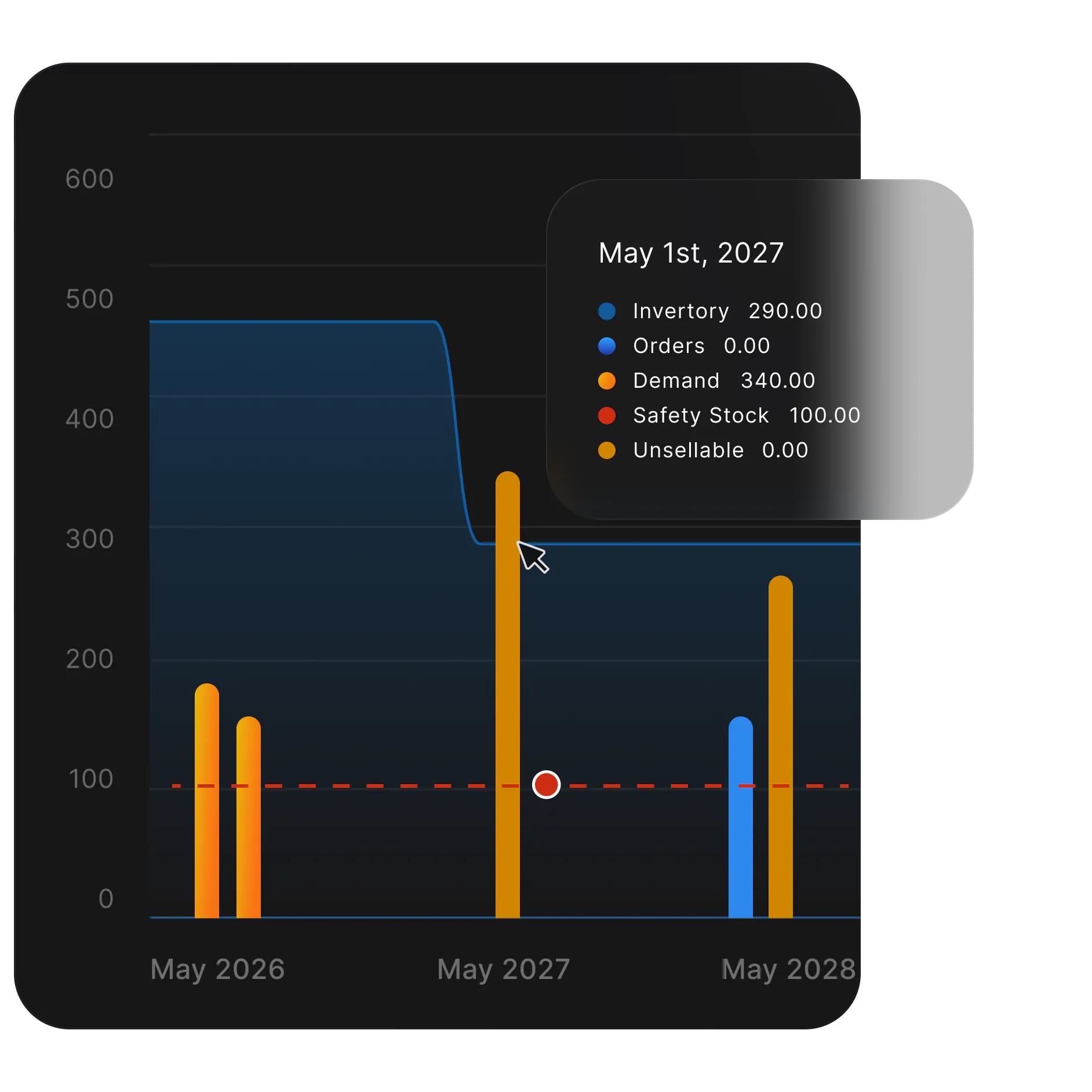
Reducing material waste begins with accurate measurement. Pharmaceutical manufacturers must track the movement of raw materials through procurement, storage, and production to identify where losses occur.
Planning teams often overlook material waste until inventory expires or excess batches remain unused. Tracking specific operational metrics allows manufacturers to detect inefficiencies earlier in the planning process.
Key metrics include:
-
Expired API inventory value
-
Unused batch output
-
Raw material yield variance
-
Inventory write-offs
-
Excipient storage losses
Monitoring these indicators helps planning teams identify where waste originates and where planning improvements can reduce material loss.
Practical Steps to Reduce API and Excipient Waste
Manufacturers looking to reduce API and excipient waste should begin with planning diagnostics.
These diagnostic steps reveal how manufacturers can minimize API and excipient waste through better planning and improved supply chain coordination. Key steps include:
-
Map material flows from procurement through production.
-
Identify where excess inventory accumulates.
-
Review forecasting accuracy and planning cycle frequency.
-
Evaluate batch sizing decisions across product families.
-
Improve visibility of lot-level inventory and expiry dates.
These steps reveal structural inefficiencies that generate material waste.
Waste reduction rarely requires radical operational changes. In many pharmaceutical organizations, stronger planning discipline and improved visibility across demand, inventory, and production schedules produce the largest improvements.
Where Waste Reduction Actually Begins: The Planning Process
API and excipient waste rarely originates on the production floor. It usually begins earlier in the planning process through misaligned forecasts, rigid scheduling, and fragmented inventory visibility.
Reducing waste requires stronger coordination across demand planning, procurement, and manufacturing operations. Structured planning processes make these decisions visible and measurable.
Manufacturers that strengthen planning discipline can significantly reduce waste, lower raw material costs, and improve the environmental footprint of pharmaceutical manufacturing.
FAQs
What can manufacturers do to decrease medication waste?
Manufacturers can decrease medication waste by improving demand forecasting and aligning production schedules with real market demand. Better inventory visibility and shelf-life monitoring also prevent excess raw materials from expiring.
What is good manufacturing practice (GMP) for APIs?
Good Manufacturing Practice (GMP) ensures that active pharmaceutical ingredients are produced and controlled in accordance with strict quality standards. These regulations cover manufacturing processes, documentation, equipment validation, and quality testing.
How do active pharmaceutical ingredients (APIs) enter the environment?
APIs can enter the environment through manufacturing waste streams, wastewater discharge, or improper disposal of unused medications. Effective waste management and environmental controls help reduce this impact.
How can pharmaceutical companies be more sustainable?
Pharmaceutical companies improve sustainability by reducing raw material waste, improving manufacturing efficiency, and optimizing supply chain planning. Better forecasting and inventory management reduce expired materials and unnecessary production.
Why is inventory planning important in pharmaceutical manufacturing?
Inventory planning ensures APIs and excipients are used before expiration and prevents unnecessary procurement. Tracking shelf life and lot-level inventory helps reduce raw material waste and supply chain disruptions.
How can pharmaceutical manufacturers reduce API waste?
Manufacturers reduce API waste by aligning procurement decisions with forecast confidence and production schedules. Monitoring shelf life and batch planning also helps ensure materials are consumed before expiration.