Patent pending

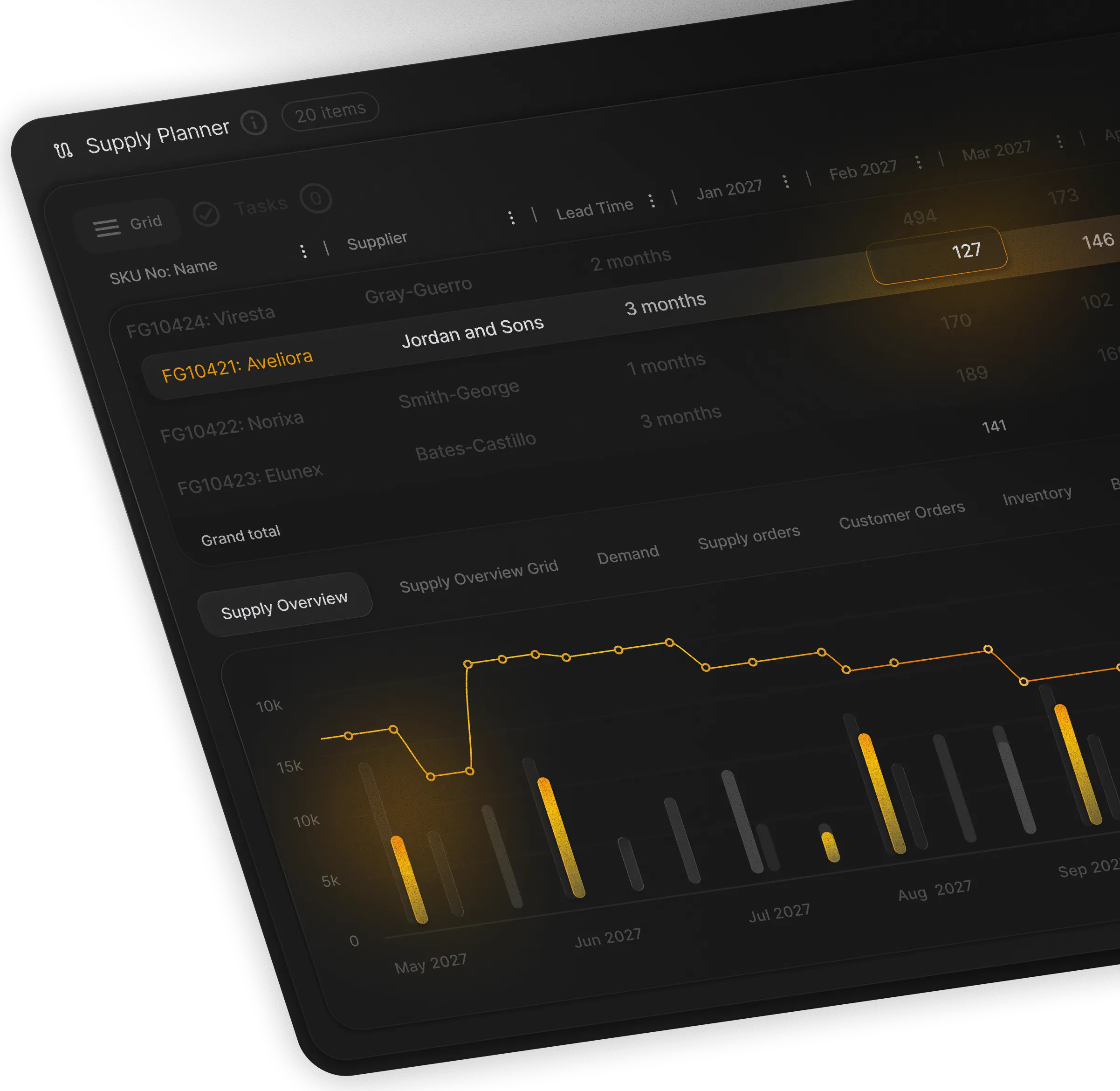
Supply planning software designed for pharmaceutical precision

Balance demand, capacity, and constraints automatically. Shelf life per market, batches, MOQs and CMO lead times are built into every order suggestion, so your planners approve orders instead of rebuilding them.

Book a demo

Spot the shortfall months out

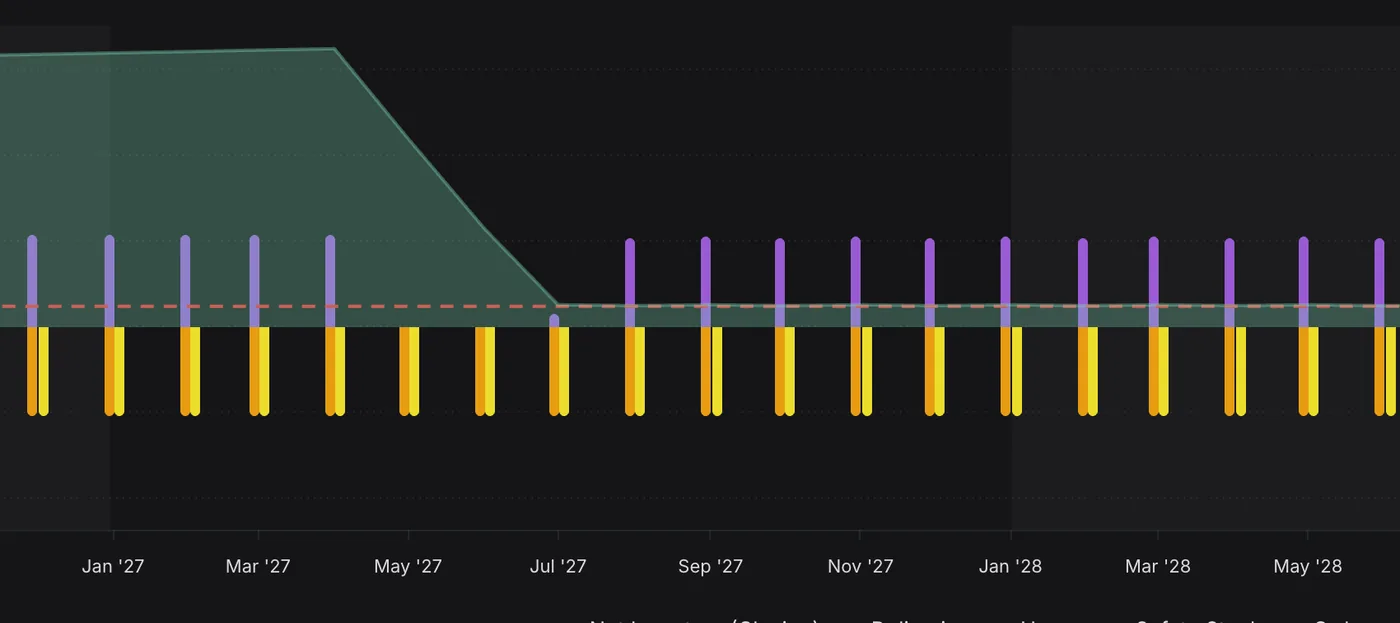
Cough Syrup 200ml in Iberia drops to 77 bottles in June 2027. Safety stock is 1,500, so that month gets flagged.
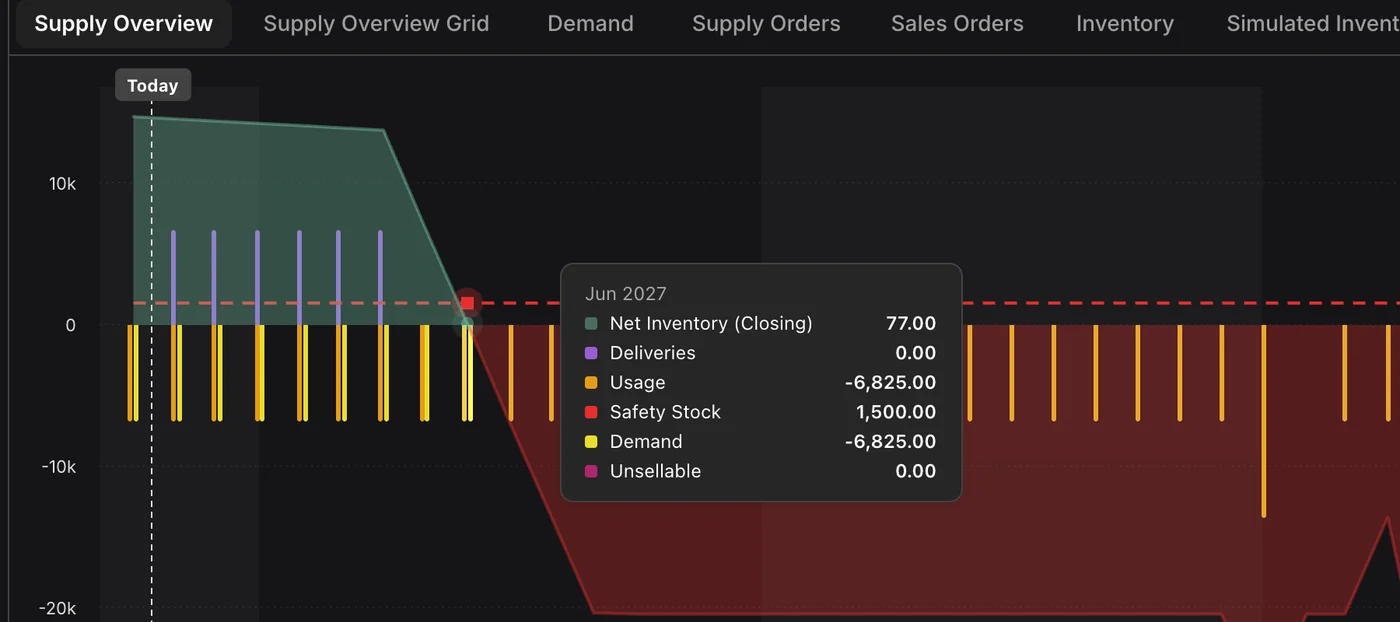
PLAIO Supply Planner chart for Cough Syrup 200ml at the Iberia warehouse: projected stock drops below the safety stock line, with June 2027 showing 77 bottles against a safety stock of 1,500.

Most supply plans are rebuilt by hand

A typical week: export the forecast, refresh inventory, look up each lane's MOQ and lead time and rebuild the orders. On Thursday someone hears a batch slipped and a market is about to run short. PLAIO does that whole loop for every SKU and location in one run.

Suggestions arrive already rounded and timed.

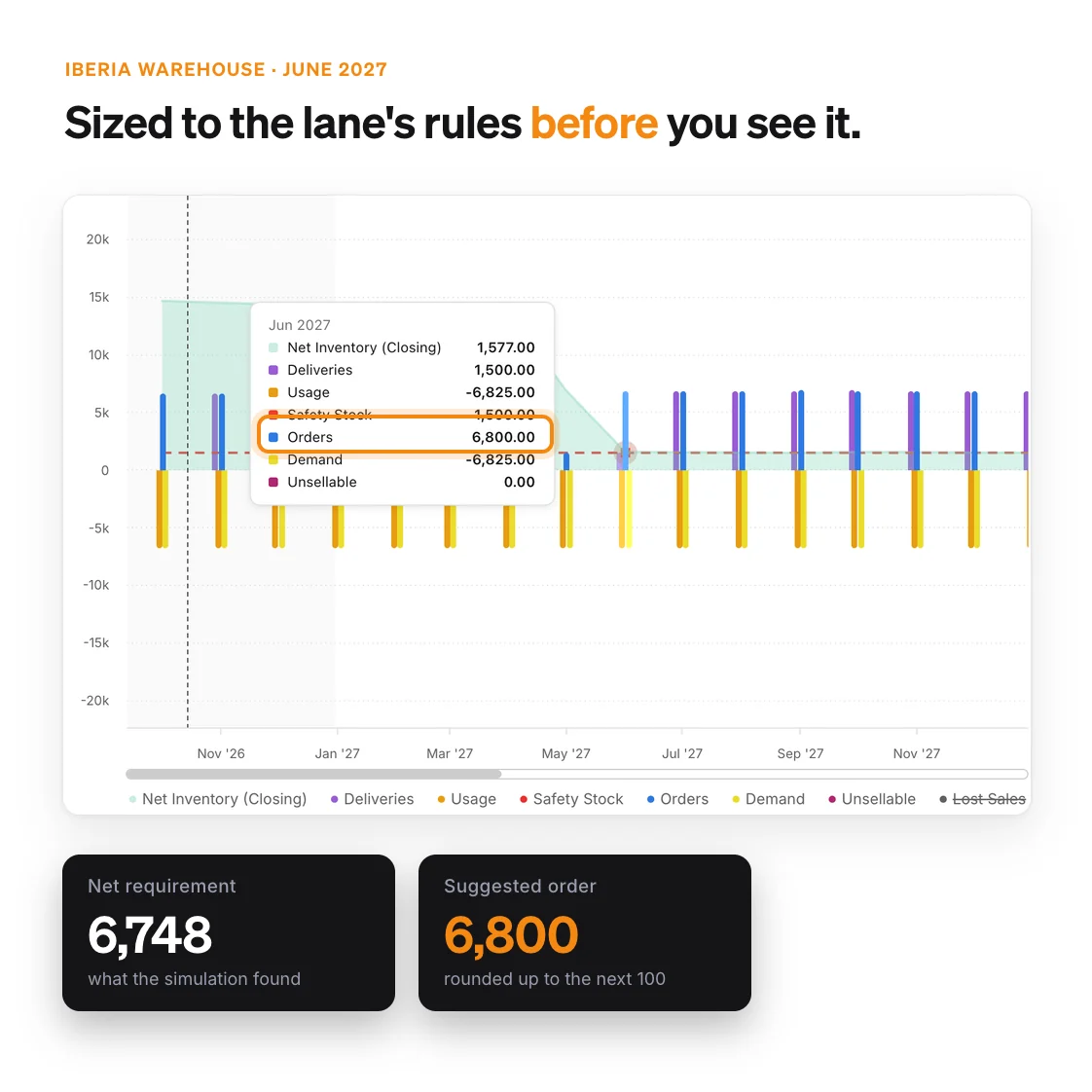
PLAIO projects inventory month by month across the network. Where stock falls short, it sizes an order on the lane that supplies it. The minimum order quantity, order increment and lead time are already applied when the number reaches you.

Take a warehouse that needs 6,748 bottles. The suggestion comes back as 6,800, placed a month ahead, and a planner approves it.

Why it matters:

Nobody rounds quantities or counts back lead times by hand any more. And since the whole network runs in one pass, an upstream order reflects what the markets will actually need.

Supply Overview chart for Cough Syrup 200ml in Iberia where planned orders hold stock at the safety line, with June 2027's 6,800 order highlighted next to tiles showing a net requirement of 6,748 rounded up to 6,800.

Inside PLAIO's Supply Planner

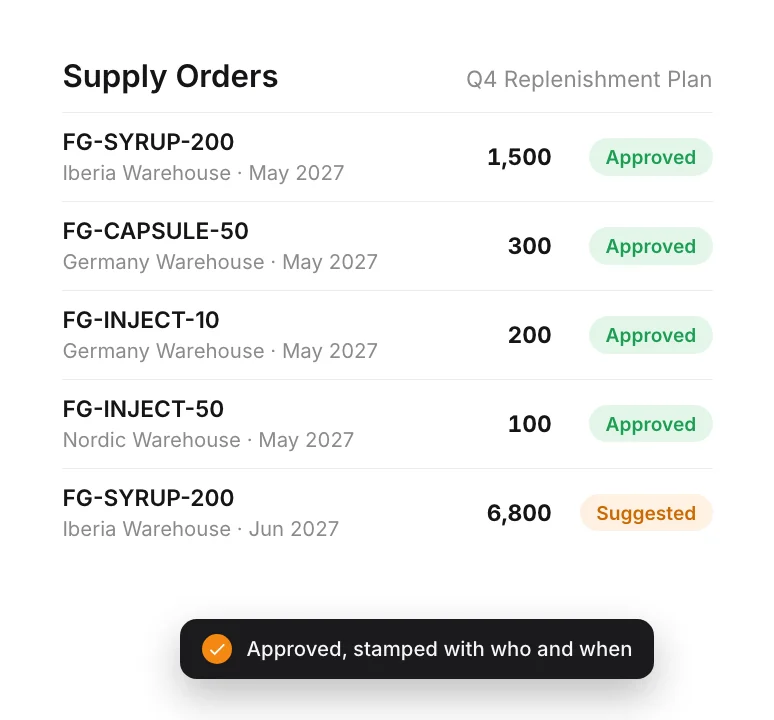
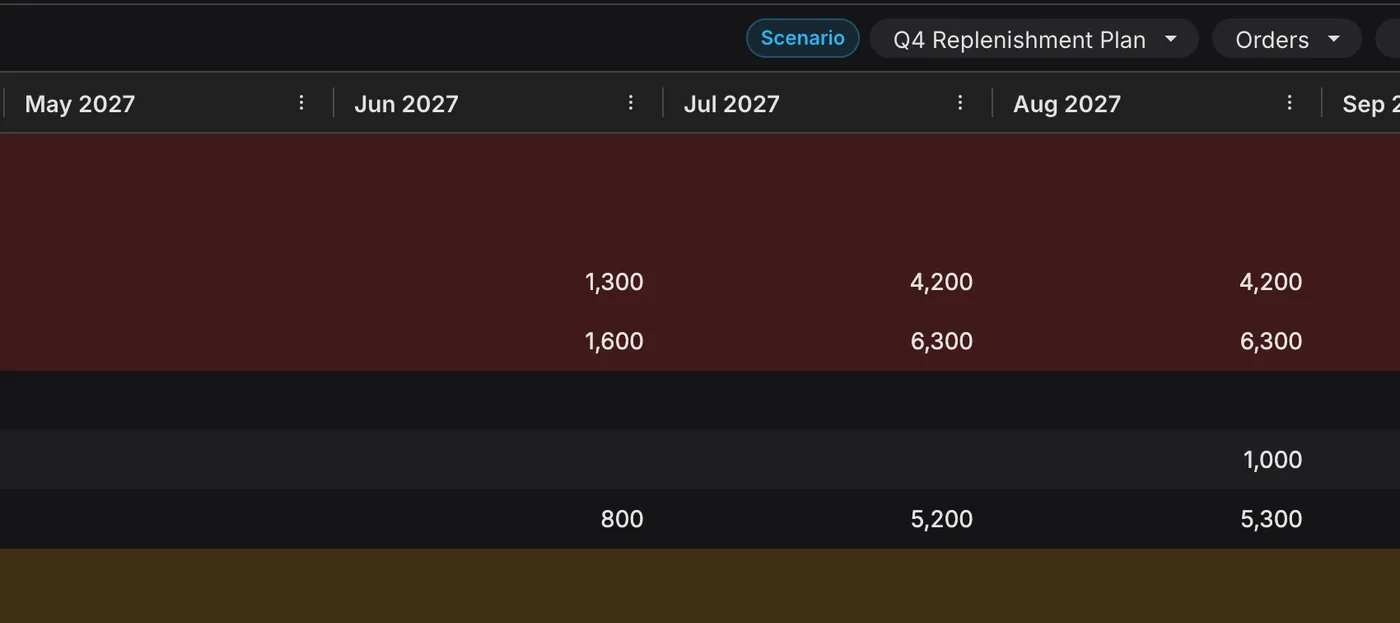
Supply Orders for the Q4 Replenishment Plan: four May 2027 suggestions approved and a June suggestion of 6,800 still marked Suggested

Review and approve suggestions

Suggestions and firm orders share one list. When a planner approves one, PLAIO records who did it and when, and the order waits there for your ERP to collect.

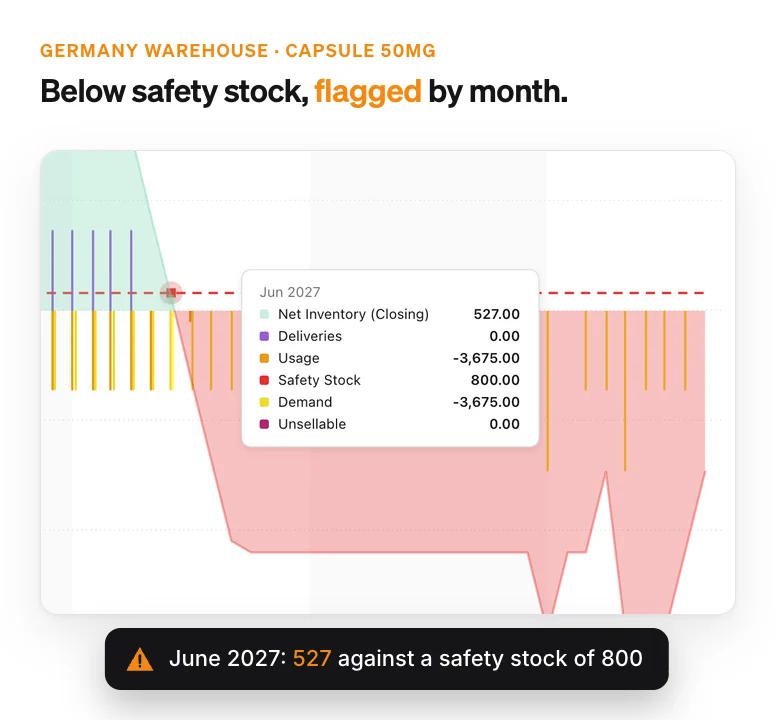
Inventory chart for Capsule 50mg in Germany falling below its safety stock line, with June 2027 at 527 against a safety stock of 800.

Safety stock per item

Some items need a fixed quantity. Others need cover in days, weeks or months that moves with demand. Any month where a location is projected below its level gets flagged.

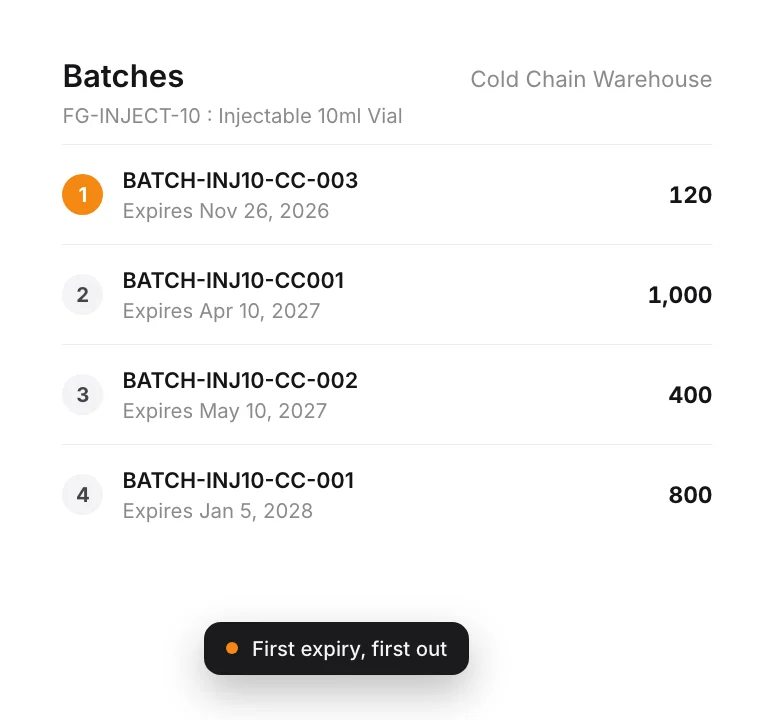
Four batches of Injectable 10ml Vial at Cold Chain Warehouse in expiry order, with the batch expiring Nov 26, 2026 used first

Batches and expiry

Stock is planned batch by batch and used first expiry, first out. Set a minimum remaining shelf life per item or location, and anything that will expire before it sells shows as unsellable.

How supply planning works in PLAIO builds the supply plan

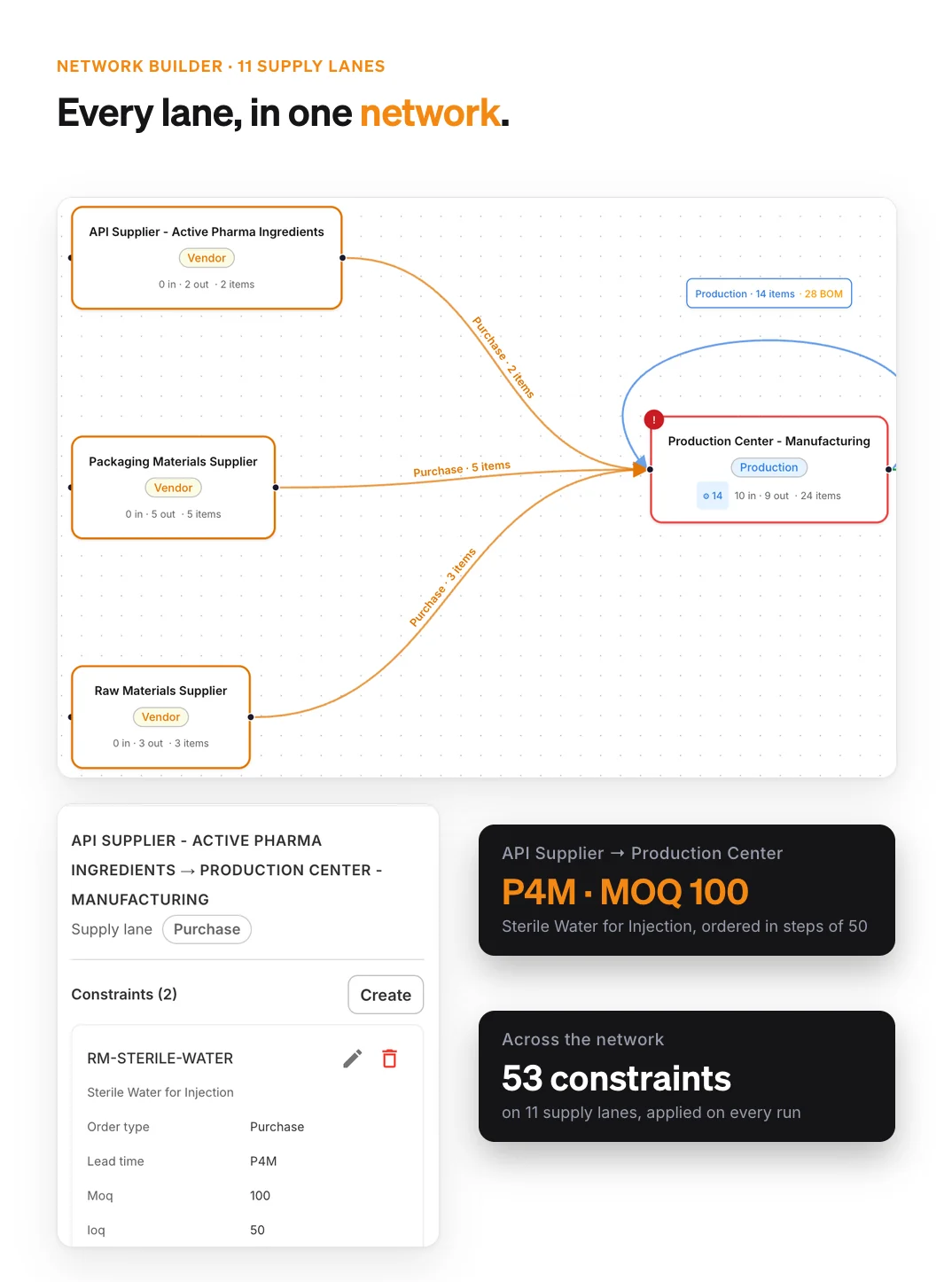
PLAIO network of suppliers feeding the plant over purchase lanes, with one lane's rules open: Sterile Water for Injection, 4-month lead time, MOQ 100, increments of 50.

Lanes as your ERP has them

Each supply lane holds its source and destination, order type, lead time, MOQ, order increment and maximum order capacity, as booked in your ERP. Supplier and CMO purchases, your own production and transfers between sites share one network.

Market demand reaches the API

The plan steps through each month against demand, inventory, firm orders and safety stock. When a market warehouse falls short, the requirement carries back to the bulk and the API behind it. Upstream orders end up matching what the market will need.

A list to start the week

Shortages, stock under safety stock, unfulfilled demand, broken MOQ or capacity rules and unsellable stock all go on one exceptions list. Each line names the SKU, the location and the month.

For heads of supply

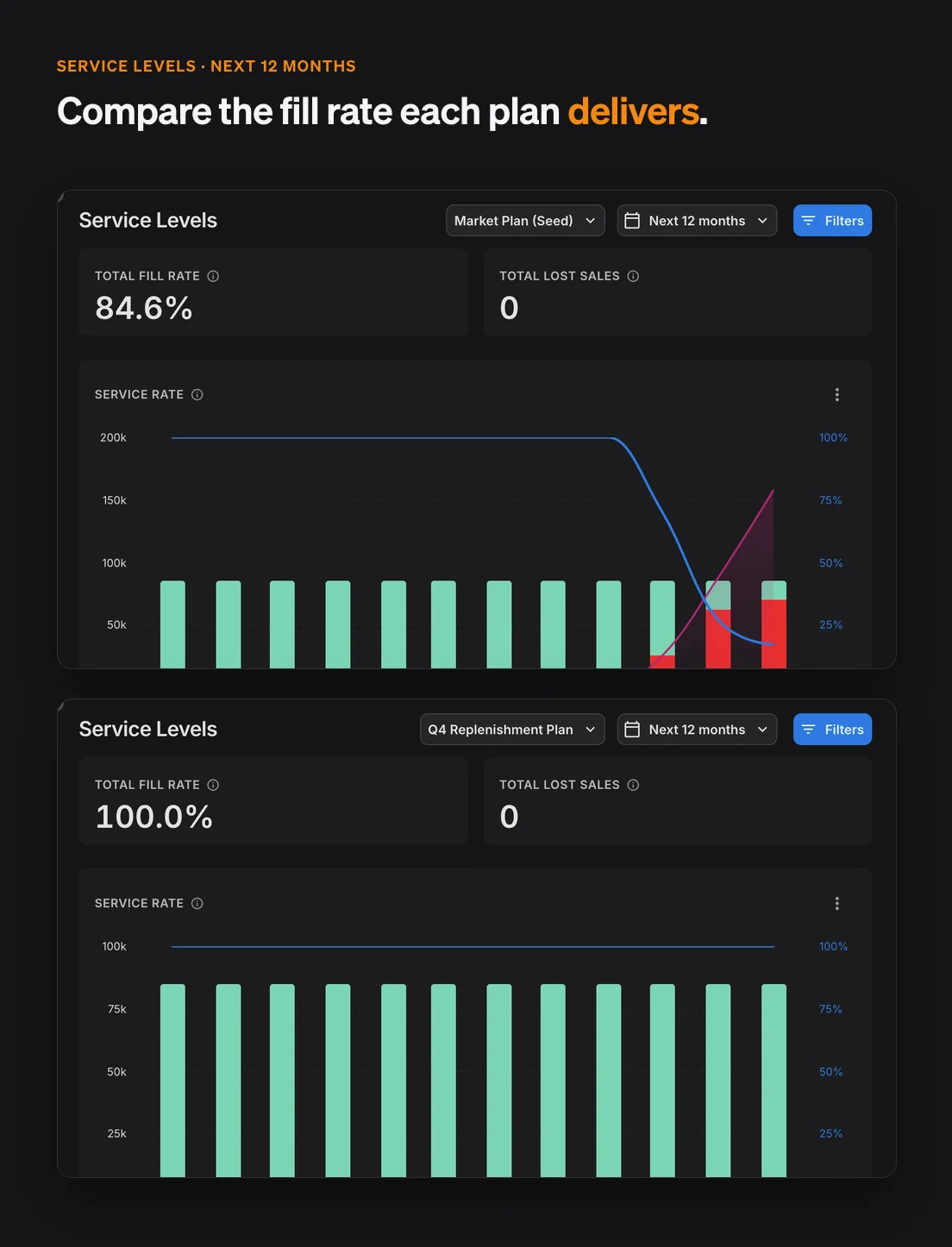
Compare plans before S&OP

  • Fill rate, unfulfilled demand and lost sales per item, for every supply scenario you build.
  • Projected stock and months of inventory, plus the quantity and cost of anything heading for expiry, well before the write-off.
  • The approver's name and a timestamp on every accepted suggestion.

Why it matters:

The team spends its week on exceptions that affect service and inventory. You bring one supply plan into S&OP.

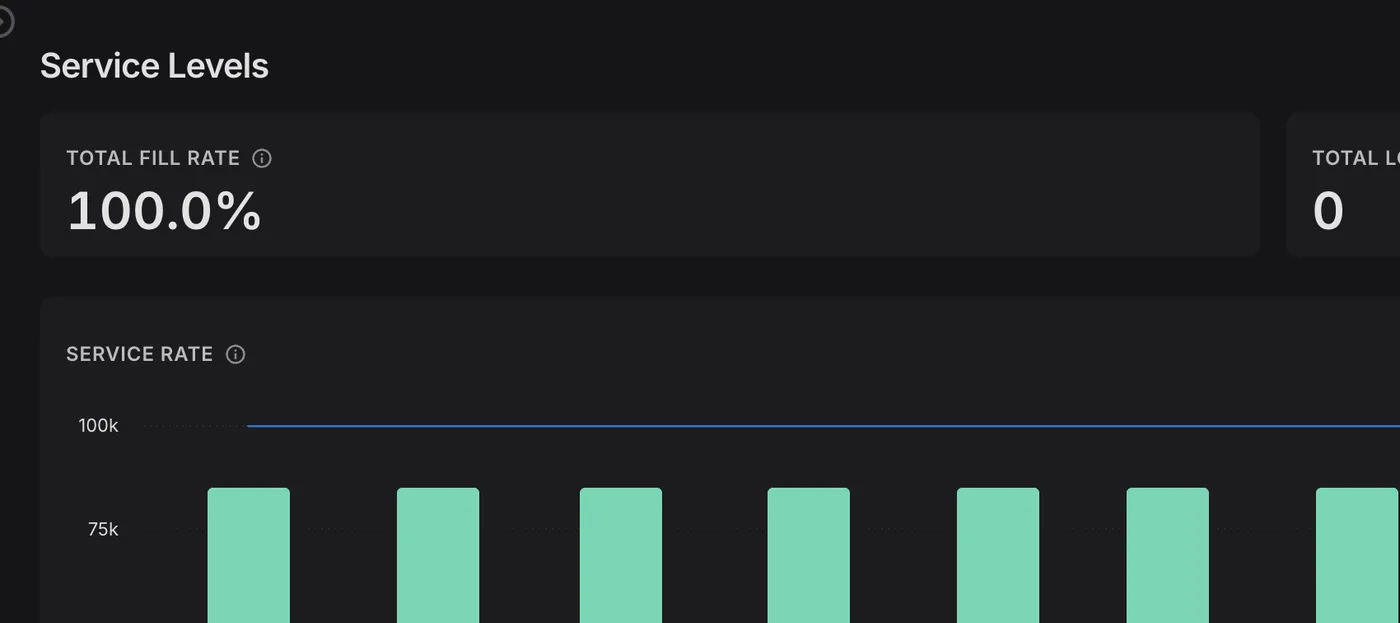
Two Service Levels dashboards compared: the Market Plan delivers an 84.6% fill rate, the Q4 Replenishment Plan 100.0%.

Supply Planning FAQ

Yes. Every lane has its own lead time, MOQ, order increment, maximum order capacity and frozen period, and the lead time can be split into processing and transfer time. A purchase from a CMO can consume a bill of materials, which means its components get planned as well. Suggestions respect all of it before a planner opens them.

Per item and location. It is either a fixed quantity or cover in days, weeks, months or years, and cover moves with demand. Planners can change the policy on any item. A month where a location dips below it becomes an exception.

No. PLAIO plans and the ERP executes. Inventory, open orders and supply lanes come from the ERP. Approved suggestions go back through PLAIO's API with the approver and time attached, and the ERP turns them into requisitions or orders. Posting and financial control never leave the ERP. See Integrations for the data flow.

Each batch keeps its expiry date, and the plan uses the earliest-expiring stock first. You can require a minimum remaining shelf life per item or per location; stock that is too short-dated for a market no longer counts as sellable there. The Inventory and Expiry dashboard totals the quantity and cost heading for expiry.

Yes. A supply scenario copies the whole plan, so you can try a different demand source, lane or policy and leave the active plan alone. The Service Levels and Inventory and Expiry dashboards work on any scenario, which puts fill rate, lost sales and months of inventory side by side.

Yes. Central sites and regional and market warehouses sit in one network, linked by transfer lanes. Read the plan for the whole network or filter it to one market. Each market keeps its own safety stock, shelf life rules and exceptions.

Upgrade to Supply planning software made for pharma.

In a demo we start from lanes, lead times and shelf life and show the order suggestions PLAIO builds from them, with the exceptions and service level that follow.

Book a demo

Connect the Dots Across Your Planning Process

Start with smarter forecasting.

Build better supply plans with accurate, AI-powered Demand Planning Software

Demand

Go from plan to execution.

Generate detailed, constraint-aware shop floor schedules with Production Scheduling Software

Production

Cookie settings

To enhance your experience on our site and to analyze traffic, we use cookies. By clicking "Accept All," you agree to the storing of cookies on your device for analytics purposes. You can manage your settings or learn more in our Privacy Policy.

Manage Settings
  • Your Privacy Matters to Us

    We use cookies to improve your browsing experience and analyze how our website is used. These cookies allow us to understand trends, monitor website traffic, and gather insights to make the site better for you.

    We respect your privacy and are committed to transparent data usage.

    Why Do We Use Cookies?

    Necessary Cookies: These ensure that the website functions properly.

    Analytics Cookies: These help us track site traffic, user behavior, and performance metrics. The data collected is anonymous and allows us to continuously optimize the site.

    Preferences Cookies: We may use cookies to remember your preferences and tailor your experience.

    Marketing Cookies: We may use cookies for marketing purposes.

    Your Control, Your Choice

    By clicking "Accept All," you consent to the use of all cookies. If you prefer, you can customize your choices and opt out of certain cookies. You can learn more about how we handle data and cookies in our Privacy Policy.