Consensus Planning

Pharma Consensus Planning That Aligns Teams Before Decisions Are Made

Turn disconnected inputs into one agreed demand and supply plan.

Book a demo

Someone owns each follow-up

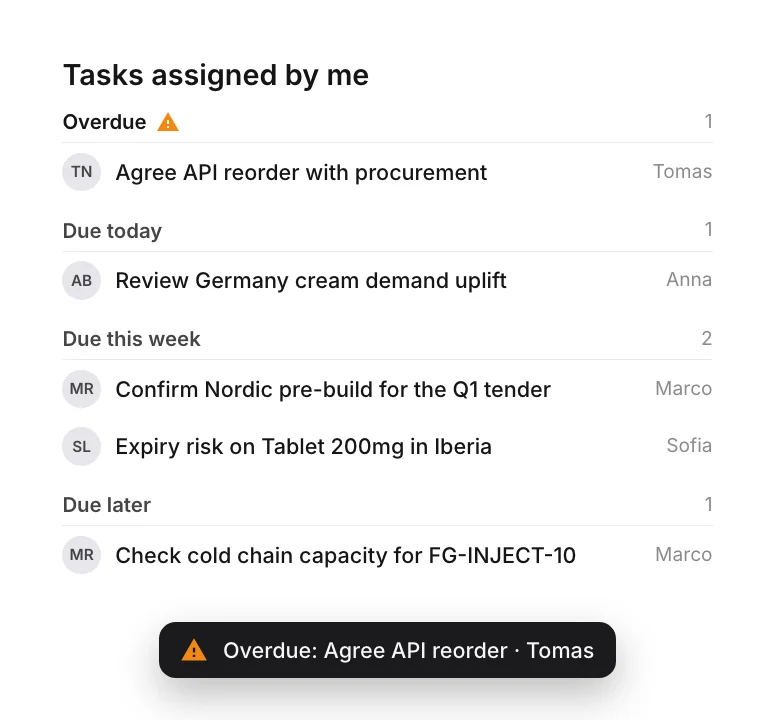
Six tasks sit on Supply Planner rows, each with a name and a due date. One is already late.
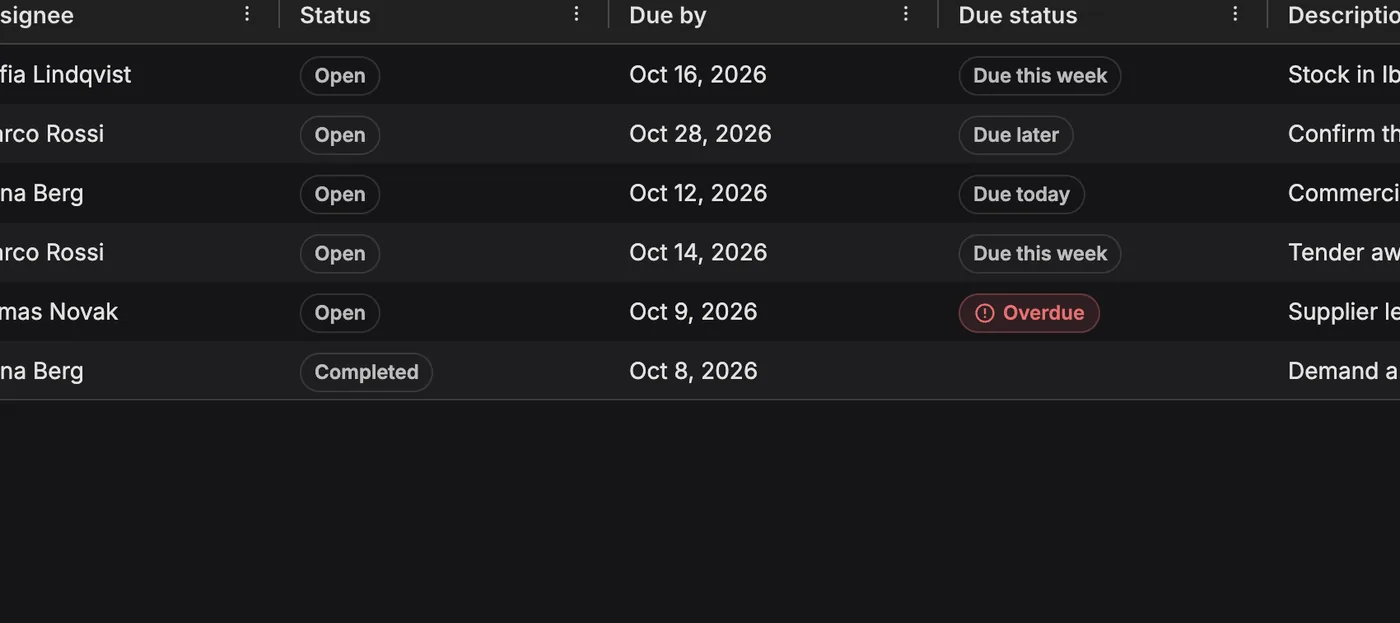
Every follow-up has an owner. Six tasks on Supply Planner rows, each with an assignee and a due date. One is already overdue.

One Plan. Multiple Voices. Aligned Teams.

Pharma supply chain planning involves multiple departments, but disconnected spreadsheets lead to conflicting versions of the truth. PLAIO creates a single collaborative workspace where all teams contribute, align, and agree on one synchronized demand and supply plan before execution.

Teams agree things in meetings and email threads, and the plan rarely finds out.

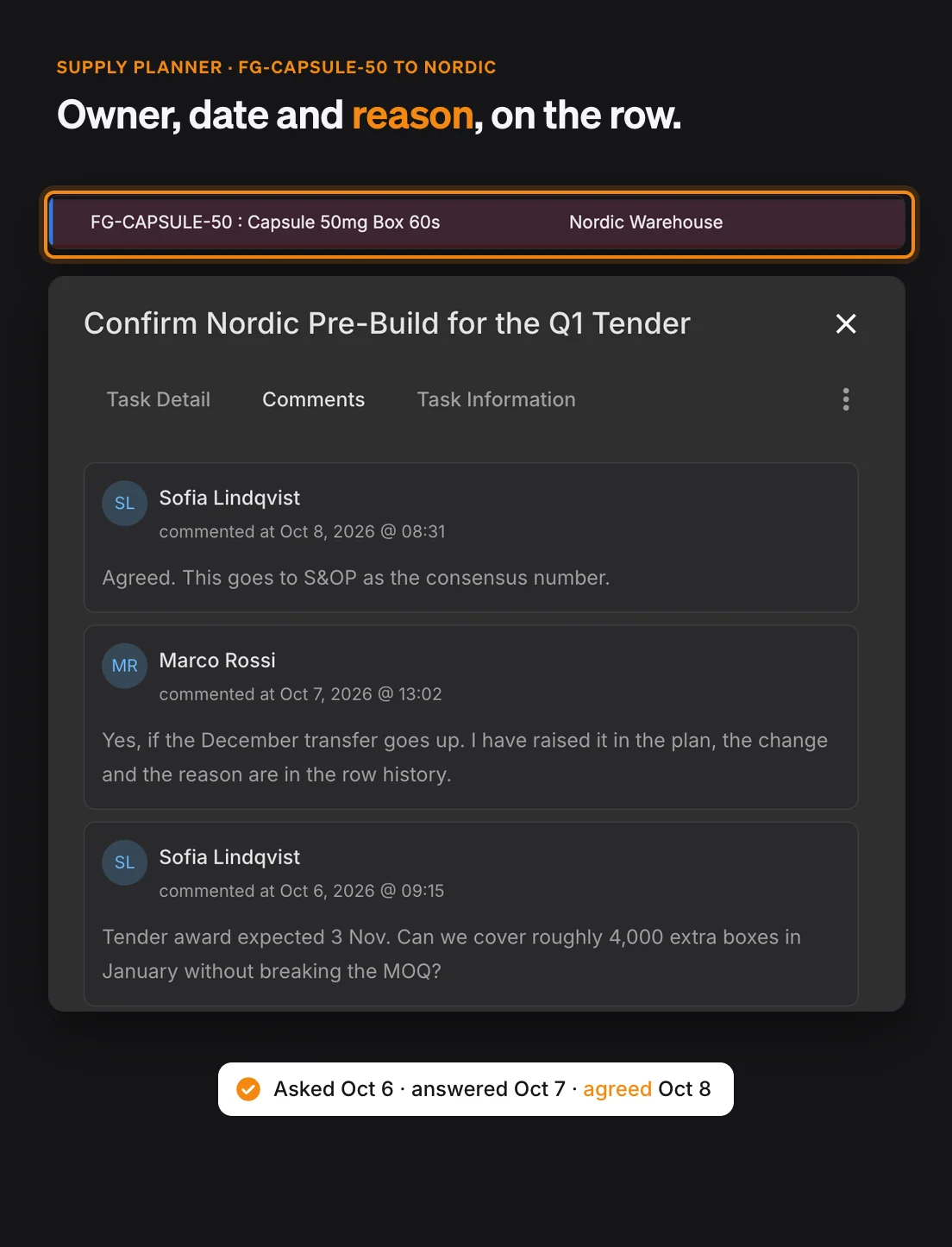
Say a tender is due in November. Someone asks in a thread whether January can be covered without going under the MOQ, and a planner changes a cell. Two weeks on, nobody can say why December went up.

In PLAIO that conversation happens on the plan row. The task has an owner and a due date. If the number changes, the row records who changed it, and they can leave a comment saying why.

Why it matters:

People reopen decisions they can't find. When the agreement sits on the plan, the next planner and the next S&OP meeting pick up where the last one stopped.

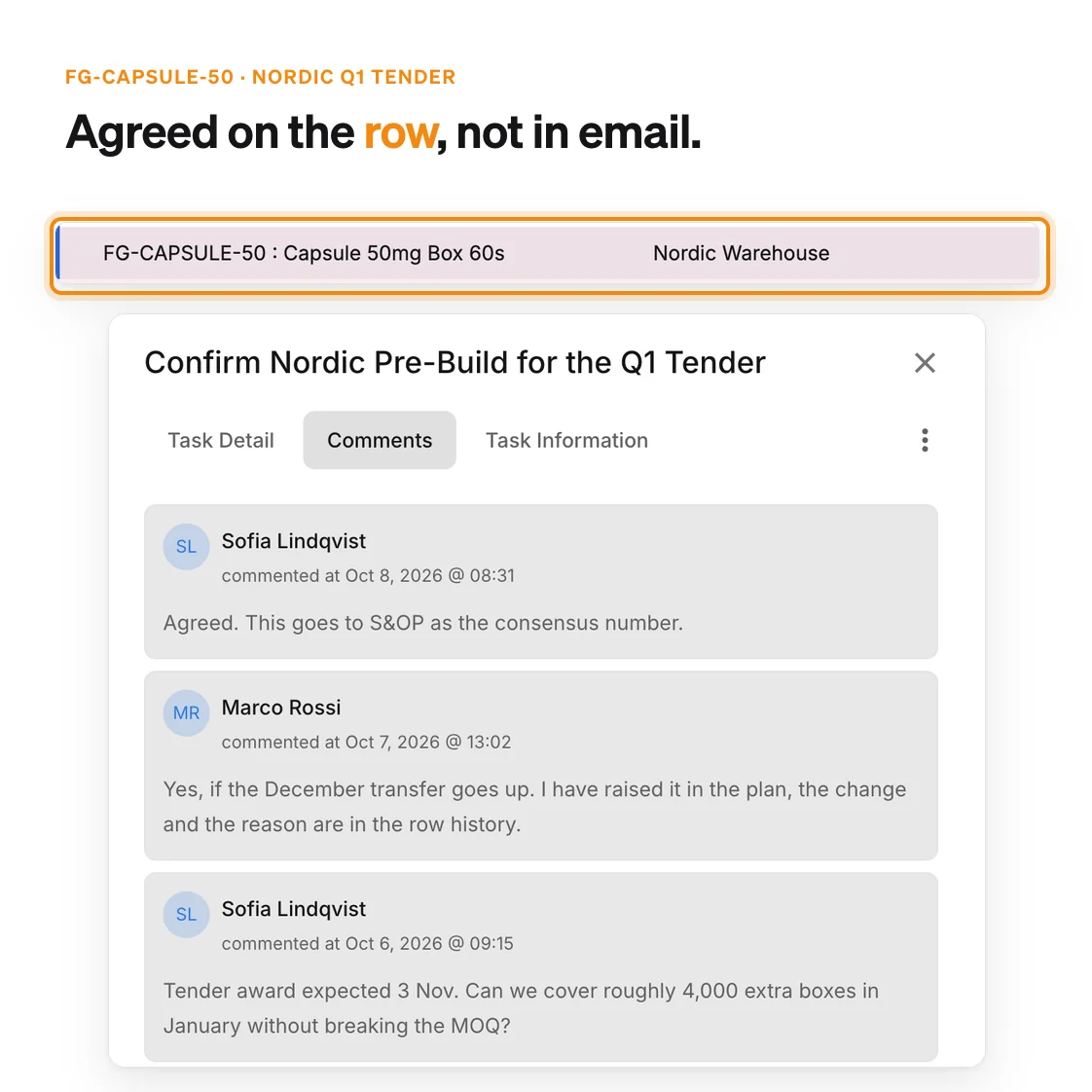
Supply plan row for Capsule 50mg into the Nordic warehouse with the task comment thread where the Q1 tender pre-build is agreed

What you can agree in PLAIO

Tasks assigned by me, grouped into Overdue, Due today, Due this week and Due later, each with its assignee

Comment, Assign, and Agree

Use in-line comments to debate assumptions and assign action items to drive resolution, preventing misalignment during execution. Every task on a plan row has an owner and a due date, so everyone sees what is open and what is overdue.

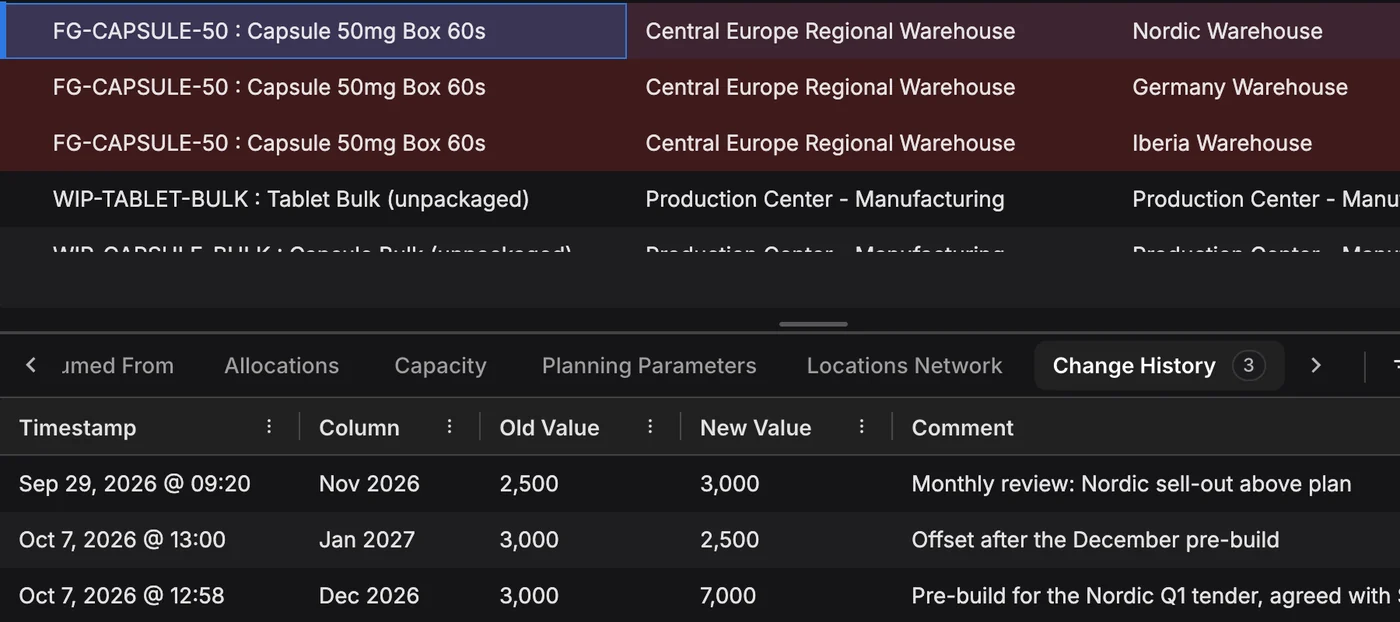
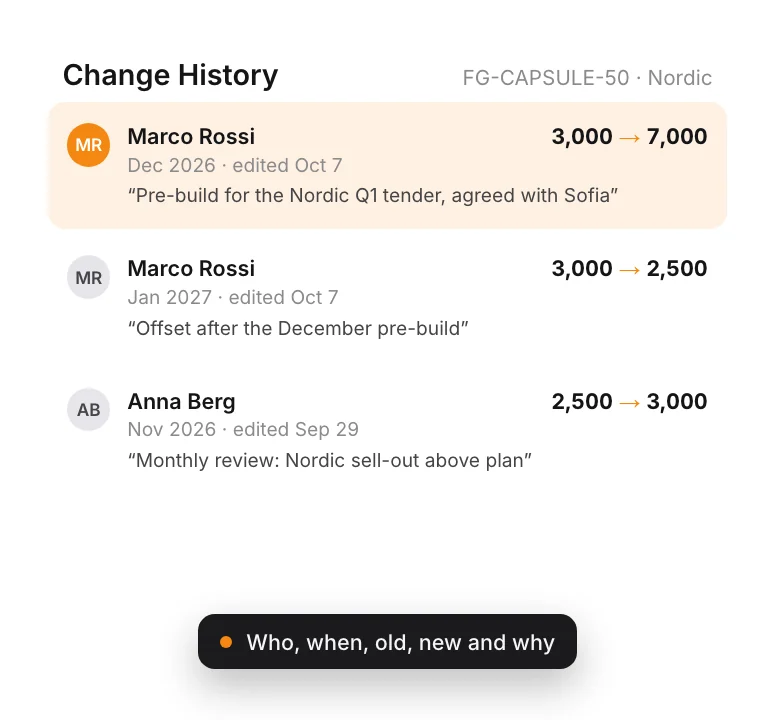
Change History for FG-CAPSULE-50 into Nordic: three edits, each with the person, the month changed, old and new values and a written reason

Track Change History and Ensure Accountability

Each edit is kept with the person who made it, the time, and the old and new values. A comment on the entry can explain the reason, which helps when an auditor or a variance review asks.

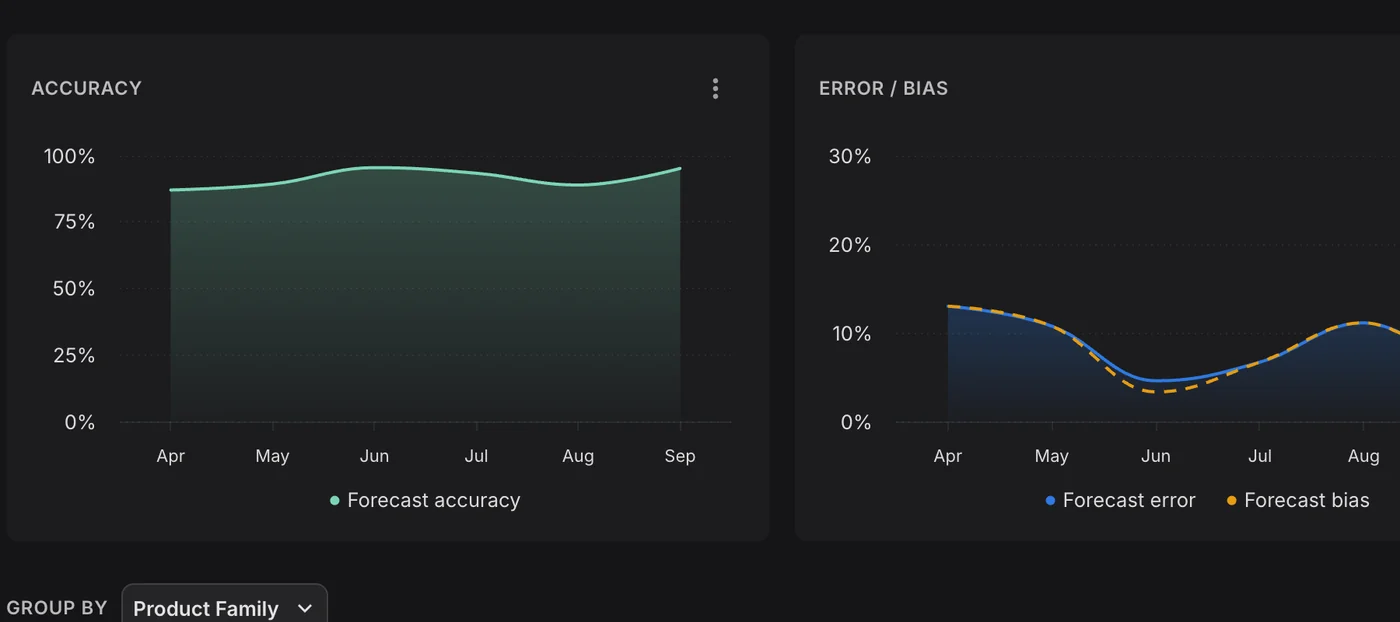
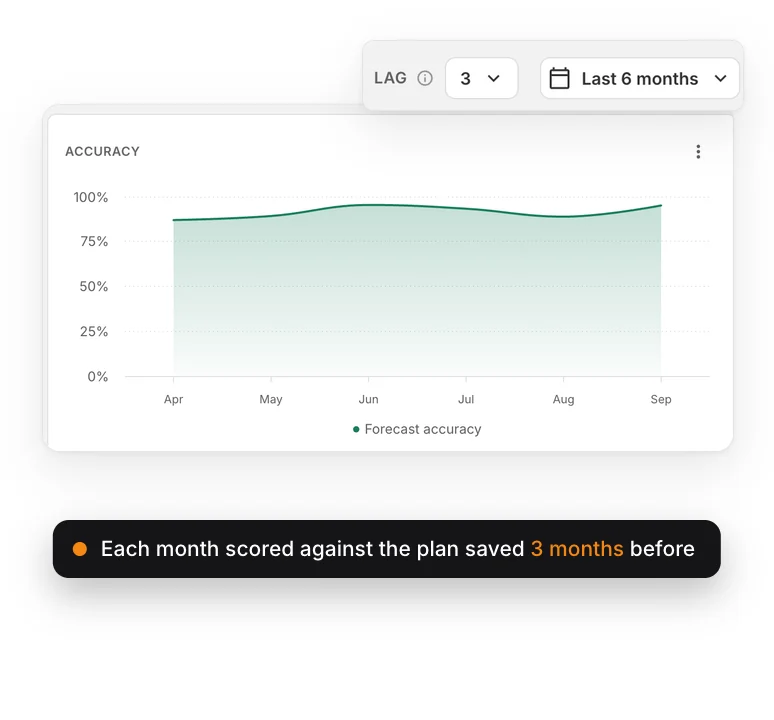
Forecast accuracy by month at a three-month lag, scored against the plans saved each month

Keep each month's plan

Once a month PLAIO saves a snapshot of the active demand plan in the Forecast Library. Forecast accuracy is scored against those snapshots, so you can look back and see how a past cycle's plan held up.

How consensus planning works in PLAIO

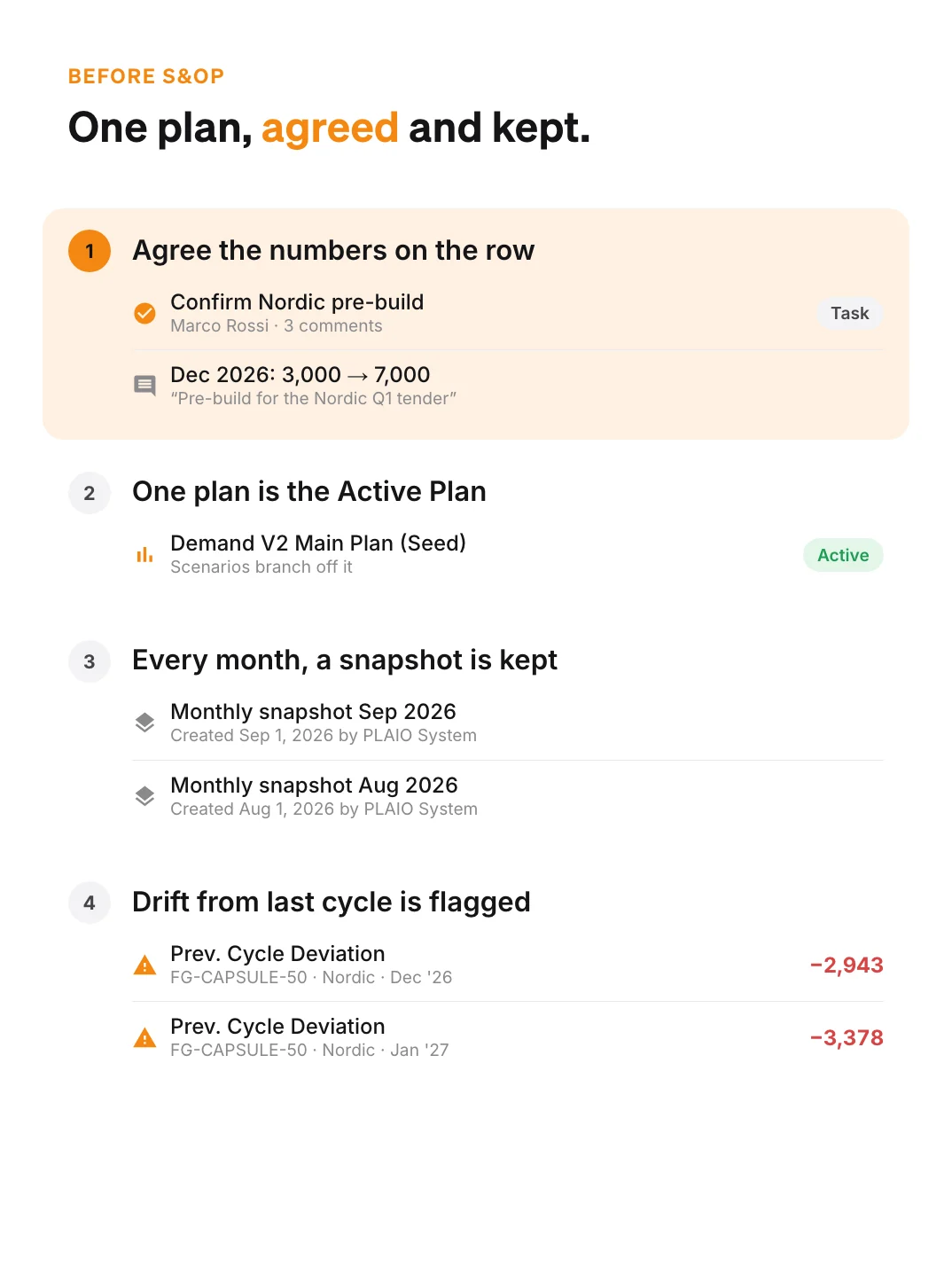
Four steps: agree the numbers on the row with a task and a recorded change, one Active Plan, a monthly snapshot of it, and Prev. Cycle Deviation exceptions where the live plan has moved away from the last cycle

Demand

PLAIO's consensus demand planning process aligns commercial, market, and statistical forecast inputs into a single, agreed-upon demand plan that becomes the trusted baseline for the entire pharma supply chain. One scenario is the Active Plan, what-ifs branch off it until someone sets them as the plan, and every month that drifted past your threshold since the last cycle is flagged before the meeting.

Supply

The consensus plan connects demand realities with supply constraints in one shared workflow. Planners align capacity and inventory to create a feasible, organization-wide supply plan before execution begins, with the discussion and change history on each Supply Planner row.

Production

The agreed demand and supply plan flows directly into production scheduling. Manufacturing teams execute against a clear, aligned baseline, reducing last-minute changes and operational disruption. Production orders are the supply plan's orders, so the schedule starts from the same agreed numbers.

If you run the planning team

Key capabilities at a glance

  • A unified workspace for demand, supply, and commercial planning workflows.
  • In-line commenting and action items to support alignment.
  • Each change to the plan is logged, with a reason where the planner gave one.

Why it matters:

When service slips or stock gets written off, someone will ask what was decided. You can trace the number back to the decision, rather than searching old inboxes for it.

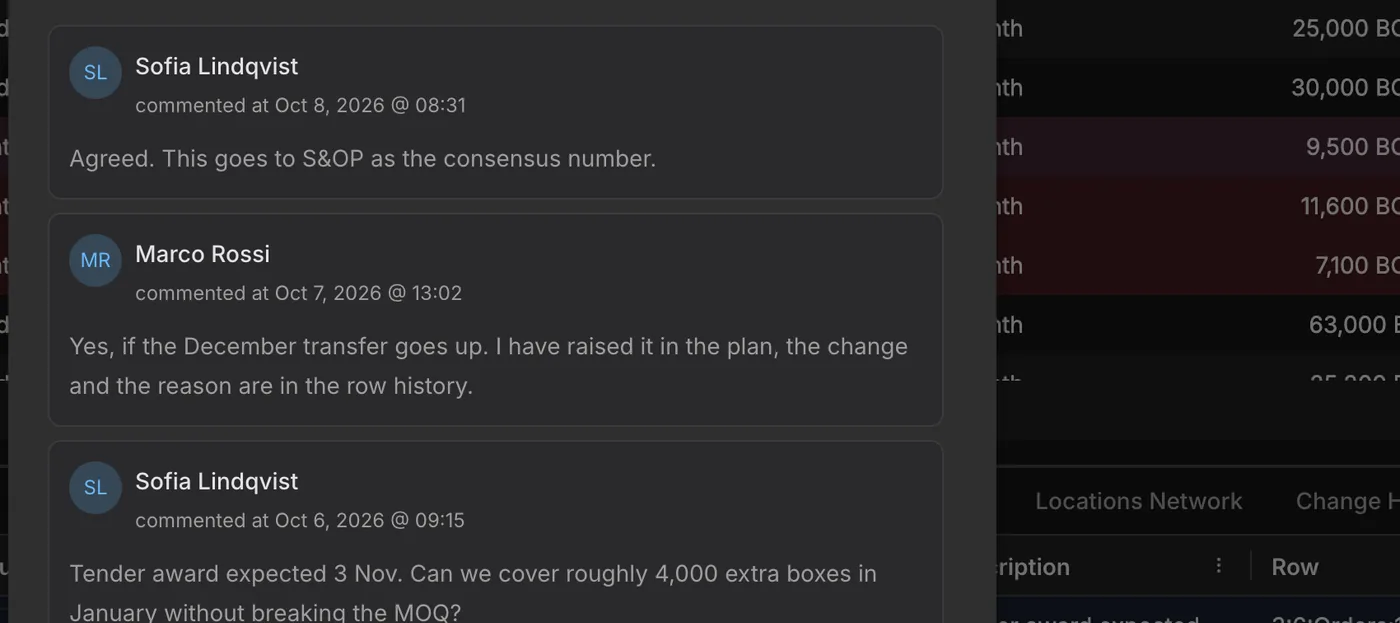
Dark task comment thread on the Capsule 50mg Nordic plan row, asked, answered and agreed over three dated comments

Consensus Planning FAQ

It is the part of the month where commercial, demand and supply teams settle on one plan. Without it, each team works from its own numbers. Most companies run it as a monthly cycle that ends with one plan going into S&OP.

On the rows of the planning worksheets, for example the Supply Planner and the exception lists. A task has a title, a description, an assignee, a due date, a status and its own comment thread. The Tasks page lists the tasks you own and the ones you handed out, sorted by when they are due, with overdue and unscheduled ones in their own groups.

Yes. Every worksheet row has a Change History tab. It lists each edit with the time, the user, the column and the before and after values, and the person can add a comment. In the Demand Planner the same tab shows edits to an item's demand lines, month by month.

PLAIO snapshots the active demand plan every month and stores it in the Forecast Library. You can open any snapshot beside the current plan. Accuracy is measured against these snapshots too, which means you are scored on the plan you actually agreed.

Copy the active plan into a scenario and make the change there. Supply keeps planning against the active plan. The scenario only takes over when someone sets it as the Active Plan.

Yes. Each demand scenario has a frozen period, set in months, and the demand plan can't be edited inside it. That protects the months supply has already committed to. Supply lanes have a frozen period of their own, and PLAIO leaves planned orders inside it alone.

There is no separate sign-off step. The record of agreement is in the work itself, in task comments, change history entries and the choice of Active Plan. Sign-off still happens in your S&OP meeting, and that history is there if anyone asks how the plan got there.

Alignment before execution

Bring demand, supply, and leadership into one shared plan built on transparent trade-offs and real constraints.

Book a demo

Cookie settings

To enhance your experience on our site and to analyze traffic, we use cookies. By clicking "Accept All," you agree to the storing of cookies on your device for analytics purposes. You can manage your settings or learn more in our Privacy Policy.

Manage Settings
  • Your Privacy Matters to Us

    We use cookies to improve your browsing experience and analyze how our website is used. These cookies allow us to understand trends, monitor website traffic, and gather insights to make the site better for you.

    We respect your privacy and are committed to transparent data usage.

    Why Do We Use Cookies?

    Necessary Cookies: These ensure that the website functions properly.

    Analytics Cookies: These help us track site traffic, user behavior, and performance metrics. The data collected is anonymous and allows us to continuously optimize the site.

    Preferences Cookies: We may use cookies to remember your preferences and tailor your experience.

    Marketing Cookies: We may use cookies for marketing purposes.

    Your Control, Your Choice

    By clicking "Accept All," you consent to the use of all cookies. If you prefer, you can customize your choices and opt out of certain cookies. You can learn more about how we handle data and cookies in our Privacy Policy.