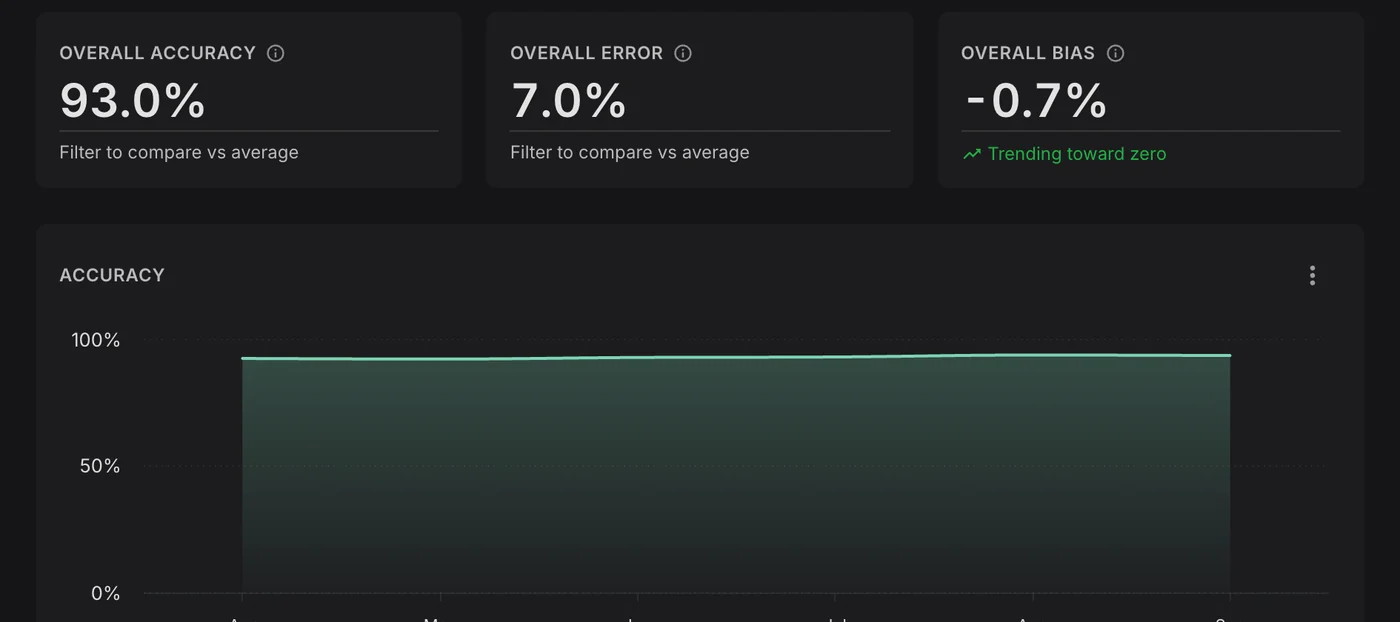
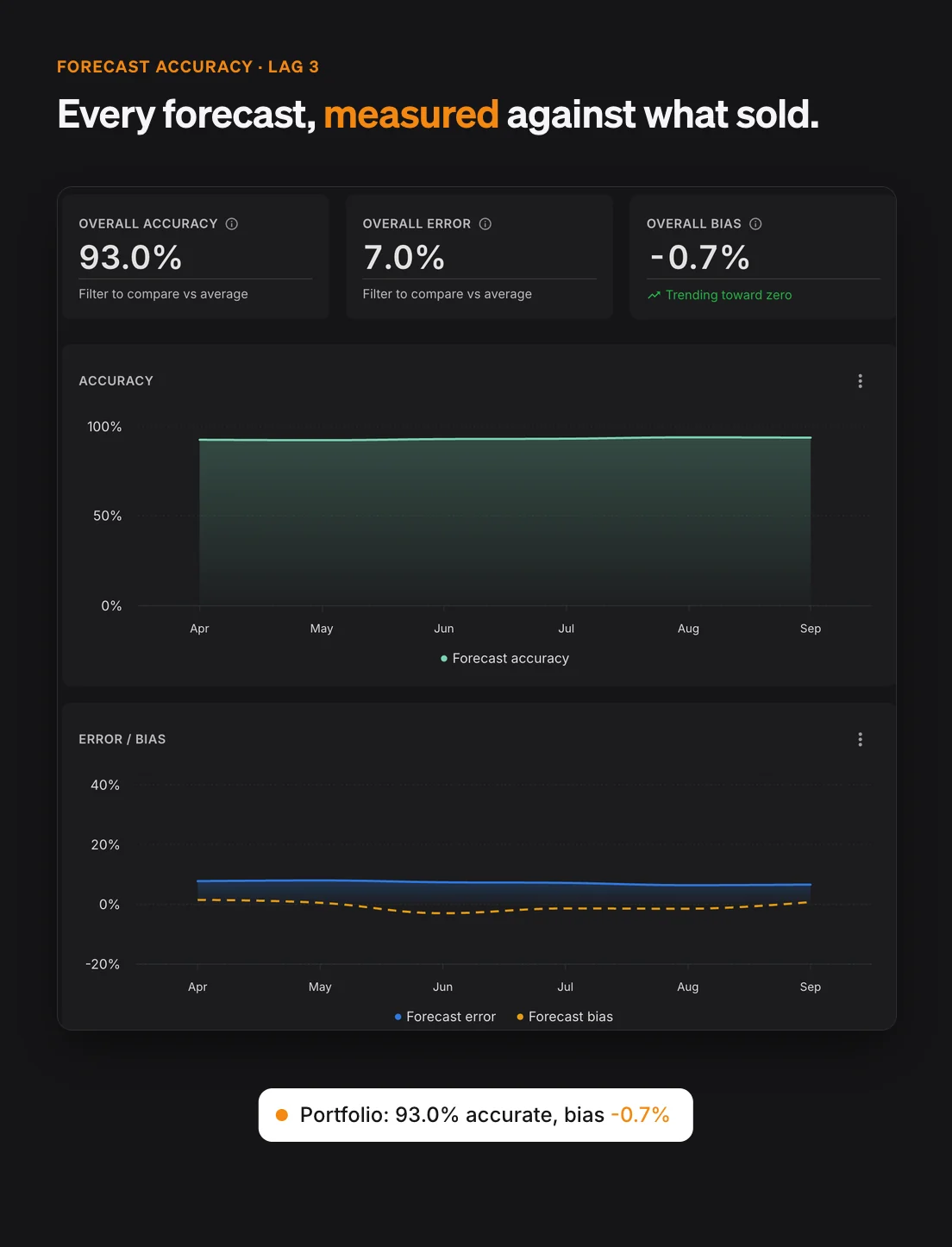
Across the portfolio, at the lag you planned on, accuracy is 93.0% and bias is −0.7%.
The model runs where you put it
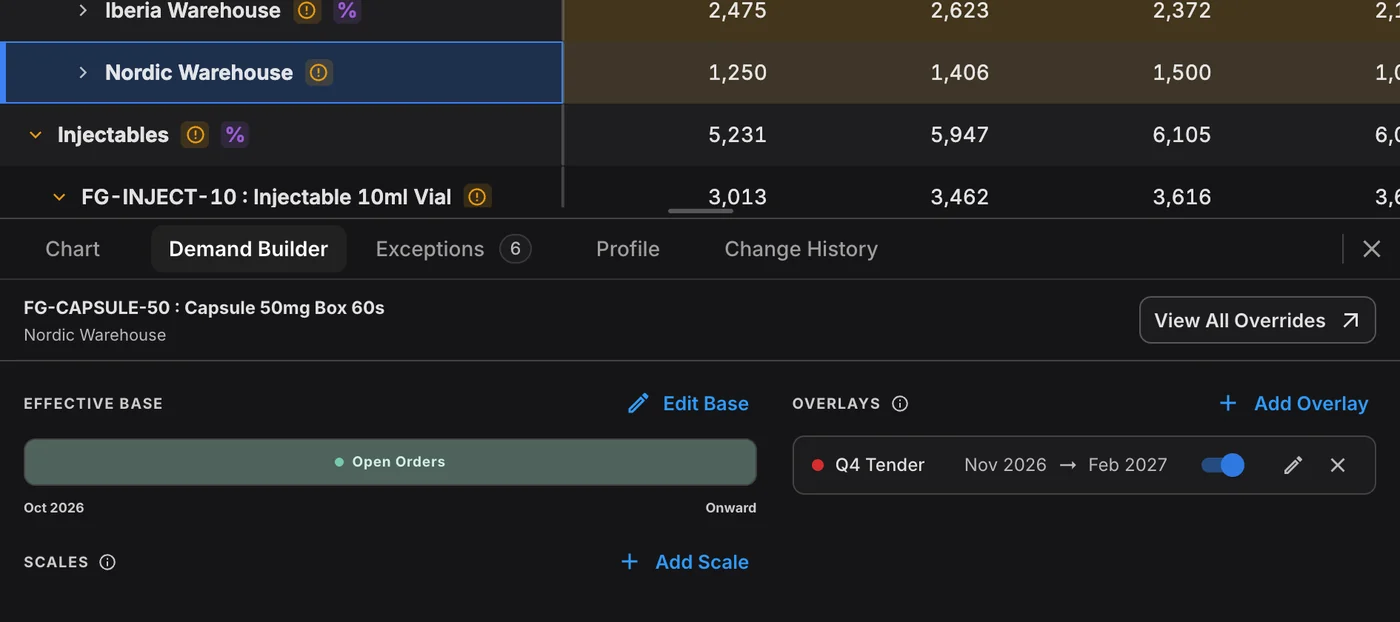
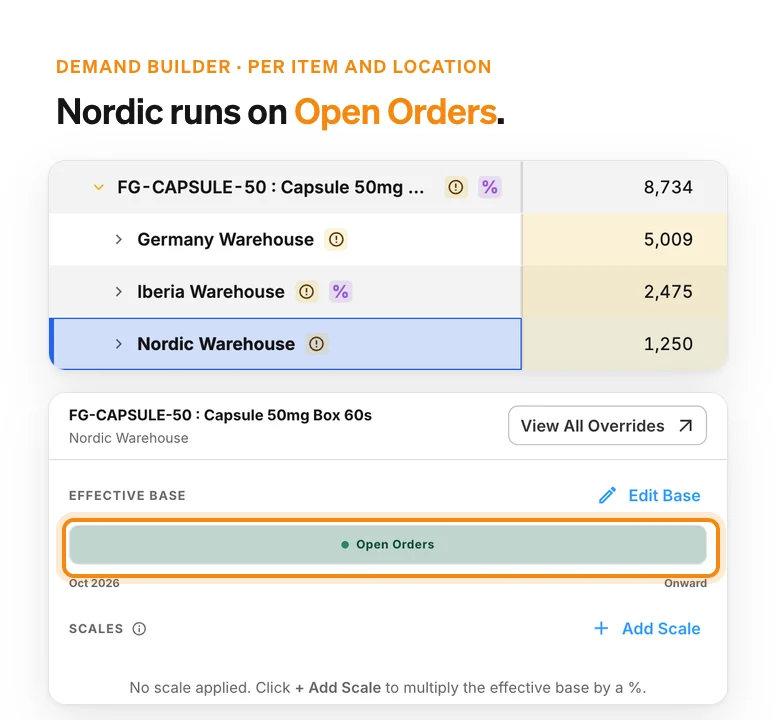
Capsule 50mg uses Open Orders as its base in the Nordics and the Commercial Plan in Germany. You set it per item and location.
Run it twice, get the same orders
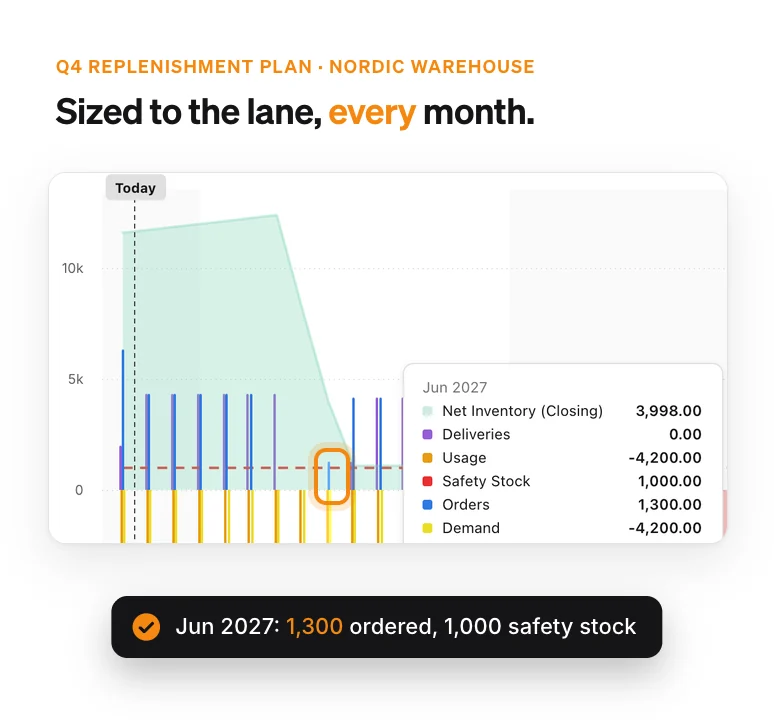
A deterministic simulation applies lead times, MOQs and shelf life, so identical inputs always give an identical plan.
You pick the trade-off
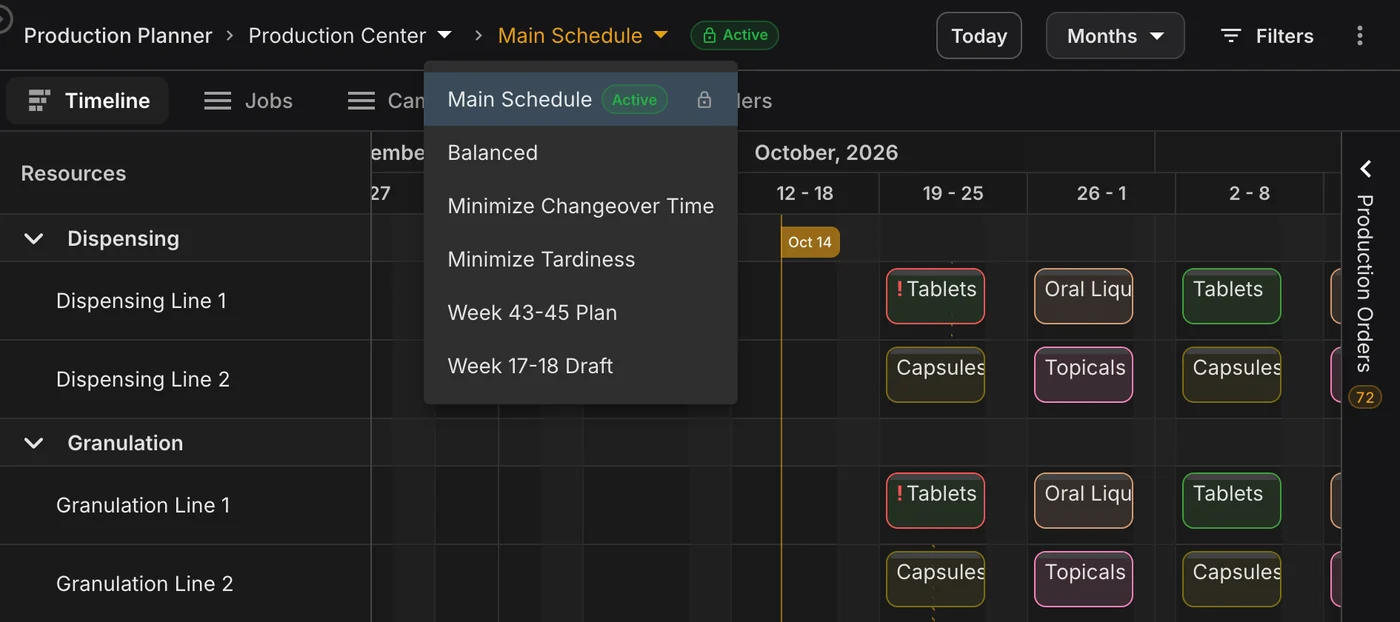
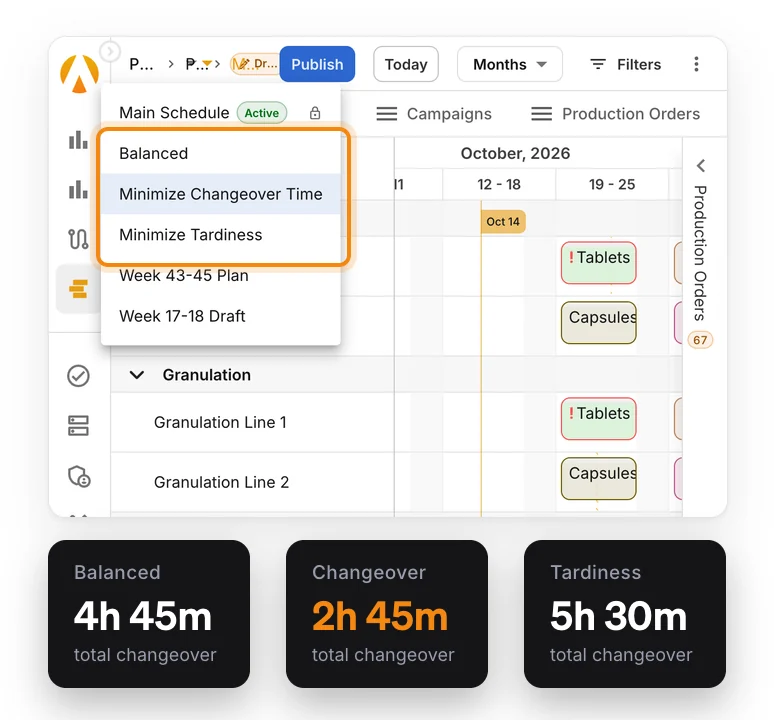
The optimizer saves its three alternatives (Balanced, Minimize Tardiness and Minimize Changeover Time) as scenarios you can compare.
Intelligence at Every Layer of Your Supply Chain
Pharma supply chain planning is too complex for spreadsheets and static rules. PLAIO builds machine learning, simulation and optimization into planning, from forecasting to production scheduling. These are not generic AI tools; they are purpose-built for pharma's specific constraints and decision patterns.
Improve forecast accuracy with machine learning that automatically detects seasonality and trends.
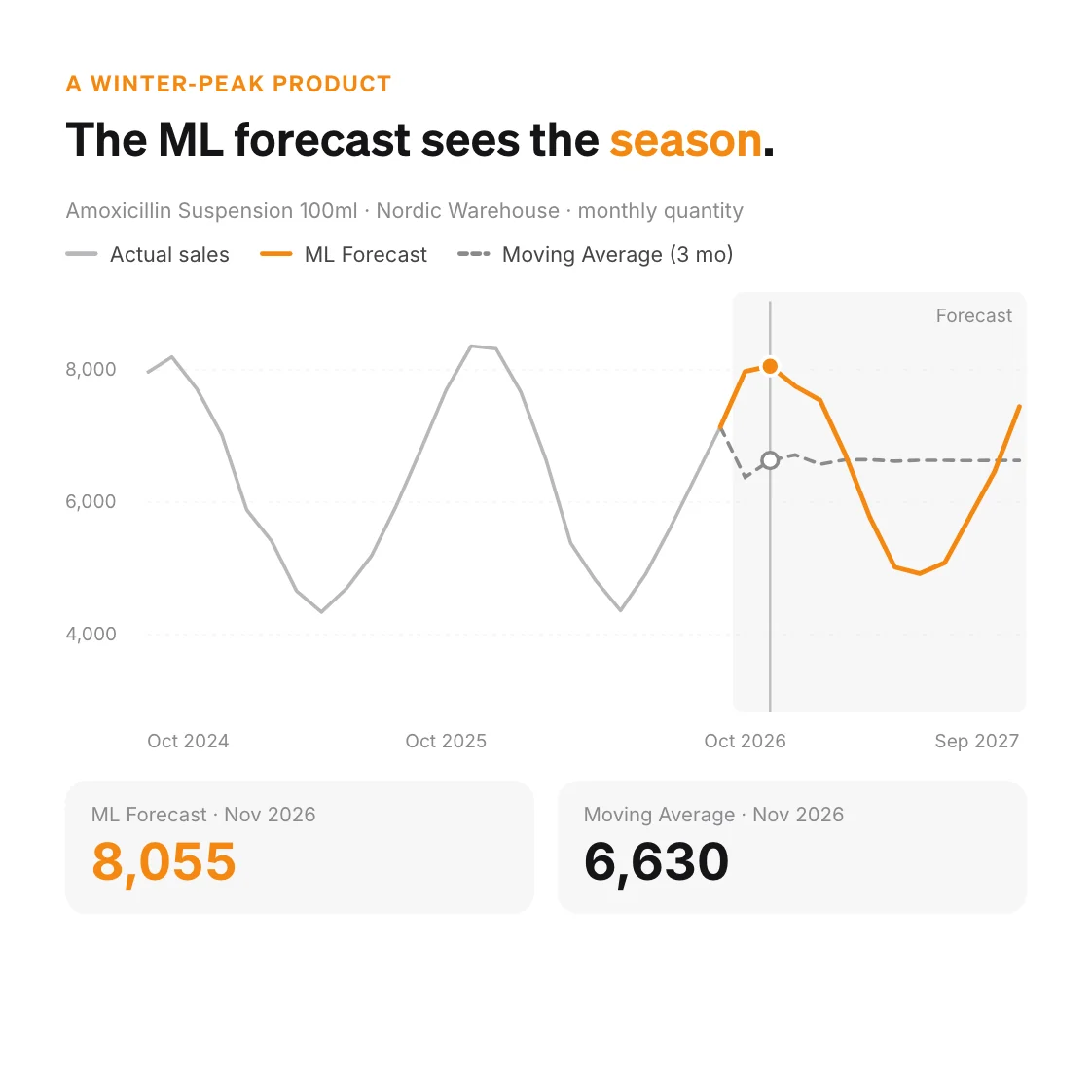
The ML forecast is trained on your monthly sales, separately for each item and location. It looks at the last few months, at six months back and at the same month last year, and it knows the time of year. So a winter product gets a winter peak. A moving average would give it a flat line.
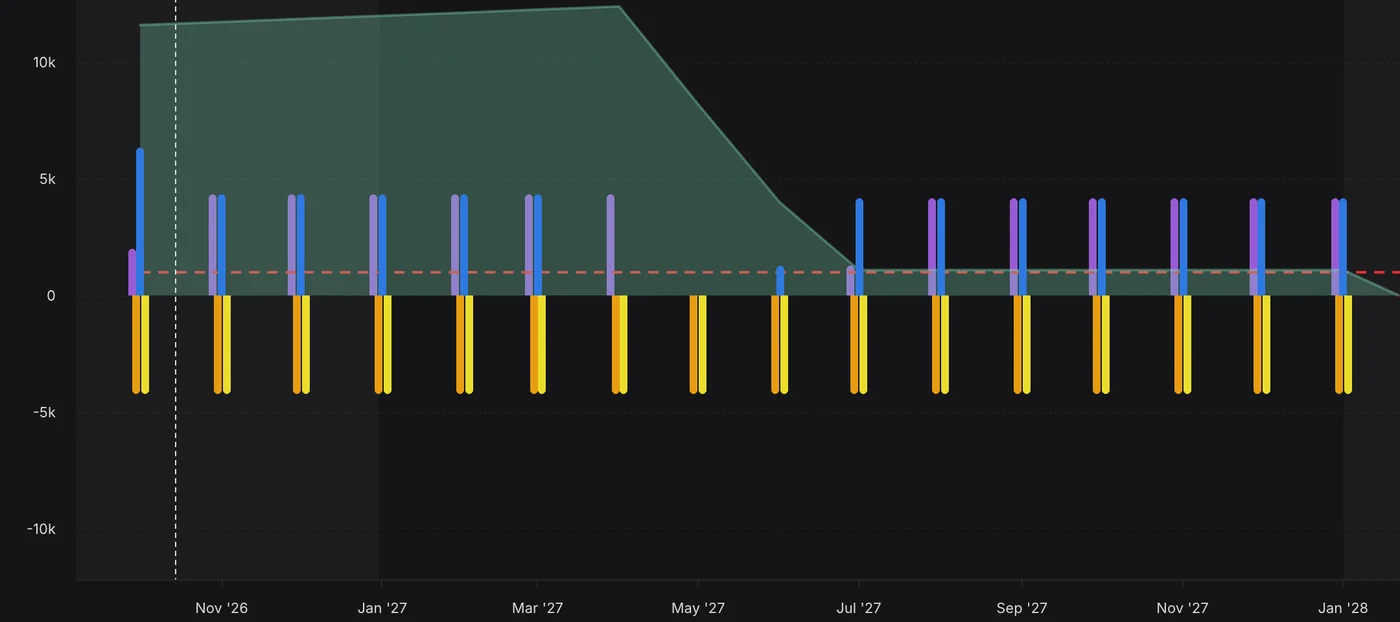
Each run also produces a moving-average forecast over the same horizon, and your commercial plan, open orders and any other sources are still there next to both. Compare them product by product and use whichever does better as the base.
Why it matters:
Better forecasts mean less excess inventory, fewer stockouts, and more confident planning decisions. And because the model sits beside your other sources, you use it where it earns its place.
What the AI in PLAIO does for planners
Decide where the forecast is used
In the Demand Builder you choose the base for each part of the horizon, say the ML forecast for six months and your commercial plan after that, with a percentage scale on top. Set it for everything at once, or per item and location.
Automated Ordering Plans
Generate ordering plans for vendors, sites, and CMOs that respect lead times, MOQs, and batch increments, producing executable orders.
Constraint-Based Production Scheduling
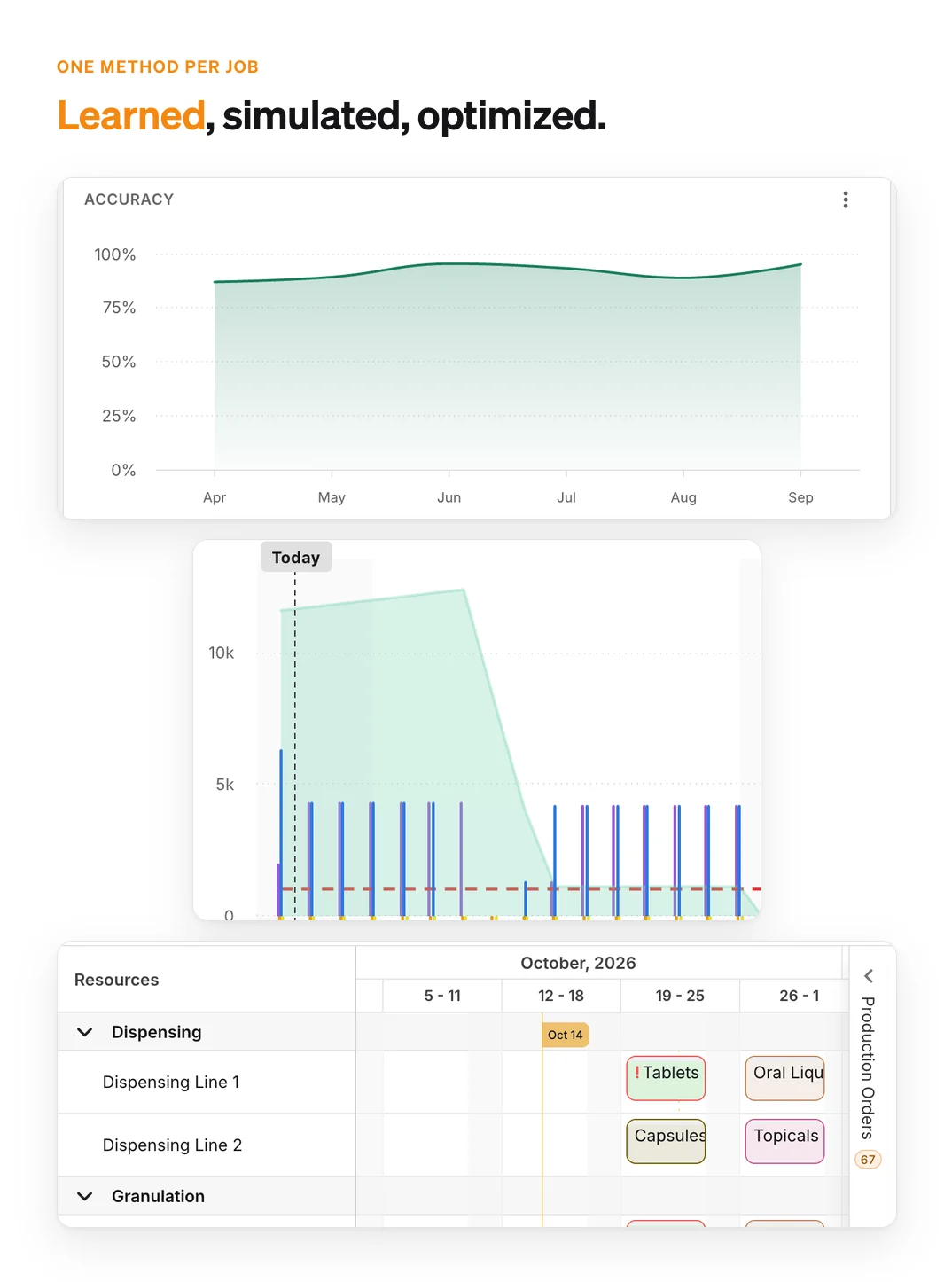
PLAIO builds schedules that fit your equipment, changeovers and cleaning times. Give the optimizer two objectives and it saves three alternatives as scenarios, one leaning toward each objective plus a balanced one. Which one gets published is up to you.
How AI, ML and optimization work in PLAIO
Demand
The forecast model learns from your own sales history. It finds seasonality and trend by itself and starts forecasting an item from its first month of sales. PLAIO tracks accuracy, error and bias at the lag you choose, so over time you see which products the model handles well and which ones another source handles better.
Supply
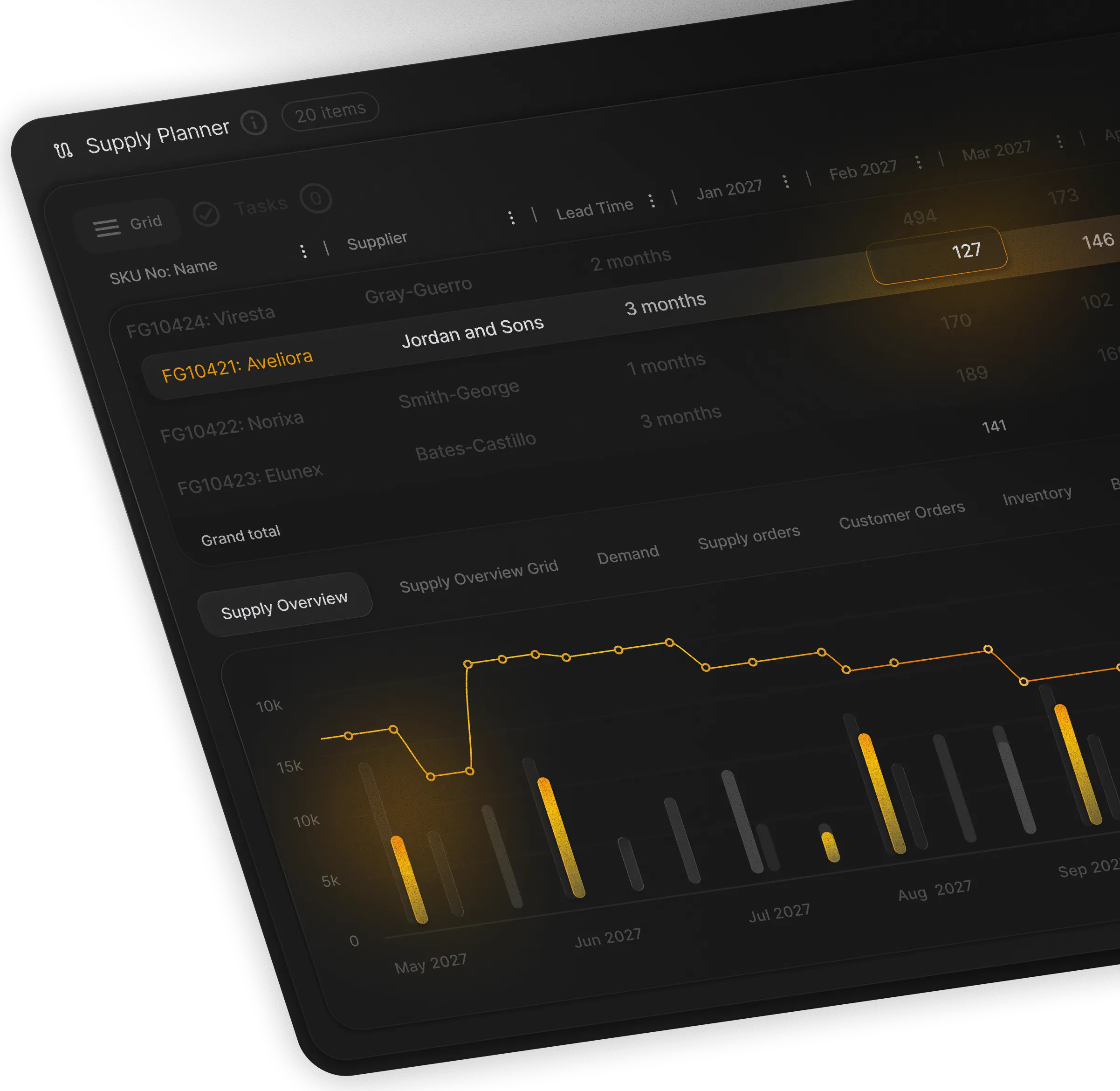
Supply planning is a deterministic simulation. It takes the forecast, current inventory, lead times and rules such as MOQs and batch increments, and works out orders you can actually place. Every order traces back to the net requirement that caused it.
Production
The production engine uses constraint-based optimization to generate feasible schedules for the objectives you choose. It understands your real-world manufacturing reality—including equipment capabilities, changeover times, and cleaning rules—to prevent schedule chaos. It runs with a fixed seed, so the same orders and objectives always give the same alternatives.
An AI ML supply chain platform purpose-built for pharma's unique constraints.
A forecast trained on your own sales history and scored against what actually sold.
Nothing goes live by itself. Order suggestions wait for a planner to approve them, and optimized schedules sit in scenarios until someone publishes one.
Why it matters:
When S&OP, quality or the board ask where a number came from, you can tell them whether a model produced it, a rule did, or a planner changed it by hand.
Different methods for different jobs. The demand forecast is machine learning, trained on your monthly sales. Production sequencing uses multi-objective optimization. The supply plan is a deterministic simulation of inventory, orders and constraints, which is why any order suggestion can be reproduced and explained.
Partly. You can see what it learns from and how well it performs. It reads your sales history at fixed look-backs (the last few months, six months ago and twelve months ago) plus the month and quarter. Each forecast run also produces a moving-average forecast for the same items, and the Forecast Accuracy dashboard shows accuracy, error and bias by product family at the lag you choose. What it won't do is write a reason next to each number. We won't pretend otherwise.
No. The ML forecast only reaches the plan where the Demand Builder uses it as the base, which you set globally or per item and location. Order suggestions stay suggestions until a planner approves them, and the production optimizer writes its results to new scenarios that you compare and publish.
One month. The model starts forecasting an item and location from its first month of sales, and it has more to learn from as history builds up. Seasonality comes from looking back to the same month last year, so two years of monthly sales gives it the most to work with. Until then you can keep the moving average or your own plan as the base in the Demand Builder.
Yes. With a fixed seed, the same orders, resources and objectives produce the same three alternatives. You pick two objectives out of late orders, earliness, changeover time and missed orders. Each candidate sequence is then placed by the scheduler planners use when they schedule by hand, constraints included. Production Planning covers that scheduler.
Decide with intelligence, not instinct
Apply AI trained on your own sales history and constraint-based optimization to generate plans that are both smart and executable.
To enhance your experience on our site and to analyze traffic, we use cookies. By clicking "Accept All," you agree to the storing of cookies on your device for analytics purposes. You can manage your settings or learn more in our Privacy Policy.
Manage Settings
Your Privacy Matters to Us
We use cookies to improve your browsing experience and analyze how our website is used. These cookies allow us to understand trends, monitor website traffic, and gather insights to make the site better for you.
We respect your privacy and are committed to transparent data usage.
Why Do We Use Cookies?
Necessary Cookies: These ensure that the website functions properly.
Analytics Cookies: These help us track site traffic, user behavior, and performance metrics. The data collected is anonymous and allows us to continuously optimize the site.
Preferences Cookies: We may use cookies to remember your preferences and tailor your experience.
Marketing Cookies: We may use cookies for marketing purposes.
Your Control, Your Choice
By clicking "Accept All," you consent to the use of all cookies. If you prefer, you can customize your choices and opt out of certain cookies. You can learn more about how we handle data and cookies in our Privacy Policy.