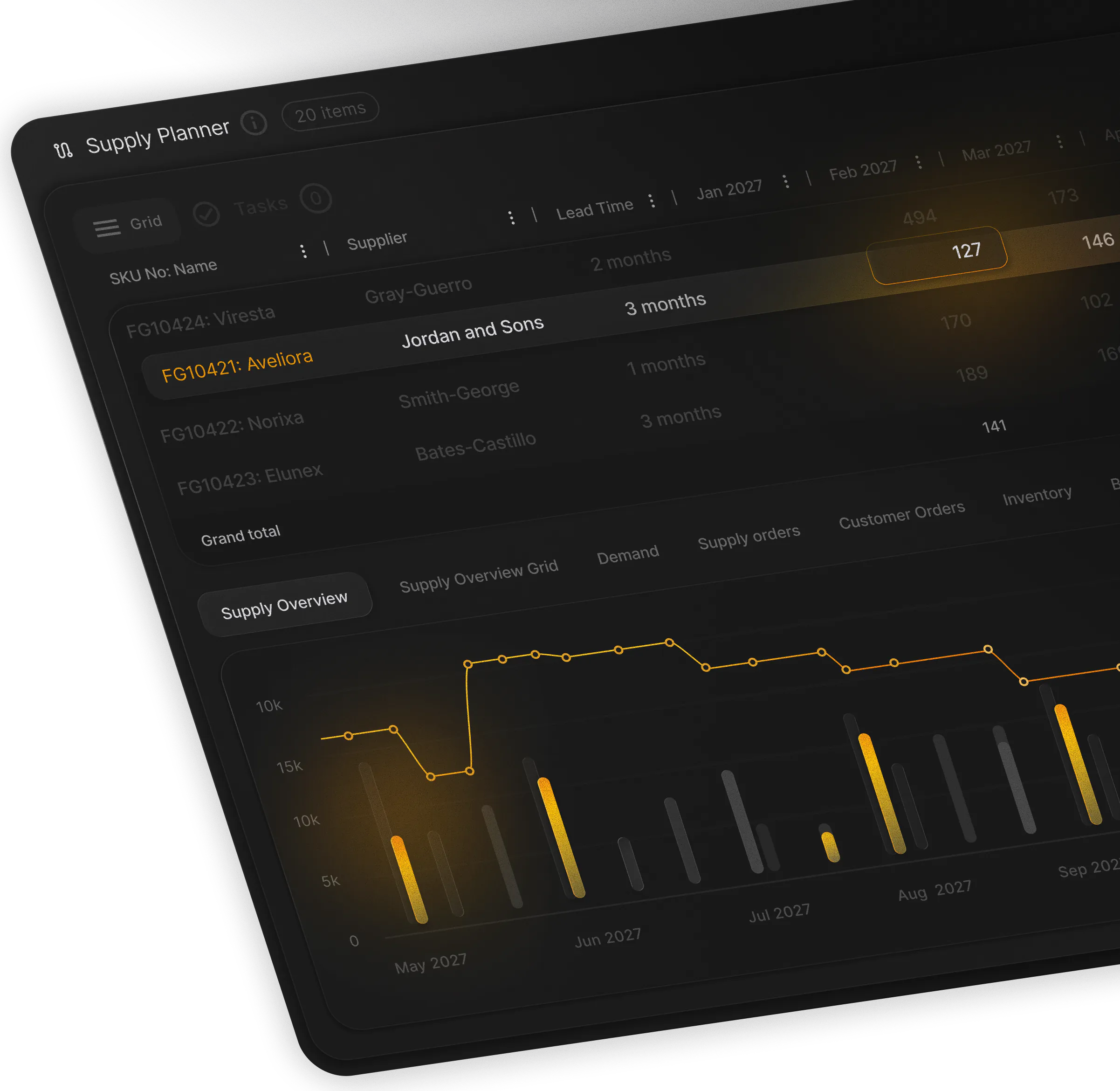


Ask a pharmaceutical operations leader how their global supply plan gets built, and they will describe a familiar, bi-weekly ritual. A planner extracts transactional data from the Enterprise Resource Planning (ERP) system, drops it into a complex Microsoft Excel workbook, and manually layers in the latest Contract Manufacturing Organization (CMO) confirmations from email threads. But in today’s regulatory environment, this manual approach represents a catastrophic vulnerability. When the plan lives in a spreadsheet, the risk lives everywhere else.
Keep NetSuite, Retire the Spreadsheet: How Sikich and PLAIO Work Together

Mitigating this operational risk does not require your company to embark on a multi-year IT integration project or replace the ERP your finance and operations teams already know. The pragmatic path forward is to layer an intelligent, pharma-native planning engine directly on top of NetSuite, combining consulting with dedicated planning software.
Sikich brings deep life sciences consulting, NetSuite implementation expertise, and GxP validation support to ensure your systems satisfy strict FDA audits. PLAIO provides the AI-powered, visual planning platform designed for the complexities of pharmaceutical manufacturing, including internal shop floor scheduling and multi-site CMO network orchestration. Sikich connects the two and supports the connection, so the team that implemented your ERP is the team that plugs planning into it.
How the NetSuite Connection Works
PLAIO does not replace NetSuite or overwrite its transactions. NetSuite remains the system of record for orders, inventory, and financials; PLAIO takes a copy of the data it needs, plans on top of it, and hands approved orders back. The connection runs through PLAIO’s documented, versioned integration API, and every record keeps its NetSuite ID as its reference, so nothing has to be re-keyed or translated along the way.
What PLAIO plans from. The integration carries the records a pharma supply plan depends on:
- Items, including shelf life and minimum remaining shelf life
- Locations, including your CMOs and vendors
- Customers and sales orders
- Open purchase orders and work orders, with confirmed and actual dates and quantities for OTIF tracking
- Bills of materials, including substitute components
- Lead times, minimum order quantities, and order increments on each supply lane
- On-hand inventory by batch, with lot numbers and expiry dates
Syncs are incremental: only records that have changed need to travel, and inventory can be sent either as individual movements or as a complete snapshot.
What goes back to NetSuite. Approved orders, not raw suggestions. A planner reviews each suggested purchase or production order in PLAIO. Once approved, it joins a to-order queue with the approver recorded; the integration raises the matching purchase order or work order in NetSuite, and when that order syncs back, PLAIO links it to the suggestion that created it. Planned orders reach NetSuite only after a planner has signed them off.
Every integration write is traceable. Each inventory change records the system it came from, the message that carried it, and the credential that submitted it. A message sent twice is applied once, and a batch that fails validation is rejected in full with row-level errors, so a bad file never half-loads into your plan.
On top of that connection, you get a unified planning system that can:
- Replace manual data entry, paper reports, and email attachments with a scheduled sync between NetSuite and PLAIO.
- Maintain a complete, immutable audit trail of every planning change, ensuring compliance-ready audit histories for your regulatory and QA teams from day one of your platform onboarding.
- Reduce forecast errors using machine learning, filtering out one-off anomalies like warehouse transfers or stockout noise without requiring a team of data scientists.
- Manage critical master data securely, including bills of materials (BOMs) and yields within a secure, structured pharma data management system rather than an unprotected, shared file on a local drive.
Deploy Three Core Capabilities of a Modern Planning Platform
Transitioning away from spreadsheets does not mean buying a more expensive version of a generic data grid. It means adopting a platform designed to understand the physical, regulatory, and commercial rules of the life sciences industry. A modern planning engine must deliver three core capabilities:
Connect Your Commitments
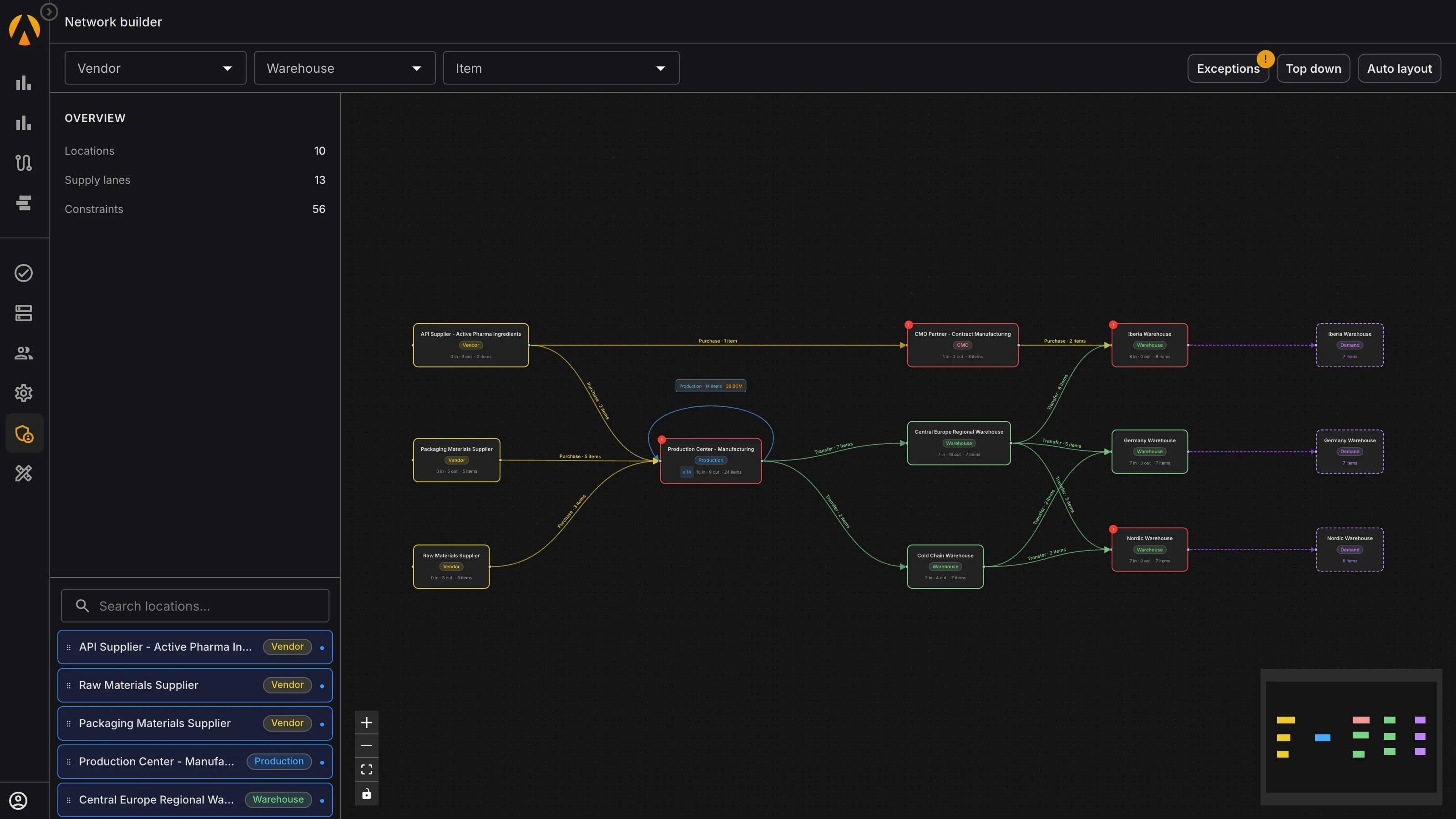
In a legacy planning setup, commercial forecasts, CMO purchase commitments, and raw material lead times are managed in separate files across different departments. A modern planning engine unifies these signals into a single, dynamic model. Having a unified view becomes critical as the pharmaceutical contract manufacturing market is projected to exceed $200 billion by 2032[1]. By achieving unified demand, supply, and production planning, any change in one part of your network automatically ripples across the plan. If an affiliate commercial team updates a market forecast, or if an API supplier alters a ship date, the system immediately recalculates the downstream impact on your packaging campaigns and customer orders. This shared surface allows you to optimize your S&OP meetings, aligning commercial and manufacturing teams with live, unvarnished data and transforming your S&OP process with AI and automated recommendations.
Model Real-World Constraints
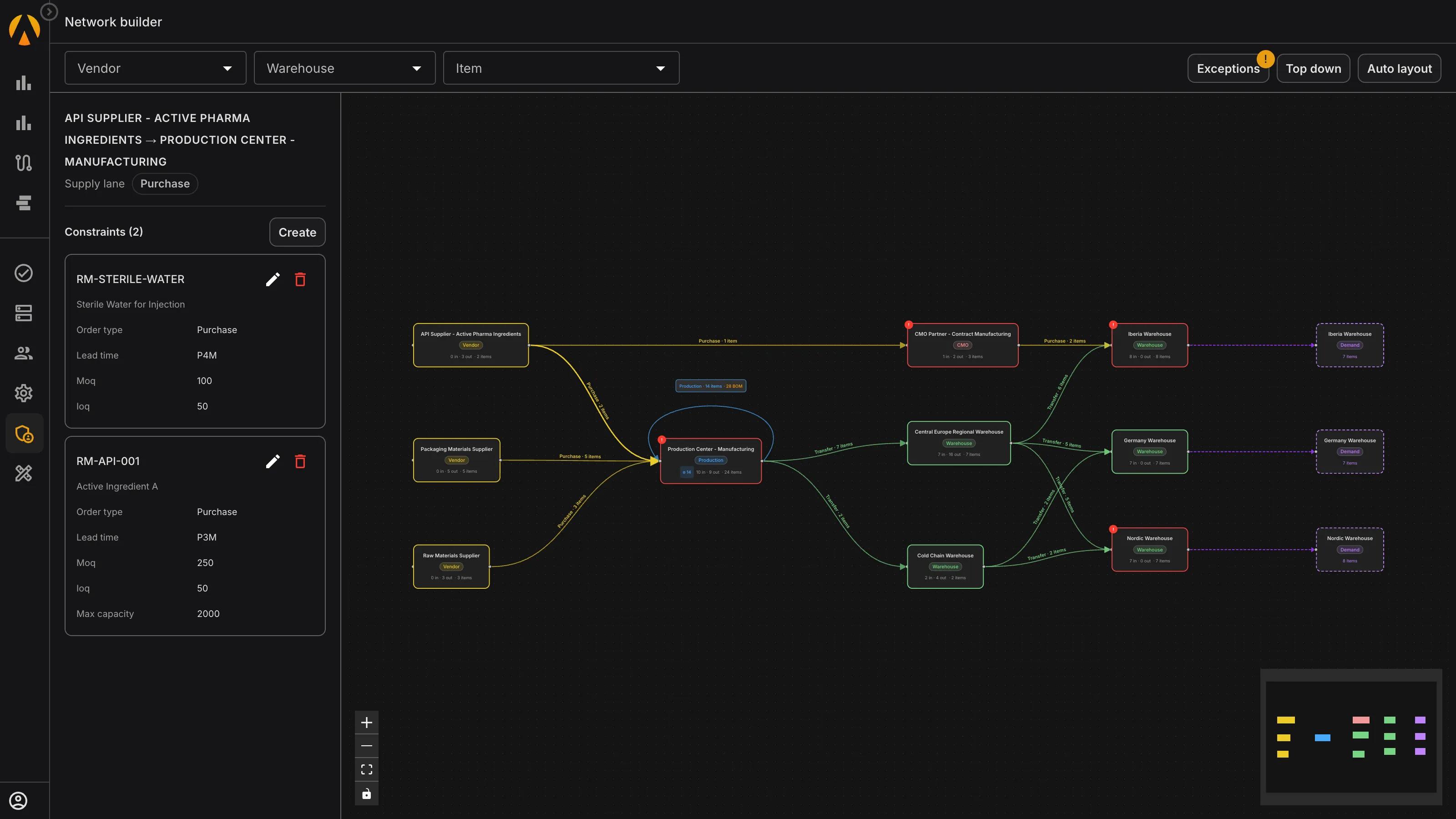
A plan built in Excel is a wish list because it assumes infinite capacity and perfect yield. A pharma-native planning engine automatically models physical and regulatory rules. This includes embedding specific pharma constraints, such as country-specific remaining-shelf-life (RSL) requirements at the port of import, varying minimum order quantities (MOQs), and batch-increment rules directly into the calculations. If you ship a drug to Germany, which requires 18 months of remaining shelf life upon import, while your domestic market accepts 12, a purpose-built pharma supply planning engine automatically matches the correct batches to the correct markets, eliminating shipping rejections and reducing expiry write-offs.
Test What-If Scenarios Rapidly
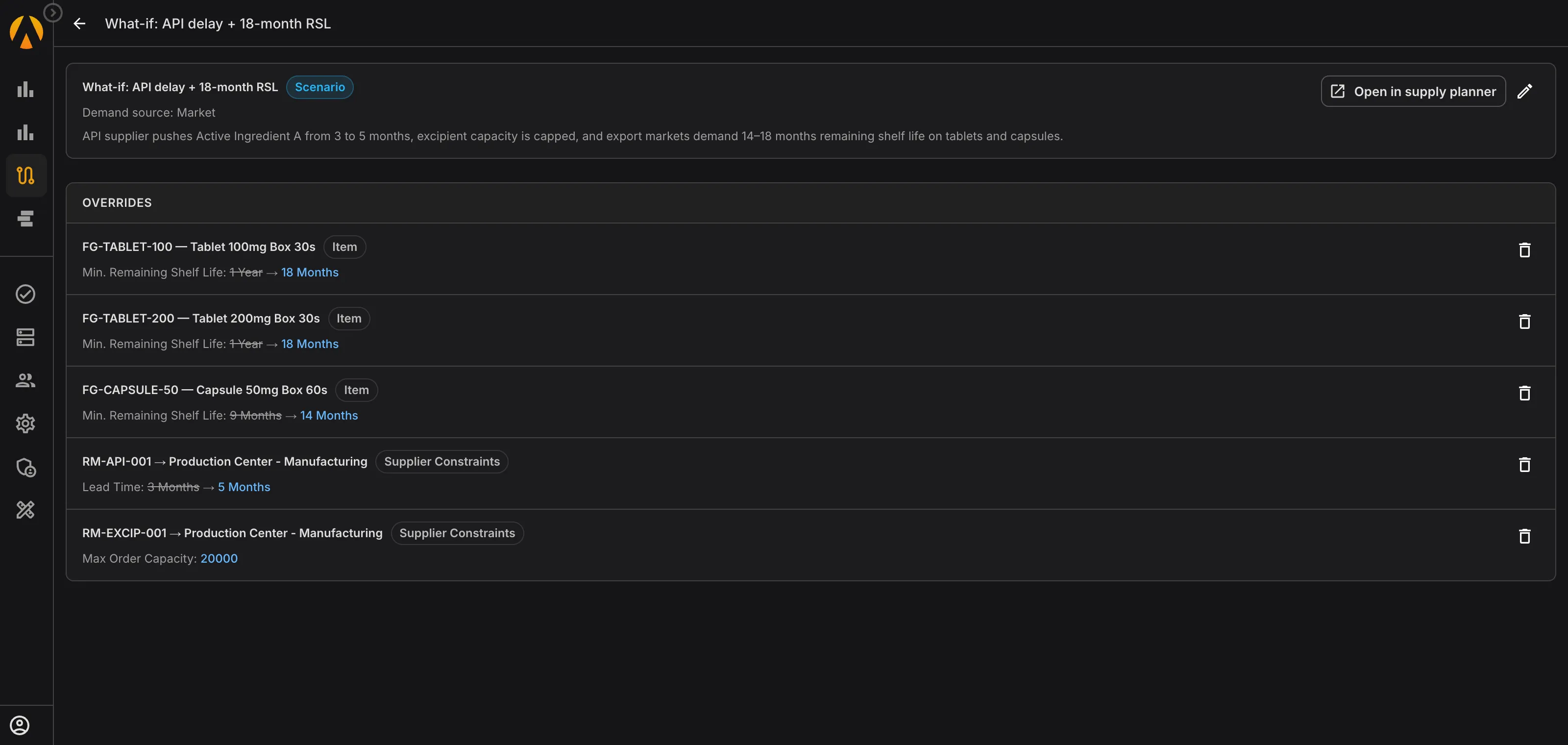
When an API supplier reports a quality failure or a CMO cancels a packaging campaign slot, you do not have days to analyze your options. Operations leaders must test three or four alternative scenarios in an S&OP meeting and compare the trade-offs. A modern planning layer allows you to run complex simulations in minutes. You model the impact of moving a production run, switching to an alternative supplier, or pulling forward a product launch, with the system calculating the exact effect on capacity, inventory levels, and your On-Time In-Full (OTIF) delivery performance. This speed shifts S&OP from reactive troubleshooting to proactive risk mitigation.
The rest of this article sets out why the spreadsheet-and-ERP approach is failing pharma planning teams.
Integrate External CMO Data Directly Into Your System of Record

One structural shift is physical: where your production takes place. The historical model of vertically integrated, internal manufacturing is replaced by an outsourced environment. Today, contract manufacturing organizations (CMOs) and contract development and manufacturing organizations (CDMOs) account for 50% to 60% of total pharmaceutical manufacturing volume worldwide — a leap from a decade ago. In fact, the outsourcing share of global pharmaceutical services expenditure rose from approximately 34% in 2014 to 49% in 2023[2], pushing in-house spending below the majority threshold. Furthermore, 75% to 80% of modern mid-market drug originators outsource at least one major manufacturing activity, with others relying entirely on external partners for finished-dose formulation or secondary packaging. Indeed, a peer-reviewed study analyzing sterile injectable drugs found that New Drug Applications (NDAs) were twice as likely to outsource[3], compounding the transparency and concentration concerns within the manufacturing base.
This outsourcing model introduces an architectural mismatch for traditional ERP platforms, especially since building alternative in-house capacity is incredibly cost-prohibitive; building a single pharmaceutical production facility can cost up to $2 billion[4] and take 5 to 10 years to become fully operational. When production sat inside your own manufacturing plants, your ERP’s Master Production Schedule (MPS) tracked the progress of the shop floor. But in an outsourced network, the decision-relevant data — confirmed campaign windows, actual yield variances, quality release dates, and raw material inventory at the CMO — lives in external systems. It arrives via email attachments, PDF invoices, and supplier spreadsheets, outside your system of record.
This is not a data quality issue to solve by hiring coordinators to re-key data. It is an architectural failure. ERPs are transactional engines built to record financial and material movements that have already occurred. They do not model the complex, multi-site constraints of an external manufacturing network against shifting commercial forecasts and strict shelf-life rules. When you force this multi-site network logic into a two-dimensional spreadsheet, you build a system that fails to represent reality. We have written extensively about what moving beyond spreadsheets really means for pharma supply chains, highlighting why a new spatial data model is required to map these external network dependencies.
Eliminate the Systemic Risk of Excel-Based Workarounds
Planners do not cling to spreadsheets out of stubbornness or laziness. They use them because they offer immediate flexibility. If a commercial manager calls with a revised forecast for a new product launch, or if a supplier reports a minor delay, a planner builds a custom formula or layers in a manual safety stock buffer in seconds without submitting an IT ticket or waiting for a software change-control board to approve the modification.
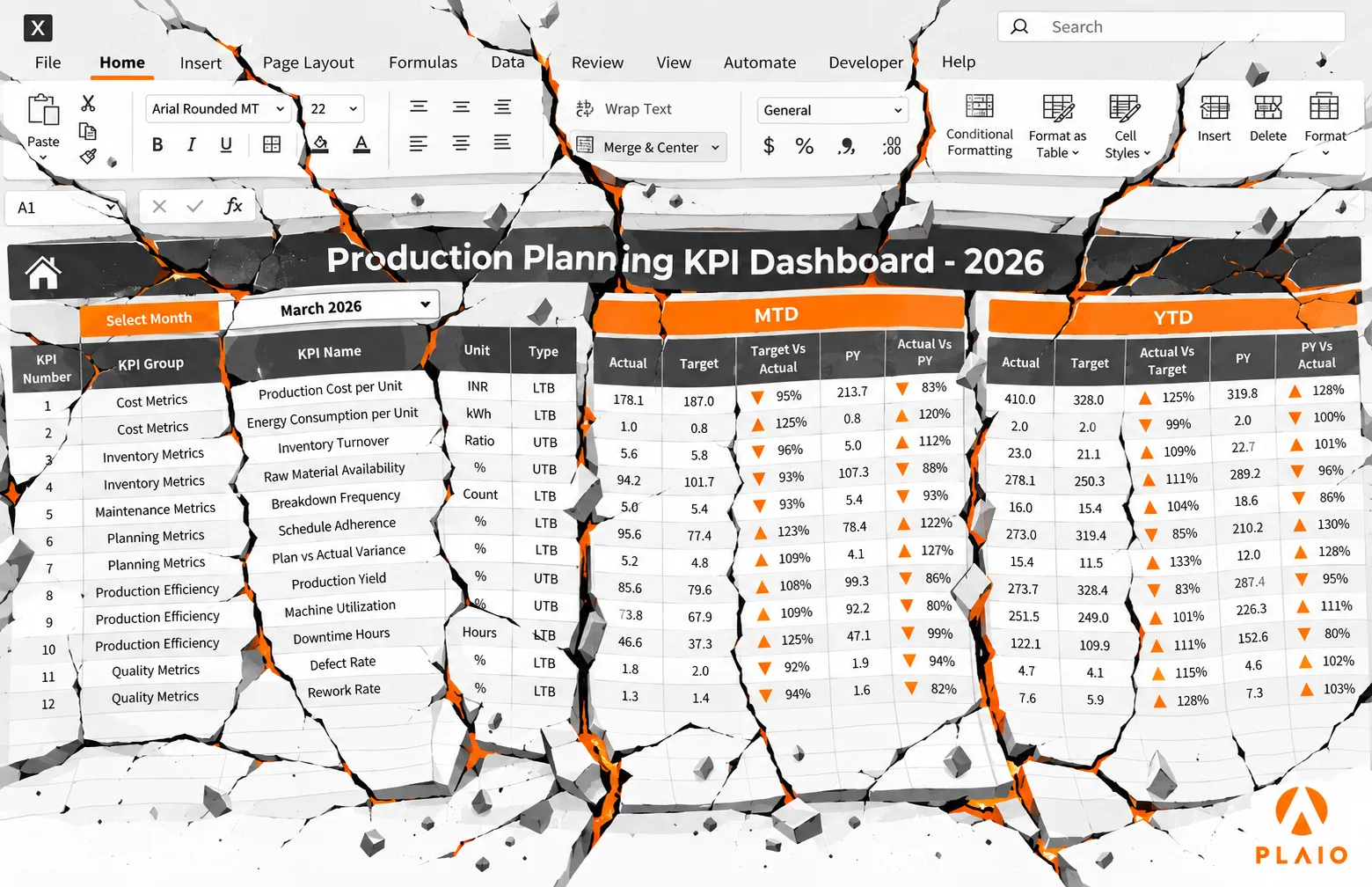
When the Plan Lives in a Spreadsheet, the Risk Lives Everywhere Else
However, this short-term operational flexibility creates systemic risk for the organization. As your product portfolio grows and your CMO network expands, these quick-fix spreadsheets morph into fragile webs of custom macros, nested VLOOKUPs, and complex formulas. In fact, a peer-reviewed study of operations management spreadsheet designs noted that manually writing cell formulas is fraught with risk of errors[5] as supply networks scale. They become highly personalized, “black box” systems that only one or two planners in the company understand. Indeed, a peer-reviewed study on end-user spreadsheet development found that these systems are frequently built by skilled professionals who have no formal training[6] in spreadsheet design, creating massive unchecked risks. If the creator of your master S&OP spreadsheet goes on vacation, takes sick leave, or leaves the company, your supply planning capability is paralyzed. This critical dependency is expensive; research shows that workers spend an average of 3.6 hours per week fixing spreadsheet errors[7], totaling over 22 workdays annually.
This environment is error-prone; industry research consistently shows that approximately 88% of spreadsheets contain errors[8] even after careful revision. Furthermore, a peer-reviewed study of operational spreadsheets found errors in 0.8% to 1.8%[9] of all formula cells, with several errors exerting substantial impacts on key organizational metrics. In a highly regulated, GxP-compliant industry, a broken cell formula is a major business risk. Spreadsheets lack an automated audit trail. There is no way for a quality auditor or supply chain director to trace who changed a safety stock target, why a yield assumption was altered, or when a demand signal was bypassed. This lack of transparency makes it impossible to build a repeatable, audit-ready planning process, which is why demand planning tools vs spreadsheets has become a critical operational debate for mid-market pharma brands. In our diagnostic reviews, we find that staying in Excel only compounds the underlying issues of why demand planning in the pharmaceutical industry is broken.
Objection: “A planning tool is too rigid to handle daily exceptions like a spreadsheet can.” The standard fear is that moving to structured software will strip planners of their agility, locking them into rigid processes that cannot adapt when a batch slips. However, modern systems do not remove human control. A specialized platform like PLAIO integrates automated constraint validation with an intuitive user interface, giving planners the identical flexibility of a spreadsheet with the added security of an automated audit trail and real-time exception management.
Overcome the Validation Bottleneck Using SaaS Architectures

Pharmaceutical supply chain and operations directors know that spreadsheets are a ticking time bomb. Yet, they repeatedly defer implementing dedicated planning tools.
The reason for this hesitation is the fear of the validation workload associated with Computer System Validation (CSV) and GxP compliance in an FDA-regulated environment.
Deploying traditional enterprise software meant a multi-year project involving custom point-to-point integrations, heavy infrastructure investments, and thousands of pages of manual Installation Qualification (IQ), Operational Qualification (OQ), and Performance Qualification (PQ) documents. Planners look at the effort required to validate an on-premise system and decide that coping with the daily chaos of spreadsheets is the safer operational choice.
But the validation calculation changes with modern SaaS architectures. As the U.S. CMO/CDMO market is projected to grow from $83.1 billion in 2025 to $149.4 billion by 2032[10], companies are adopting specialized, pharma-native planning layers that sit alongside their existing transactional ERP, such as NetSuite, and connect to it through a documented integration contract rather than custom point-to-point code, without rebuilding the system of record. Because the ERP remains the system of record for transactions, financial reporting, and material inventory, the validation of the planning layer becomes a highly scoped, predictable, and accelerated exercise. Your ERP stays exactly as it was validated; the planning layer is what gets qualified.
Objection: “SaaS validation is a continuous compliance risk during automatic updates.” Operations leaders often worry that automatic cloud updates will break their GxP validation status. In reality, modern pharma-native SaaS architectures isolate the core transactional database from the analytical planning layer. Because planning platforms operate as decision-support layers without executing financial transactions, updates do not compromise your core ERP validation state. PLAIO’s integration contract is also versioned by date and pinned per customer, so a platform release does not silently change the interface your NetSuite connection was validated against. That transforms a historical multi-year nightmare into a controlled, routine check.
Run the Diagnostic Checklist on Your Existing Workbooks
If you are evaluating whether your Excel-based supply planning process is safe, ask yourself these five diagnostic questions:
- Assess Key-Person Dependency: If the primary planner who built and maintains your master planning spreadsheet leaves the company tomorrow, could another team member run the S&OP cycle without immediate training or disruption?
- Measure Reconciliation Overhead: Does your planning team spend more than 20 hours every month extracting data, copying and pasting rows, and validating cell formulas across ERP reports, CMO emails, and commercial forecasts?
- Identify Inventory Write-offs: Has your company written off batches due to expiration, because short-dated inventory was not flagged and allocated to a market that would accept it in time?
- Evaluate Scenario Latency: When a major supplier delay occurs, does it take your team longer than ten minutes to run a complex “what-if” scenario and see the net impact on inventory and customer deliveries across your product portfolio?
- Verify Compliance and Traceability: Can you produce a complete, automated audit trail showing exactly who changed your planning assumptions, when they made the change, and why, to satisfy a GxP or FDA systems review?
If you answered “No” to two of these questions, your spreadsheet is an operational single point of failure. The risk of staying in Excel outweighs the effort required to modernize your planning stack.
Transition From Operational Chaos to Proactive Control
Transitioning from spreadsheets to an automated planning engine does not have to be a shock to your team. The shift works when it is structured. PLAIO is designed to import your existing spreadsheets directly, letting your planners map their data structures and build trust in the system’s automated suggestions.
As your planners gain confidence, they can stop acting as data coordinators chasing emails and start acting as strategic advisors who protect your supply chain’s resilience. If you manage your global supply plan in an Excel file that one person owns, your operational risk is distributed across every inbox and hard drive in your company.
It is time to consolidate that risk into a single, secure, and compliant environment. Let us show you how we can help your team plan smarter. To see the future of pharma-native planning in action, learn more about how machine learning is transforming pharma demand planning, or take the first step today and book a 30-minute conversation with Sikich and PLAIO about modernizing planning on top of NetSuite.
References
- “Outsourcing Trends and Strategies.” CPHI Trend Report. https://www.cphi.com/media/cphi.com/CPHI-trend-report-outsourcing-trends-and-strategies-08e0bf4053beb929d36cd45d049ddb5b.pdf
- “Global pharmaceutical outsourcing - statistics & facts.” Statista. https://www.statista.com/topics/11575/outsourcing-in-the-pharmaceutical-industry/
- Liu, W.; Wosinska, M. E.. “The Landscape of Contract Manufacturing of Sterile Injectable Drugs: Who Is Making What, Where, and for Whom.” Therapeutic Innovation & Regulatory Science, July 2017. https://pubmed.ncbi.nlm.nih.gov/30227060/
- “Contract Development and Manufacturing Organization (CDMO) Outsourcing Market.” Fortune Business Insights. https://www.fortunebusinessinsights.com/contract-development-and-manufacturing-organization-cdmo-outsourcing-market-102502
- Grossman, Thomas A.; Mehrotra, Vijay; Sidaoui, Mouwafac. “Alternative Spreadsheet Model Designs for an Operations Management Model Embedded in a Periodic Business Process.” 1 February 2018. arXiv:1802.00484. https://arxiv.org/abs/1802.00484
- Cleary, Pat; Ball, David; Madahar, Mukul; Thorne, Simon; Gosling, Christopher; Fernandez, Karen. “Investigating the use of Software Agents to Reduce The Risk of Undetected Errors in Strategic Spreadsheet Applications.” June 2008. arXiv:0806.0189. https://arxiv.org/abs/0806.0189
- “How Spreadsheet Mistakes Are Costing Operations Teams Thousands.” Doss. https://www.doss.com/research/spreadsheet-error-costs-operations-thousands
- “Why Supply Chain Spreadsheets Can Cause Major Supply Chain Issues.” The Owl Solutions. https://theowlsolutions.com/https-www-theowlsolutions-com-post-supply-chain-spreadsheet-issues/
- Powell, Stephen G.; Lawson, Barry; Baker, Kenneth R.. “Impact of Errors in Operational Spreadsheets.” 4 January 2008. arXiv:0801.0715. https://arxiv.org/abs/0801.0715
- “U.S. CMO/CDMO Market Size, Trends & Growth 2025–2032.” Persistence Market Research. https://www.persistencemarketresearch.com/market-research/us-cmo-cdmo-market.asp