
TLDR:
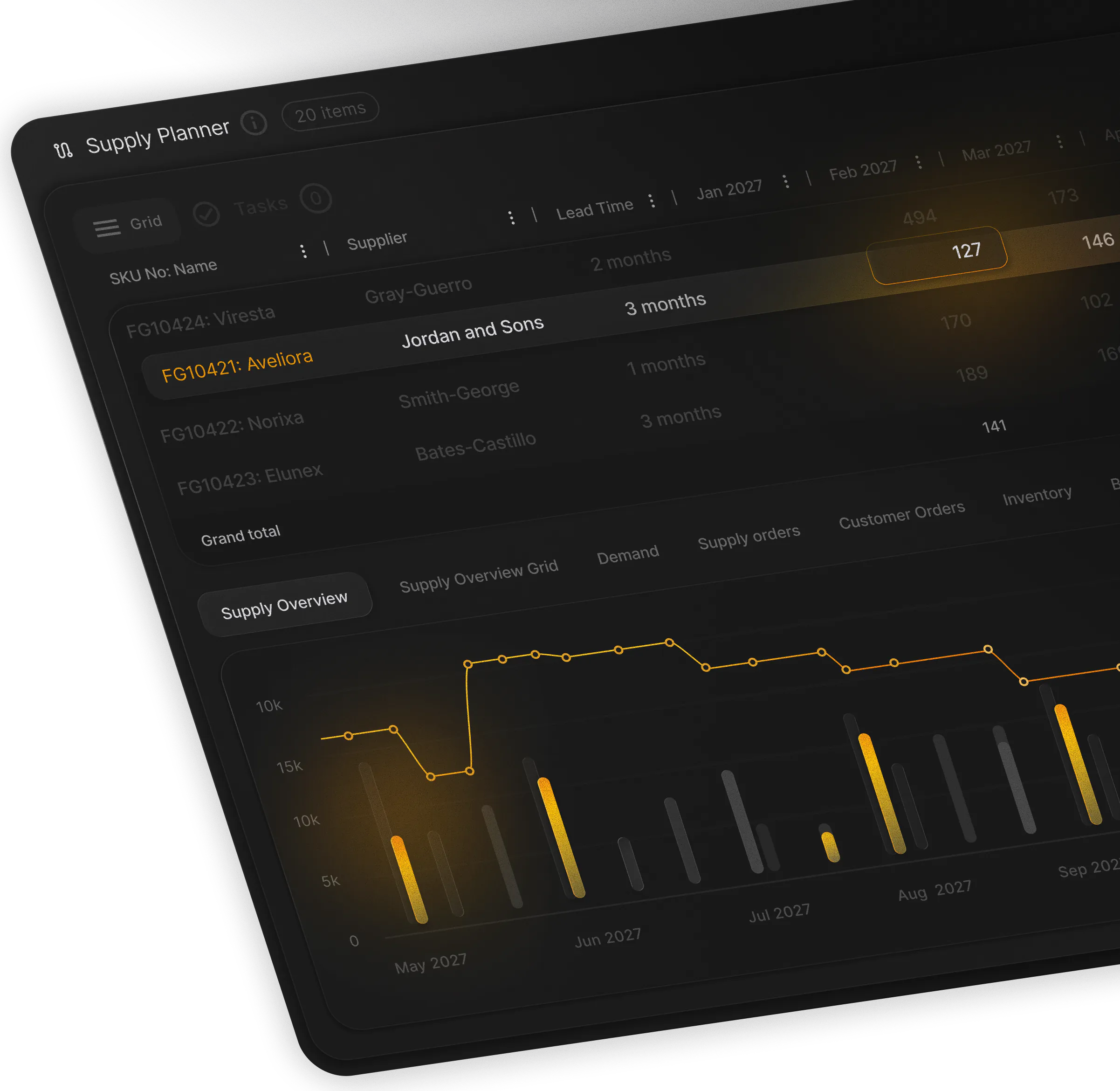
Demand planning forecasts what the market needs, while supply planning determines how to deliver it within real-world constraints like capacity, materials, and lead times.
In pharma, aligning the two is critical due to long production cycles and shelf-life limits. When connected through structured processes and shared data, companies reduce excess inventory, avoid shortages, and improve overall supply chain stability.
Demand vs Supply Planning in Pharma Supply Chains Explained
In pharmaceutical supply chains, two planning functions are easy to confuse but hard to run without. Demand planning and supply planning each address a different aspect of the same problem: ensuring the right products reach patients on time, without excess or shortage.
That tension sits at the heart of demand vs supply planning in pharma supply chains.
Demand planning focuses on estimating how much product the market will need, using historical sales and market signals. Supply planning then translates that forecast into a realistic production and procurement plan based on capacity, materials, and lead times.
In pharma, maintaining that balance is not simple. Manufacturing cycles are long, materials must be secured early, and products have a limited shelf life. When forecasts and production plans fall out of sync, inventory becomes unstable, and cash flow tightens.
For many mid-market pharmaceutical companies, the challenge is not the absence of process but the absence of visibility. Forecasts live in one spreadsheet, capacity plans in another. The connection between them is often unclear until something goes wrong.
This article clarifies the difference, explains how the functions interact, and shows what effective alignment looks like in practice.
What Is Demand Planning in Pharmaceutical Supply Chains?
Demand planning is the process of predicting how much of a product customers will need over a given time period. In pharma, this means forecasting orders from wholesalers, distributors, or health systems, typically over a 3- to 18-month horizon.
Most of the data used in demand planning comes from commercial inputs. Sales performance, contract commitments, and market insights shape the forecast.
Core Inputs in Pharmaceutical Demand Planning
Demand planners typically rely on:
-
Historical sales by product and market
-
Historical data trends and seasonality
-
Tender and contract commitments
-
New product launches
-
Market intelligence from commercial teams
The goal is accurate forecasting that supports financial and service goals.
The 7 Steps of Successful Demand Planning
In pharmaceutical environments, this process typically follows a structured sequence:
-
Collect historical sales and market data
-
Clean and validate data inputs
-
Generate an initial statistical forecast
-
Review the forecast with commercial teams
-
Apply adjustments based on market intelligence
-
Measure forecast accuracy
-
Align the forecast with supply planning
This structured approach improves forecasting accuracy and creates a stronger foundation for supply planning decisions.
Unconstrained vs Constrained Forecasting
Forecasting typically begins without operational limits. Planners estimate expected demand based only on historical data and market signals.
At this stage, the process ignores capacity and raw material availability.
Once the forecast moves to supply planning, constraints such as lead times, batch sizes, and safety stocks are applied. Adjustments are made based on feasibility.
Why Accurate Forecasting Matters in Pharma
Forecast errors create measurable risk in pharmaceutical operations:
-
Overforecasting increases stock levels and ties up cash flow.
-
Underforecasting leads to shortages and service failures.
-
Expired inventory results in write-offs.
Shelf-life limits and regulatory controls make these errors more expensive than in most industries.
A strong forecast sets direction. Operational feasibility determines whether that plan can be delivered.
What Is Supply Planning in Pharmaceutical Operations?
Supply planning determines how a business will fulfill the demand forecast. It translates projected demand into a concrete plan for production, procurement, and inventory management.
Demand planning defines expected demand. Supply planning determines how it will be delivered. The inputs here are the demand forecast, current stock levels, production capacity, raw materials availability, and supplier lead times.
In pharmaceutical supply chains, supply planning must account for:
-
Validated production capacity
-
Raw materials and API availability
-
Supplier lead times
-
Batch size constraints
-
Quality release timelines
-
Target safety stocks
Core Components of Pharmaceutical Supply Planning
Supply planning typically includes:
-
Capacity Planning: Confirms whether production lines can meet forecast volumes.
-
Material Requirements Planning (MRP): Calculates raw materials and packaging needs based on production schedules.
-
Master Production Scheduling (MPS): Converts forecast demand into detailed production plans.
-
Inventory Planning: Defines stock levels and safety stocks to buffer variability.
Each of these steps connects forecasting with execution. The output is a feasible production and procurement plan.
Demand Planning vs Supply Planning: Key Differences
Although closely connected, these two planning functions solve different problems.
The table below compares demand planning vs supply planning across the dimensions that matter most for pharma operations teams.
Both functions aim to optimize supply chain efficiency and product availability. The difference lies in focus, timing, and the nature of the decisions required.
Example of Supply and Demand in Pharma
Scenario: Suppose demand planning forecasts a spike in respiratory medication sales during peak flu season.
Supply planning then evaluates whether production capacity, raw materials, and supplier lead times can support that increase. If API availability is constrained or batch capacity is limited, adjustments must be made.
How Demand and Supply Planning Work Together
These two functions operate as a connected cycle, not separate activities.
The demand plan sets expected market needs. The supply plan tests whether those expectations are feasible given capacity, materials, and lead times.
Forecasts are reviewed against production limits and inventory policies. Gaps are identified early so teams can adjust before service levels are affected.
When demand and supply planning are aligned, those connections become visible, and the supply chain runs with greater stability and fewer surprises.
The S&OP Workflow in Pharma
Most mid-market pharmaceutical companies coordinate this process through Sales and Operations Planning (S&OP).
A typical workflow includes:
-
Demand forecast creation
-
Capacity and material review
-
Gap analysis
-
Scenario evaluation
-
Executive alignment
This structured cadence improves visibility across teams. It also supports better inventory control and working capital management.
What Happens When Demand and Supply Planning Are Misaligned
Misalignment between these two functions creates operational instability.
The impact may not appear immediately. Instead, small gaps accumulate and begin to affect inventory, production, and service levels.
Common warning signs include:
-
Rising inventory despite stable demand
-
Safety stocks are increasing without a policy
-
Frequent production schedule changes
-
Expedited raw material orders
-
Inconsistent service levels
Misalignment often stems from disconnected workflows and unclear ownership. If not corrected, the result is higher costs, reduced visibility, and weaker overall supply chain performance.
Best Practices for Aligning Demand and Supply Planning
Improving alignment between demand and supply planning does not require complex systems.
It requires clear ownership and consistent processes. For mid-market pharmaceutical companies, small changes often yield measurable gains.
Standardize Forecasting Inputs
Demand planning should follow a consistent methodology. Historical sales and trend data must come from a single source of truth. Assumptions should be documented and reviewed monthly.
Track forecast accuracy regularly. Without measurement, forecasting customer demand becomes subjective. Clear tracking supports continuous improvement.
Align Safety Stock Policies With Risk
Safety stocks should not be adjusted informally. They should reflect:
-
Supplier lead times
-
Demand variability
-
Service level targets
-
Shelf-life constraints
In pharma, excessive safety stocks increase expiry risk and tie up cash flow. Insufficient safety stocks increase shortage risk. A structured policy balances both.
Connect Capacity and Material Planning Early
Production capacity and raw materials availability must be reviewed as soon as the demand forecast changes. Waiting until late in the cycle increases risk.
Linking forecast updates with material requirements planning helps prevent last-minute procurement and rushed production changes. Early visibility reduces disruption and supports cost control.
Create a Structured Monthly Review
A formal review process improves coordination across commercial, operations, and finance teams. This review should:
-
Compare forecast versus capacity
-
Highlight gaps
-
Evaluate trade-offs
-
Confirm financial and service goals
Move Beyond Spreadsheet-Based Planning
Spreadsheet-based planning can work at a small scale, but it limits visibility as operations grow. Forecast updates, capacity assumptions, and material constraints often sit in separate files, increasing risk and delaying adjustments to production or safety stock targets.
Integrated planning environments synchronize demand planning, supply planning, and inventory decisions into a single, structured workflow. For mid-market pharmaceutical companies, the goal is not complexity. It is coordination.
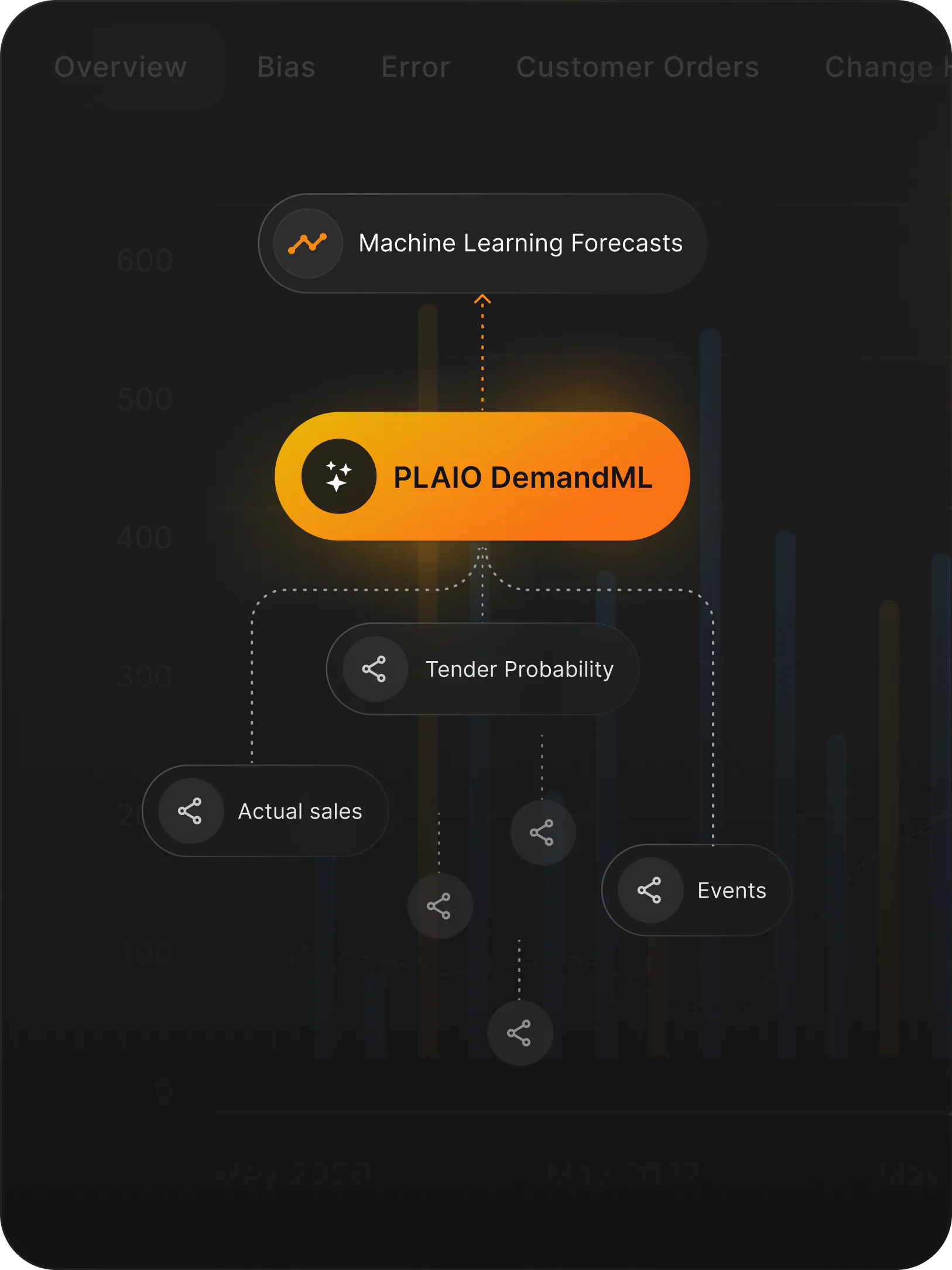
PLAIO’s demand planning capabilities are designed to support this integration within pharmaceutical supply chains.
Moving beyond spreadsheets reduces blind spots and provides greater clarity throughout the planning cycle.
Why Alignment Determines Performance
When planning teams work from the same numbers, performance improves.
-
Excess inventory decreases
-
Rush procurement declines
-
Stock levels stabilize
-
Cash flow improves
-
Service performance becomes more predictable
These results directly affect margin and working capital.
Most planning failures are not about effort. They happen when teams are working from different assumptions. The forecast shifts, but capacity stays the same. A supplier extends a lead time, but safety stock targets are never revisited.
Performance improves when those gaps are surfaced early. When commercial expectations, production limits, and material constraints are reviewed together, decisions become clearer.
Trade-offs are made intentionally instead of reactively.
For mid-market pharmaceutical companies, improvement does not require enterprise-scale systems. It requires disciplined coordination between forecasting and execution. Organizations that treat demand and supply planning as an integrated discipline achieve stronger inventory control and more stable financial performance.
Frequently Asked Questions
What is the difference between demand planning and supply planning?
Demand planning forecasts customer demand using historical sales and market data. Supply planning determines how the business will meet that demand within production and material constraints.
Why is demand vs supply planning important in pharma?
Pharmaceutical supply chains operate under strict regulatory and shelf-life constraints. Misalignment increases stock risk, cost pressure, and service disruption.
Can demand planning and supply planning be managed in one system?
Yes. Integrated supply chain management platforms can connect forecasting, capacity planning, and inventory management in a single workflow.
What are the common risks of poor planning alignment?
Common risks include excess stock levels, material shortages, rushed procurement, and unstable cash flow.
How does supply planning affect cash flow?
Supply planning influences inventory levels and safety stocks. Poor planning can tie up working capital or create emergency spending.
What KPIs should pharma companies track?
Key metrics include forecast accuracy, service levels, inventory turnover, safety stock adherence, and capacity utilization.