
TLDR:
Aligning commercial forecasts with manufacturing capacity in pharma requires more than better predictions. It depends on connecting demand signals with real production constraints like batch schedules, lead times, and validation processes.
Companies improve alignment by combining stronger forecasting models, shared data across teams, and integrated planning systems. This coordination helps stabilize production, reduce excess inventory, and prevent supply shortages when demand changes.
What Are Effective Methods for Aligning Commercial Forecasts With Manufacturing Capacity in Pharma?
Forecasts change faster than pharmaceutical manufacturing can respond. Commercial teams adjust demand projections as market conditions shift, but production plans remain tied to batch schedules, validation timelines, and equipment availability.
That gap shows up quickly in the supply plan. A forecast increase can arrive after production capacity is already committed.
In other cases, manufacturing scales up based on demand assumptions that later soften, leaving excess inventory in the system.
Aligning commercial forecasts with manufacturing capacity is therefore less about forecasting accuracy alone. It requires planning processes that connect demand signals with real production constraints.
Planning teams need clearer visibility into manufacturing constraints and stronger coordination between commercial and operations teams. The sections below outline the methods pharmaceutical manufacturers use to synchronize these planning processes.
Why Forecast and Manufacturing Capacity Often Drift Apart
Forecast alignment problems rarely come from a single issue. In many pharmaceutical companies, commercial forecasting and manufacturing planning operate through separate processes.
Commercial teams focus on predicting demand based on market signals, product launches, and sales projections. Manufacturing teams plan production around batch schedules, validation requirements, and equipment availability.
Because these planning cycles use different timelines and data sources, forecasts and production plans gradually drift out of alignment.
Forecast updates move faster than manufacturing cycles
Commercial forecasts often change as market dynamics shift. Competitor activity, reimbursement changes, or updated market expectations may influence demand projections.
Manufacturing schedules cannot adjust at the same pace. Pharmaceutical production requires batch processing, quality testing, and validation procedures that introduce long lead times.
Once production capacity is committed, adjusting schedules becomes difficult without disrupting other products in the manufacturing plan.
Planning data is often fragmented
Forecast alignment also depends on how planning data moves across the organization.
In many mid-market pharmaceutical companies, planning still relies heavily on spreadsheets and disconnected tools. Forecast updates may circulate through email or separate planning models before reaching supply planners. This fragmentation often results in:
-
Commercial forecasts are maintained outside supply planning systems
-
Manufacturing capacity data is stored separately from demand forecasts
-
Limited visibility into production constraints
-
Inconsistent data definitions across departments
Without a shared view of demand and production capacity, planners struggle to keep forecasts and manufacturing plans aligned.
Improving Forecast Accuracy in Pharmaceutical Planning
Better alignment starts with the quality of the forecast itself. Manufacturing teams cannot plan production effectively if demand projections change frequently or if they rely on incomplete information.
Pharmaceutical demand forecasting is more complex than many other industries. Demand patterns may shift due to regulatory decisions, product launches, or changes in prescribing behavior. Forecasts, therefore, need to combine historical demand data with forward-looking market signals.
Use multiple data sources in forecasting models
Reliable forecasting models draw from several sources of information rather than relying on a single demand signal. Common inputs include:
-
Historical sales and shipment data
-
Prescription demand trends
-
Distributor inventory levels
-
Expected product launches
-
Competitor activity and market shifts
-
Regulatory or reimbursement changes
Combining these data sources allows planners to identify patterns more accurately and improve demand projections over time.
Monitor forecasting performance continuously
Forecast accuracy should be measured regularly to identify weaknesses in forecasting models. Key metrics include:
-
Forecast error percentage
-
Forecast bias
-
Service level performance
-
Inventory coverage levels
Continuous monitoring enables planners to adjust forecasting models and improve prediction accuracy over time.
Integrating Demand Forecasts With Manufacturing Constraints
Accurate forecasts alone do not solve the alignment problem. Demand projections must translate into production plans that reflect real manufacturing limits.
Pharmaceutical production involves strict operational constraints. Equipment availability, batch sizes, and quality control processes determine how quickly manufacturing can respond to changing demand.
Map manufacturing capacity clearly
Manufacturing planners must define the constraints that shape production capacity. These constraints often include:
-
Batch size requirements
-
Equipment availability
-
Changeover time between products
-
Quality testing cycles
-
Packaging and labeling capacity
Understanding these operational limits helps planners assess whether forecast demand can be met within available capacity.
Coordinate demand planning and production scheduling
Demand planning and manufacturing scheduling should operate as connected processes rather than independent activities. Effective coordination includes:
-
Regular demand and supply review meetings
-
Shared planning dashboards
-
Cross-functional planning sessions
This coordination ensures production plans reflect current commercial forecasts.
Strengthening Data Sharing Across Planning Teams
Forecast alignment depends heavily on how information moves across the organization. If commercial forecasts, manufacturing plans, and supply chain data remain separated, planners work with incomplete information.
This challenge is common among mid-market pharmaceutical manufacturers that still rely on spreadsheets or legacy planning tools.
Centralize forecasting and production data
Centralized planning data allows commercial and manufacturing teams to operate from a shared information base. A centralized planning system may include:
-
Commercial forecasts
-
Manufacturing capacity models
-
Inventory levels
-
Demand projections
-
Production schedules
Centralized data improves data quality and reduces conflicting forecasts.
Improve supply chain visibility
Greater visibility across supply chain operations allows planners to detect potential disruptions earlier. Improved visibility supports:
-
Early identification of capacity constraints
-
Better coordination during product launches
-
More reliable long-term planning
-
Faster response to demand changes
These improvements ultimately strengthen forecasting accuracy.
Coordinating Product Launch Forecasts With Production Capacity
Product launches create some of the most difficult forecasting challenges in the pharmaceutical industry. Early demand often develops quickly, especially when a therapy addresses an unmet medical need.
Manufacturing capacity must ramp up carefully to avoid shortages while preventing unnecessary excess inventory.
Use scenario planning for launch demand
Scenario modeling allows planners to evaluate different demand outcomes. Typical scenarios include:
-
Conservative adoption forecasts
-
Moderate demand growth
-
Accelerated market uptake
Scenario planning enables manufacturers to prepare production strategies for multiple outcomes.
Align launch planning across departments
Successful launch planning requires coordination across commercial forecasting, manufacturing operations, and supply chain planning. Key alignment areas include:
-
Launch timelines
-
Production ramp-up plans
-
Inventory strategies
-
Regulatory approval milestones
Cross-functional planning reduces the risk of supply disruption during product launches.
Using Data-Driven Planning to Support Strategic Decisions
Long-term supply planning becomes more reliable when companies adopt data-driven planning processes. Integrated planning tools allow organizations to combine forecasting models with manufacturing capacity planning in a single environment.
This integration improves coordination between teams and reduces delays caused by manual data transfers.
Evaluate forecasting models regularly
Forecasting models should evolve as market conditions change. Regular model evaluation allows planners to refine assumptions and improve prediction accuracy. Planning teams often adjust models based on:
-
Historical forecast performance
-
Changes in market demand patterns
-
New product launches
-
Shifts in supply chain conditions
Continuous improvement helps forecasting models remain relevant as the market evolves.
Adopt integrated planning systems
Integrated planning platforms allow commercial forecasts, manufacturing capacity planning, and supply coordination to operate within a shared system.
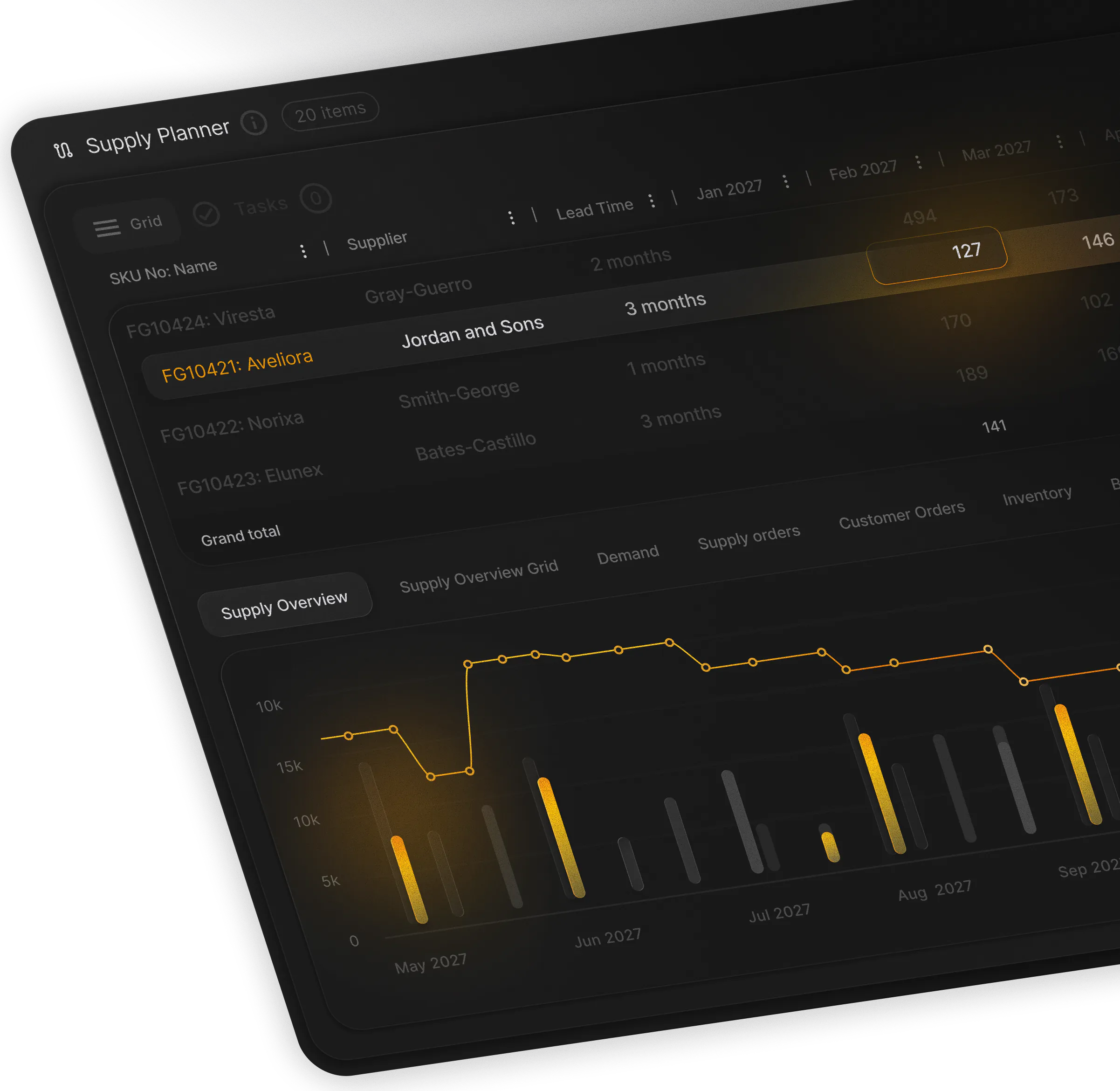
Some mid-market pharmaceutical manufacturers adopt specialized planning platforms such as Plaio to manage forecasting and production planning without relying on disconnected spreadsheets.
By connecting demand forecasts with operational data, planning teams gain better visibility into production constraints and can make more informed supply decisions.
Reducing Forecast Bias in Pharmaceutical Demand Planning
Forecast alignment also depends on reducing bias in demand projections. Forecast bias occurs when projections consistently overestimate or underestimate demand.
In pharmaceutical planning, bias often appears when forecasts rely heavily on optimistic commercial expectations or incomplete market data.
Overestimated forecasts can push manufacturing teams to increase production unnecessarily, leading to excess inventory. Underestimated forecasts may cause shortages if manufacturing capacity is insufficient.
Planning teams often reduce bias by reviewing forecast performance regularly and comparing projected demand with actual market results. Monitoring forecast bias allows companies to refine forecasting models and improve the accuracy of future projections.
Bringing Forecasts and Manufacturing Plans Into Alignment
Aligning commercial forecasts with manufacturing capacity remains a central challenge in pharmaceutical supply planning. Forecasts respond quickly to market signals, while production plans must operate within fixed operational constraints.
Companies that improve this alignment typically focus on three areas. They strengthen forecasting models, ensure planning teams share the same data, and integrate demand planning with production scheduling.
When commercial forecasts reflect real manufacturing capacity, planning decisions become more reliable. Production schedules stabilize, inventory levels become easier to manage, and supply risks become easier to detect before they affect product availability.
Over time, stronger coordination between forecasting and manufacturing planning allows pharmaceutical companies to respond to demand changes without creating shortages or excess inventory.
Frequently Asked Questions
What is pharmaceutical demand forecasting?
Pharmaceutical demand forecasting predicts future demand using historical sales data, market signals, and forecasting models.
Why is forecast alignment important in pharmaceutical manufacturing?
Forecast alignment ensures manufacturing capacity can meet projected demand, reducing stockouts and excess inventory.
What forecasting models are used in the pharmaceutical industry?
Common models include time-series forecasting, regression models, scenario planning, and product lifecycle forecasting.
How do product launches affect pharmaceutical forecasting?
Product launches introduce demand uncertainty. Scenario planning helps manufacturers prepare for multiple demand outcomes.
How can pharmaceutical companies improve forecast alignment?
Companies improve alignment through better data sharing, centralized planning systems, cross-functional planning, and integrated forecasting models.
What challenges affect pharmaceutical forecasting accuracy?
Demand forecasting in pharma is influenced by regulatory approvals, product launches, competitor activity, and prescribing trends. These factors make accurate forecasts more complex.