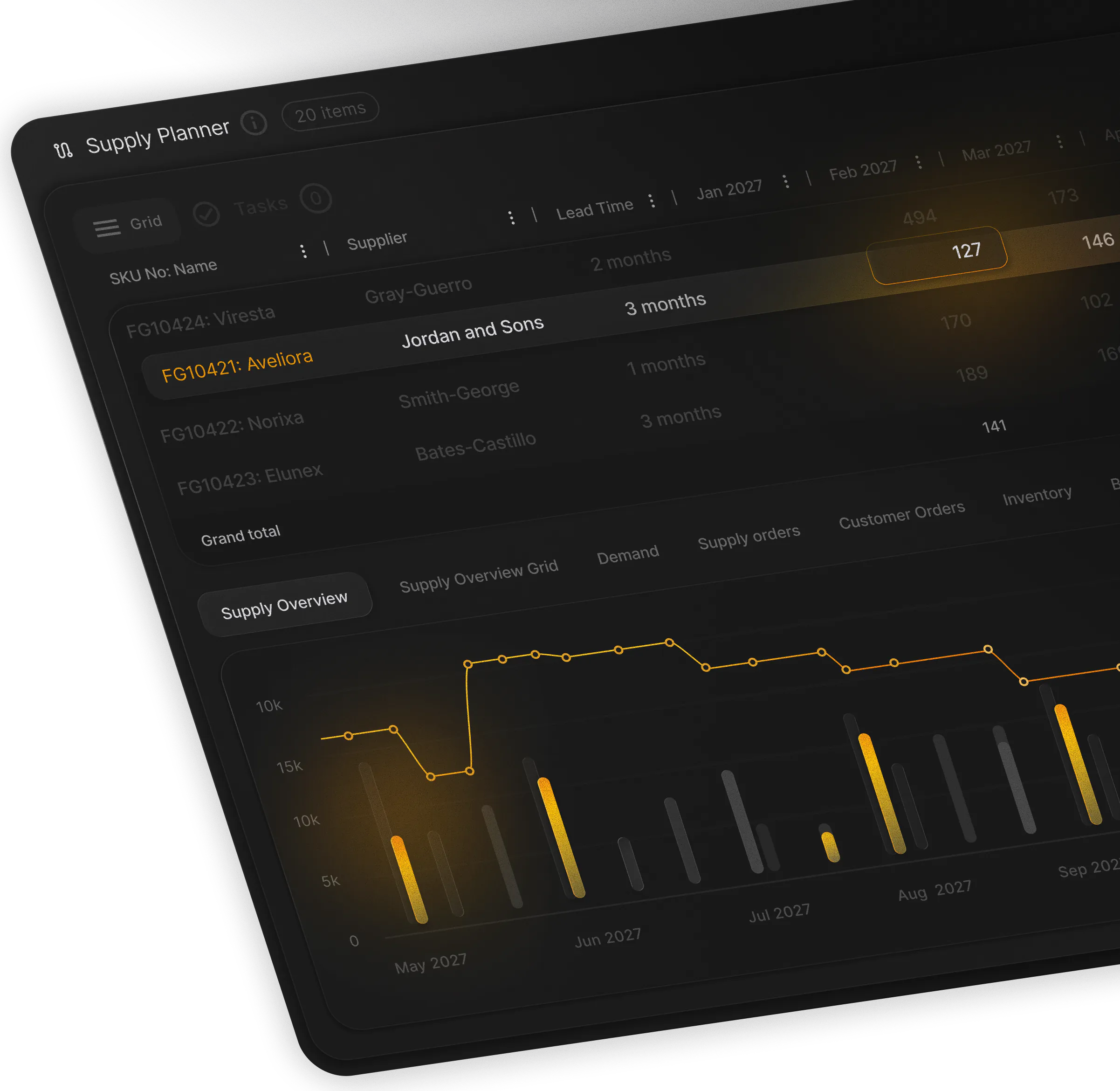

SAP S/4HANA is a precise record-keeper, but it is slow and rigid for daily planning decisions. The moment a raw material delivery is delayed or a batch fails quality testing, planners log out of the ERP and open Microsoft Excel.
To resolve these complex operational bottlenecks, you must decouple transaction execution from active planning. By connecting the structured record-keeping of SAP — acting strictly as the system of record — with a nimble, pharma-native planning engine like PLAIO, you get the best of both worlds. You keep S/4HANA as your single source of truth for transactions, while using PLAIO pharmaceutical planning software to make realistic, data-driven decisions. I will show you exactly how to integrate these two systems in weeks — not years — and without expensive custom coding.
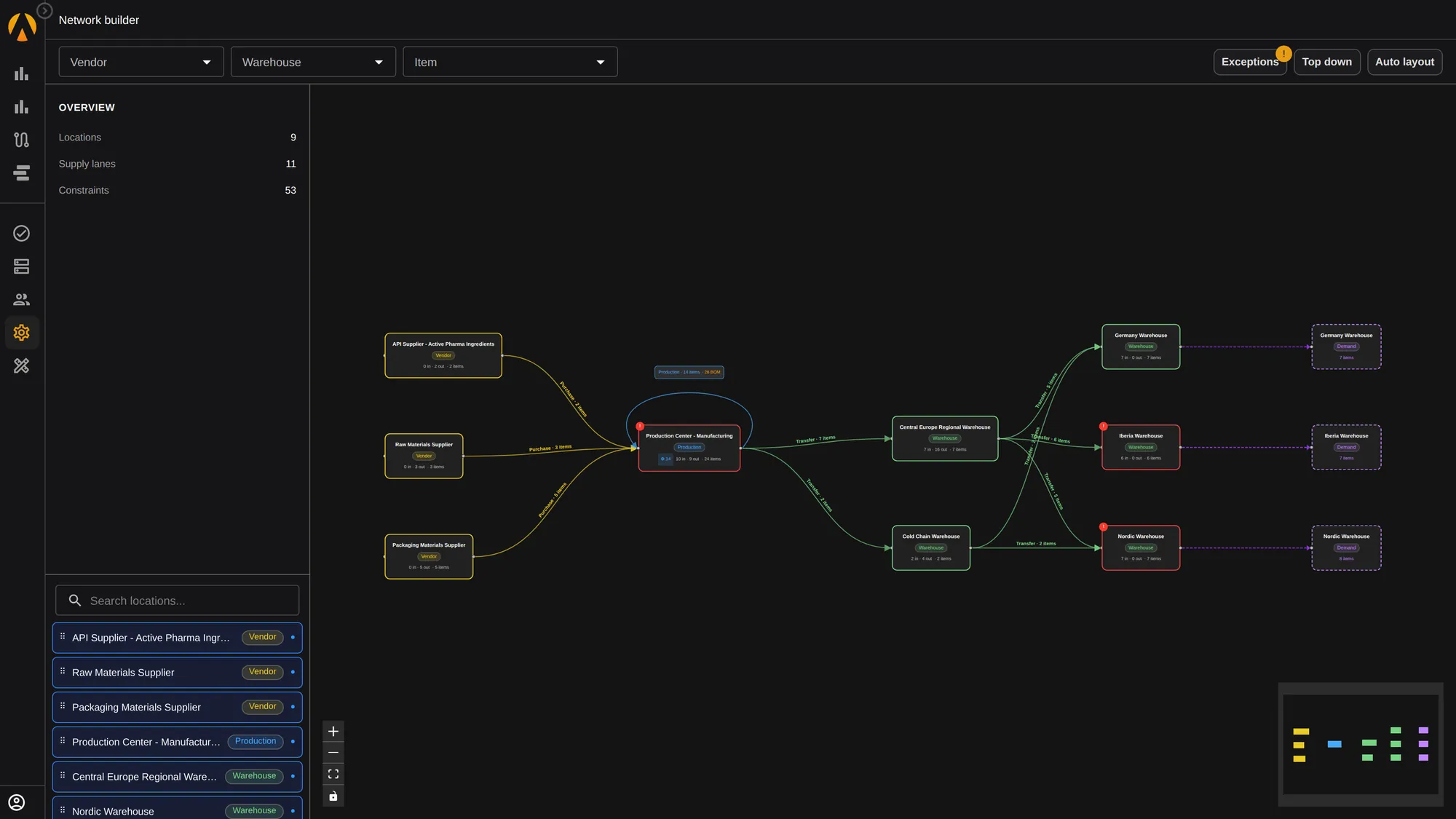
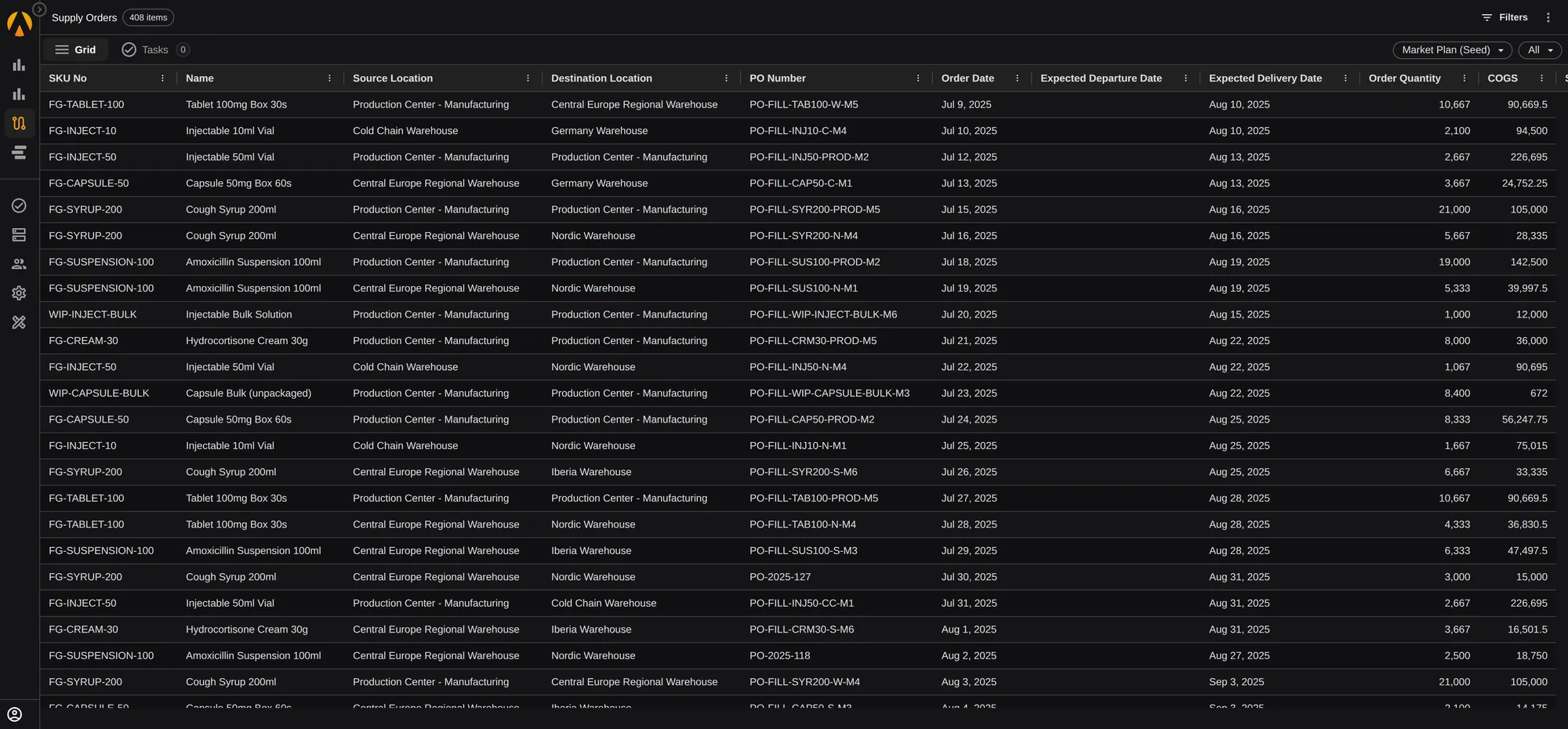
The first step is establishing how data travels between these two systems. Instead of a messy, multi-directional web of inputs, the flow is structurally decoupled. S/4HANA pushes raw master data and daily transactional updates securely via standard APIs to PLAIO. Once a decision is finalized, the approved order suggestions collect in PLAIO’s Supply Orders view and are pushed back to S/4HANA as purchase requisitions and production orders, keeping your financial controls and ERP governance completely intact.
Recognize Why Standalone ERPs Fail on the Shop Floor
SAP S/4HANA manages transactions. It tracks financial ledgers, purchase orders, and warehouse inventory movements with absolute precision. However, a system designed to look backward and record what has occurred is ill-equipped to simulate what will occur.
When you attempt to use SAP for detailed, mid-to-long-range supply chain planning, you run into three walls:
- Calculates critical runs slowly: Running a full Material Requirements Planning (MRP) cycle in SAP takes hours. Because S/4HANA calculates massive arrays of multi-echelon dependencies sequentially, it is scheduled as an overnight batch job, making interactive simulation impossible.
- Obscures visual timelines with rigid interfaces: Planners require a unified view of the entire supply chain. They need a visual timeline where they can drag and drop a production batch to see if it causes a stockout. SAP’s dense, transaction-code-driven screens (such as MD04 or MD11) make this impossible.
- Ignores complex pharmaceutical constraints: Standard ERP modules do not understand pharma constraints. They fail to calculate sequence-dependent setups (like allergen/non-allergen product runs), cleaning validation hold times, or market-specific expiry rules without heavy, expensive customization.
This is why companies are upgrading from Excel to demand planning tools that connect directly to their ERP.
Addressing the Objections: Why Single-System ERP Customization Fails
IT departments and executive leadership frequently present three rational objections to decoupling planning from S/4HANA:
- Data Synchronization Latency: Maintaining a separate planning database introduces the risk of data drift, whereas keeping planning inside S/4HANA ensures a single, real-time database.
- IT Overhead and License Cost: Adding a dedicated third-party tool increases the software footprint and vendor management overhead compared to utilizing existing SAP modules.
- Regulatory Compliance: GxP compliance requires a continuous, audited transaction trail. Moving planning decisions outside the ERP could compromise data integrity.
These concerns are reasonable, but they misunderstand the nature of active planning. While a single-system S/4HANA architecture theoretically eliminates data drift, forcing a transactional database to calculate complex, multi-variable simulations in real time degrades ERP performance. To run a single “what-if” scenario in SAP, planners must create dummy orders, execute a slow MRP run, and manually clean the database afterward.
Decoupling resolves the integration issue by utilizing read-only standard API feeds to duplicate ERP data into a secure planning sandbox. PLAIO acts as this sandbox, allowing planners to run simulations without writing corrupt or unfinished data back to the core ERP. Regarding IT overhead, the cost of custom-coding finite capacity logic and GxP-compliant scheduling rules into S/4HANA easily exceeds the subscription cost of a pre-built engine.
Finally, compliance is strengthened, not weakened. PLAIO records a complete audit trail of every forecast override and scheduling change. The final, approved plans are pushed back to S/4HANA as standard execution drafts (PLAF/BANF). SAP remains the ultimate gatekeeper and transactional system of record, while PLAIO provides the compliant environment for decision-making.
A Detailed Blueprint for PLAIO Integration with SAP S/4HANA
To avoid a multi-year IT overhaul, keep the data flow simple and standard. Use PLAIO’s standard API integration layer to act as a secure, fast bridge. SAP remains your system of record, while PLAIO serves as your interactive simulation workspace. The technical architecture relies on RESTful APIs exchanging JSON payloads, allowing you to feed master and transactional tables directly into PLAIO’s memory-optimized calculation engine.
| Data Domain | Datasets & Fields Included | Direction | Frequency |
|---|---|---|---|
| Master Data Sync | Items (SKUs, Shelf Life), Bills of Materials (BOM), Locations (internal/CMO) | SAP S/4HANA → PLAIO | Weekly (or on-demand) |
| Transactional Sync | On-Hand Inventory (with Batch & Expiry), Firm POs, Process Orders, Customer Orders | SAP S/4HANA → PLAIO | Daily (automated overnight) |
| Closed-Loop Export | Planned Purchase Requisitions (BANF), Planned Production Orders (PLAF) | PLAIO → SAP S/4HANA | On-Demand (planner triggered) |
Step 1: Sync Master Data Weekly
Master data defines the skeleton of your supply chain. Since these records do not change daily, they only need to sync periodically. Configure S/4HANA to pass three datasets to PLAIO:
- Extract item profiles: S/4HANA sends your product list, including SKU codes, descriptions, unit costs, and shelf-life parameters. This forms the basis of your inventory evaluation.
- Map Bills of Material (BOMs): Transmit the hierarchical relationships between finished goods, bulk products, intermediates, and active pharmaceutical ingredients (APIs). This allows PLAIO to calculate component needs when a forecast changes.
- Define physical locations: S/4HANA maps your physical nodes, such as internal production plants, external contract manufacturers (CMOs), and regional warehouses. In PLAIO, managing multi-site locations ensures that inventory is tracked where it sits, preventing duplicate planning buffers.
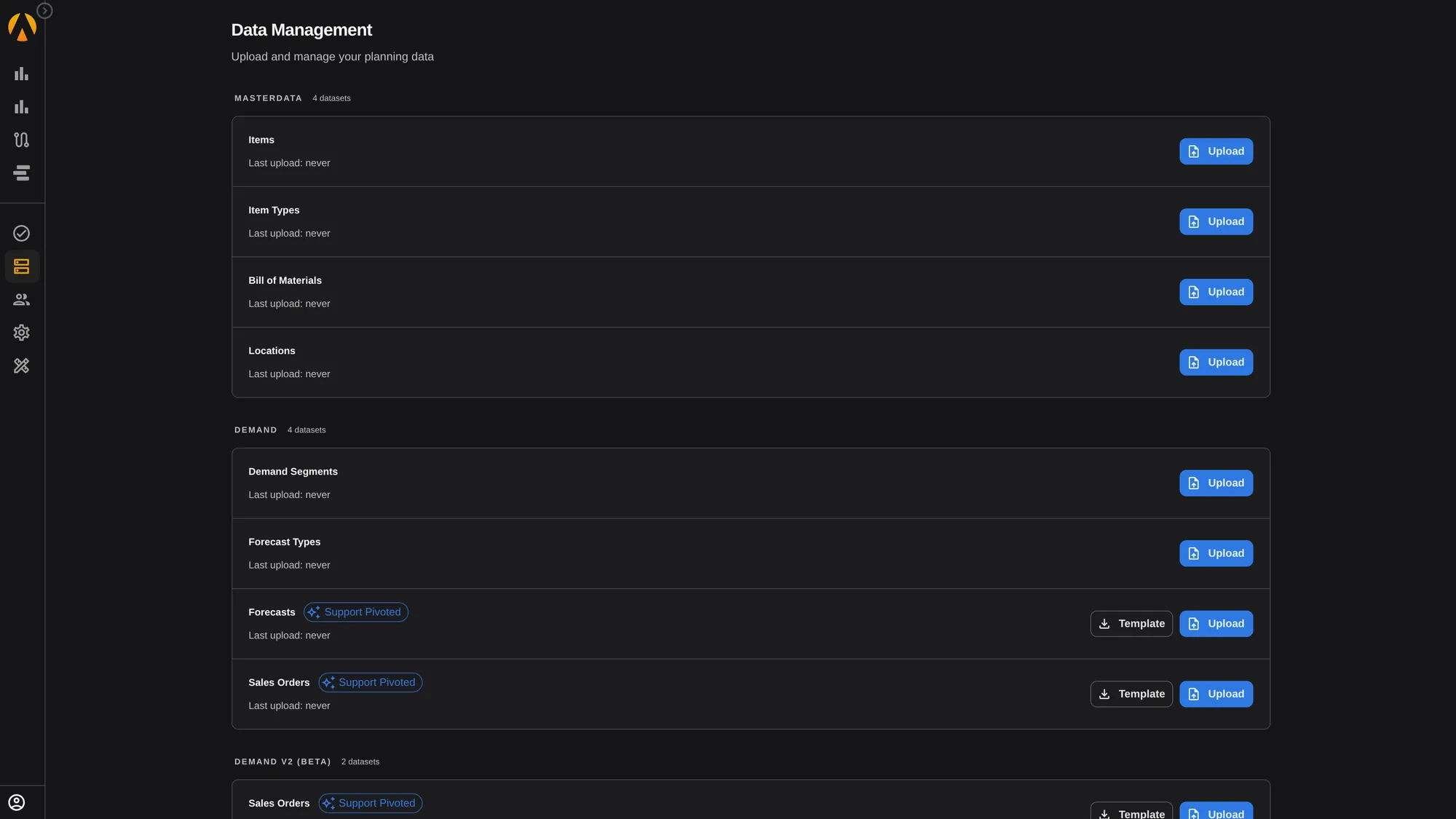
Planners manage and review these structural records in the central pharma data management portal to ensure alignment before running a simulation. In this data workspace, a clean, tabular log shows the status of imports. This log validates reference integrity in real time, alerting you with specific cell coordinates if a newly imported BOM references an Item SKU that does not exist, preventing corrupt configurations from reaching the planning board.
Step 2: Automate Transactional Data Flows Daily
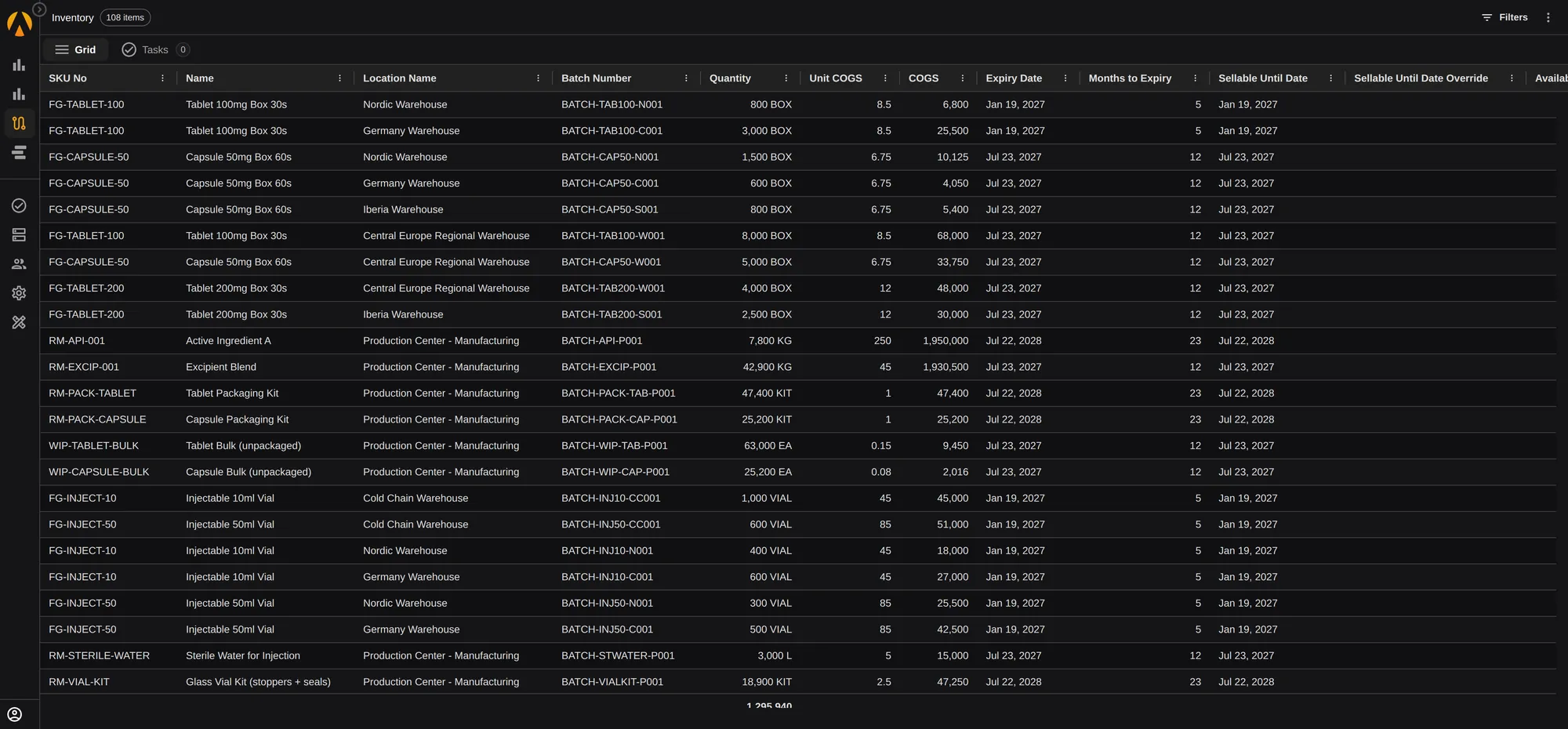
To make accurate planning decisions, feed current transactional data from S/4HANA to PLAIO on a daily automated schedule. Your PLAIO integration with SAP S/4HANA will extract inventory balances directly from SAP’s warehouse management tables (such as MARD or batch stock tables like MCHB) to ensure the planning board reflects real-world floor levels.
- Capture on-hand inventory: Extract stock levels, including batch numbers and expiration dates.
- Track active supply orders: Sync active Purchase Orders (POs) and Production Orders committed with vendors or scheduled on lines.
- Import commercial demand: Feed open customer sales orders and sales history to ensure accurate demand pictures.
Step 3: Enable Closed-Loop Export for Instant Execution
Once you use PLAIO to optimize your plan and resolve exceptions, automatically package approved order suggestions and push them back into S/4HANA as draft purchase requisitions (BANF) or planned production orders (PLAF). This step minimizes manual transcription errors, ensuring that final execution, financial posting, and warehouse controls remain securely inside SAP.
Align Your Forecasts to Eliminate Production Firefighting
When demand planning and supply planning live in separate systems, the result is operational chaos. Commercial teams build forecasts based on sales targets, while production teams build schedules based on machine uptime. When these views drift apart, you get stockouts or write-offs of expired stock — a devastating outcome given that shortages of essential medicines lasted a median of 4.0 years[1], representing 29.4% of all products in shortage.
By bringing S/4HANA actual sales history into PLAIO’s advanced demand planning module, you can immediately begin aligning demand and supply variables.
Instead of relying on rigid, backward-looking spreadsheets, utilize PLAIO’s AI-driven algorithms trained on your global portfolio. Planners can review the details of this machine learning forecasting model to understand how it uses global portfolio data to generate stable forecasts, even for new product launches with no sales history.
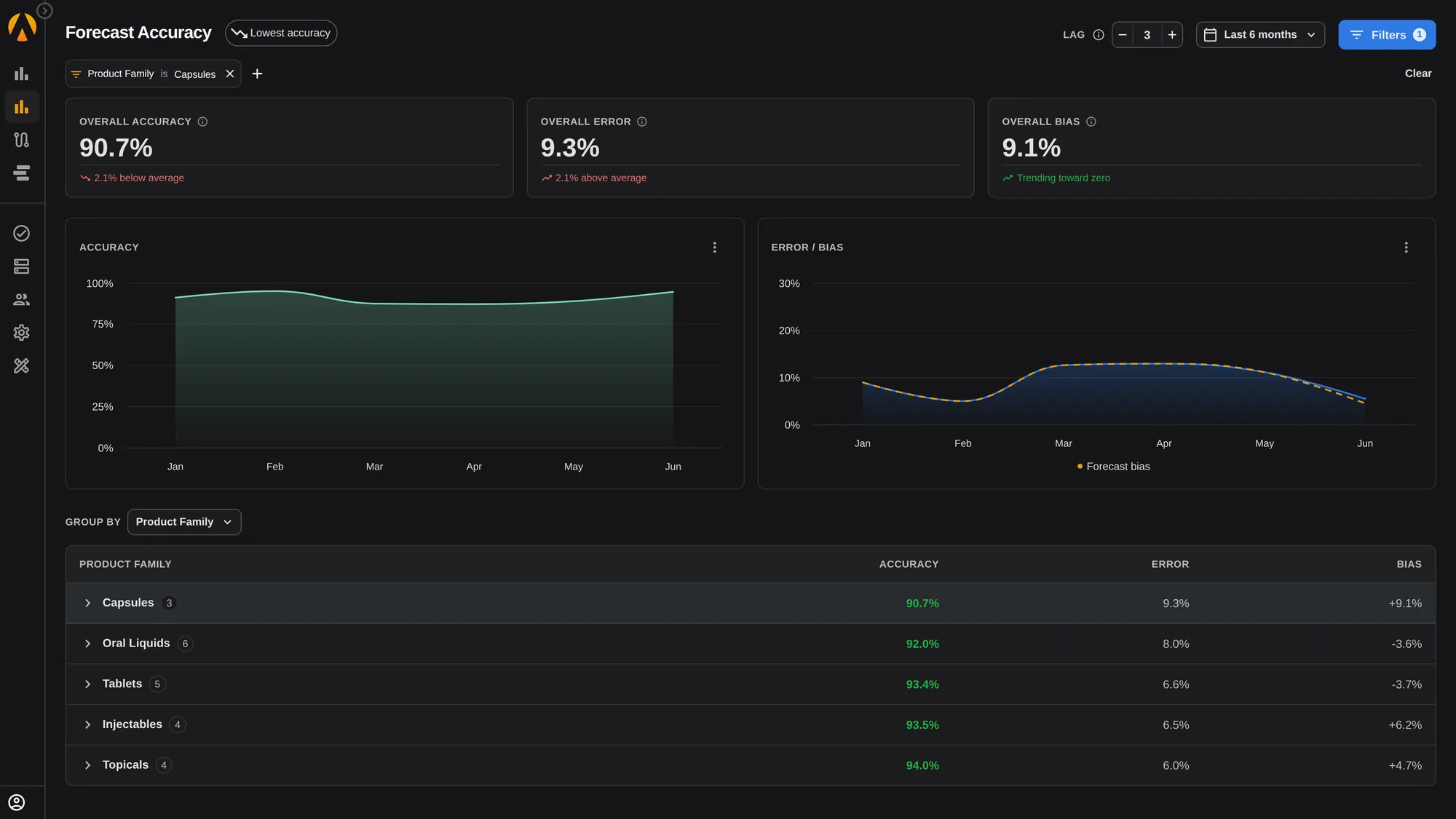
When you load historical sales from SAP, the system automatically measures forecast quality using error and bias forecast metrics. This identifies which products have systematic over-forecasting (which leads to waste) and which suffer from under-forecasting (which leads to stockouts).
To visualize the practical power of this alignment, consider a comparison between a classic spreadsheet-driven demand graph and PLAIO’s Machine Learning forecast. A spreadsheet forecast is jagged and reactive; it treats every historical demand spike or tender delay as a trend shift, forcing production teams to constantly shuffle machine setups. In contrast, PLAIO filters out transactional noise to generate a smooth, mathematically validated baseline forecast. By separating true demand signals from temporary volatility, the production team plans steady, optimized campaigns while the sales team layers in manual market intelligence without overriding the core analytical baseline.
Protect Your Margins by Minimizing API and Excipient Waste
In pharmaceutical manufacturing, active pharmaceutical ingredients (APIs) and excipients represent high capital costs. Yet, companies discard valuable raw materials every year because they expire in warehouses — a massive waste considering that nearly 80% of manufacturing facilities producing active pharmaceutical ingredients (APIs) are located outside of the U.S.[2]
This material loss is not a failure of the warehouse team. It is a failure of the planning process. When your ERP does not show the expiry dates of starting materials alongside your production campaigns, planners operate without visibility, which is highly problematic since drug manufacturing facilities typically operate above 80% capacity[1], making it difficult to increase production during supply disruptions without substantial capital cost.
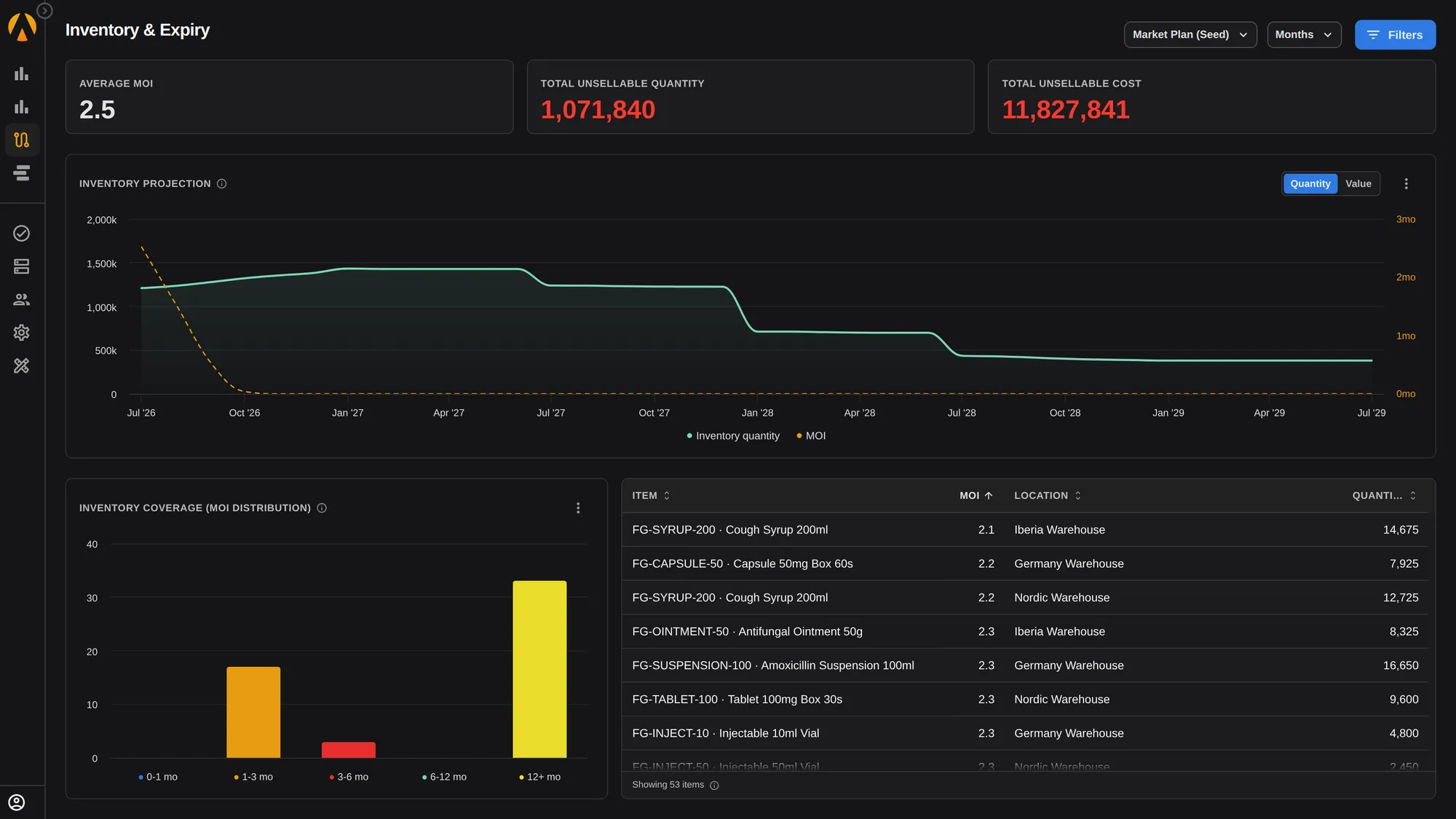
The system flags short-dated inventory and alerts you if a raw material batch is scheduled for a production run that starts after the material has expired. Rather than discovering expired materials when the operator opens the drum on the shop floor, planners receive visual warnings in advance, allowing them to shift production schedules and save the batch.
To manage this risk, planners utilize PLAIO’s time-phased inventory batch chart. This chart displays individual raw material batches as stacked bars plotted over time. Active, usable batches are color-coded in green, indicating that their shelf life falls within the required allocation window for scheduled manufacturing runs. However, as batches approach their minimum remaining shelf-life threshold, the system flags them with red warnings. If a planner schedules a production run that consumes a red-flagged batch past its usable date, the system triggers an immediate exception, allowing you to pull forward campaigns or renegotiate supplier shipments before write-offs occur.
Deploy Your Integrated System Using a Four-Step Roadmap
Decoupling S/4HANA transactional records from planning execution uses a clear, structured roadmap. You do not need to rewrite your ERP database or hire an army of systems integrators. The PLAIO integration with SAP S/4HANA establishes a reliable, bi-directional loop that aligns corporate ledger tracking with actual manufacturing throughput.
This four-step roadmap implements the integration:
- Define physical locations: Start by mapping your locations — plants, warehouses, and CMOs. This ensures that managing multi-site locations is consistent across both systems from day one.
- Onboard your master data: Use PLAIO’s templates for guided onboarding to upload your Items, BOMs, and locations. This takes days and establishes your structural framework.
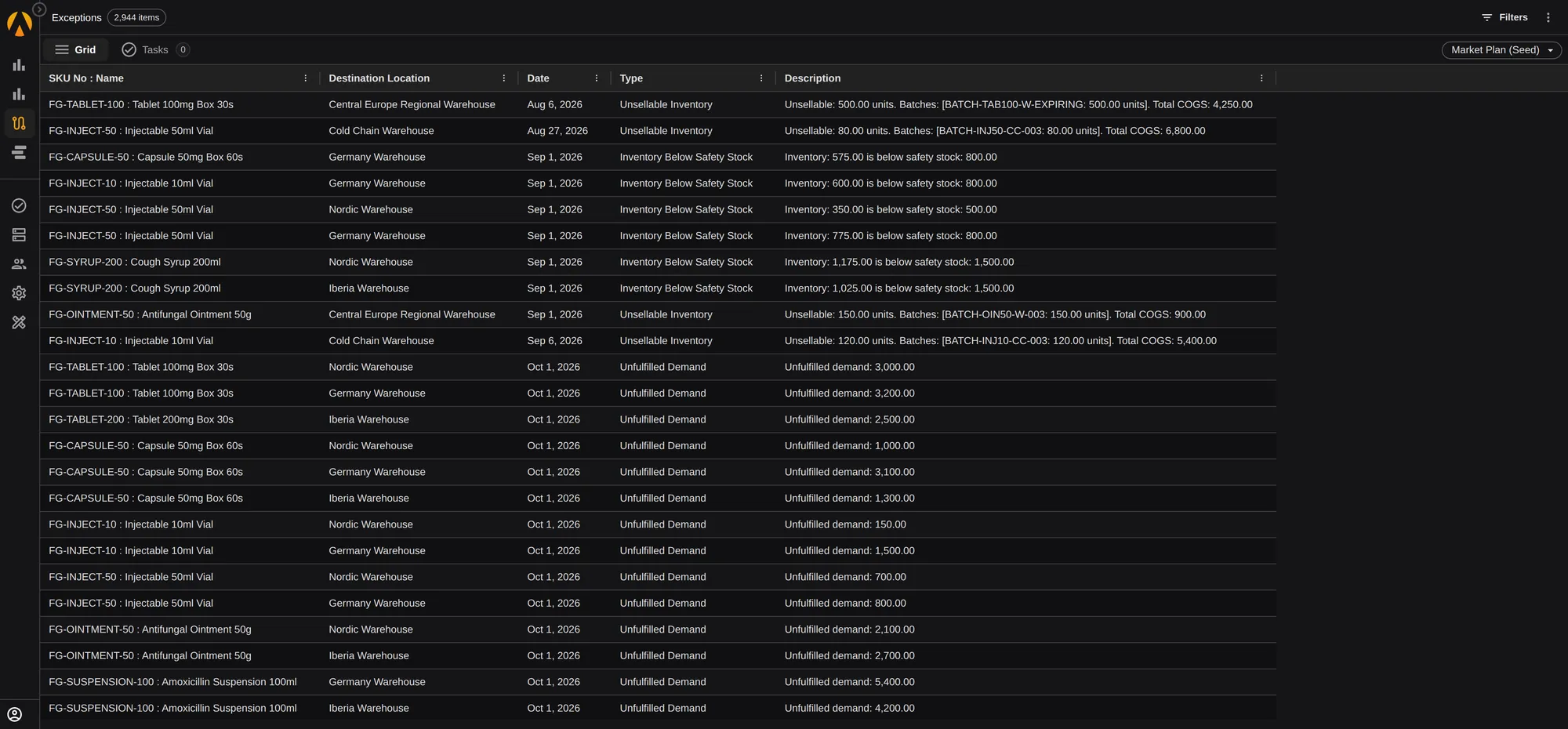
- Activate daily data syncs: Connect your daily transactional feeds from SAP (on-hand inventory, open orders). Once loaded, PLAIO’s real-time exception management automatically highlights stockout risks, late orders, and supply bottlenecks.
- Execute what-if simulations: Train your planners to use the interactive Gantt boards and the Coplanner AI to test alternative schedules. They resolve exceptions, optimize resource utilization, and push the firmed decisions back to SAP in seconds.
Following this phased approach achieves an integrated, audit-ready supply chain planning system that keeps your operations agile, compliant, and cost-efficient. The end result is a resilient, modern enterprise that leverages the robust transactional nature of SAP while utilizing PLAIO to run a highly responsive, optimized planning operation.
To see how this integration works with your S/4HANA setup, book a demo request with one of our pharma supply chain experts today.
References
- “Drug Shortages: Data Brief.” Office of Science and Data Policy, Office of the Assistant Secretary for Planning and Evaluation (ASPE), U.S. Department of Health and Human Services, 10 January 2025. https://aspe.hhs.gov/sites/default/files/documents/efa332939da2064fa2c132bb8e842bb5/Drug%20Shortages_Data%20Brief_Final_2025.01.10.pdf
- “Short Supply: The Health and National Security Risks of Drug Shortages.” United States Senate Committee on Homeland Security and Governmental Affairs, 2023. Majority Staff Report. https://www.hsgac.senate.gov/wp-content/uploads/2023-06-06-HSGAC-Majority-Draft-Drug-Shortages-Report.-FINAL-CORRECTED.pdf