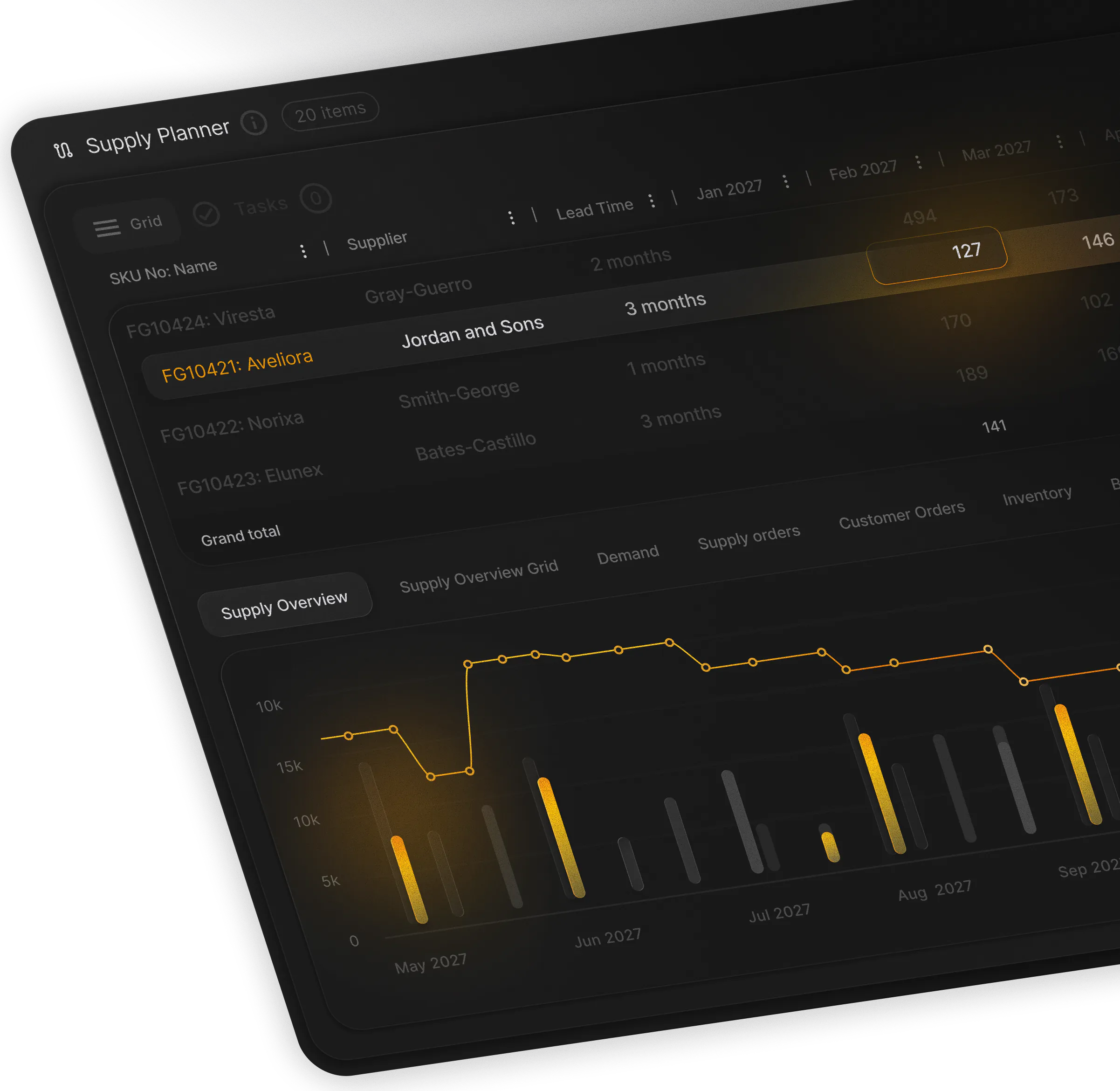


Effective demand planning in the pharmaceutical industry is a non-negotiable for patient health, yet traditional methods are fundamentally failing. Planners are trapped in spreadsheets, reconciling conflicting forecasts while navigating the sector’s unique supply chain challenges: long lead times, rigid batch sizes, and immense regulatory pressure.
The Core Challenges of Demand Planning in the Pharmaceutical Industry
To fix the problem, we first have to appreciate its unique factors in our industry. Every industry faces planning challenges, but the pressures in pharma are made worse by generic planning tools. It’s a constant tightrope walk between the human cost of a shortage and the immense financial pressure of waste from expiry.
Map Your Unique Pharmaceutical Constraints
The consequences of a bad forecast in pharmaceuticals are delayed, severe, and expensive. First, the timelines are brutal. The lead time for an active pharmaceutical ingredient (API) can stretch for months, sometimes over a year. A decision you make today based on a commercial forecast won’t manifest as a finished product until late next year. By the time you realize a mistake, the correction is already painfully slow.
Second, manufacturing is rigid. You can’t just make one more bottle. Production happens in validated, fixed-batch sizes, and changeovers between products require deep cleaning and verification that takes time and money. This creates a natural conflict between a volatile commercial forecast and an inflexible manufacturing schedule, a struggle we solve when helping companies align their commercial and operational plans. Managing shelf-life and regulatory requirements adds another layer of complexity.
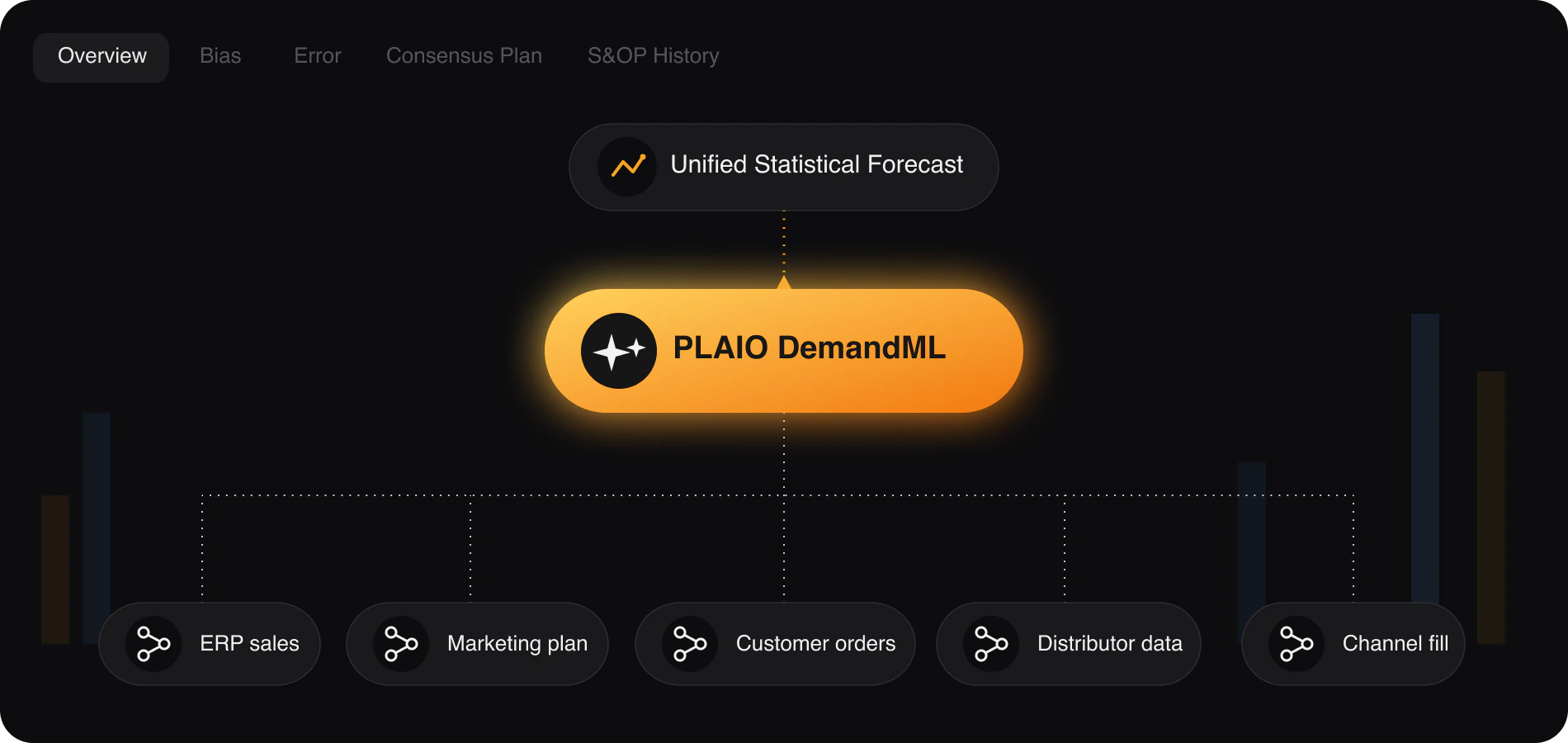
Finally, the data is a mess. Many planners are forced to be historians because they spend their time piecing together fragmented information. Sales history comes from the ERP, commercial forecasts live in a marketing spreadsheet, and distributor inventory data arrives in a monthly email. It’s a vicious cycle: bad data leads to bad guesses, which undermines trust in the system and discourages investment in fixing the data. A modern planning system breaks this cycle by becoming the single source of truth and a core pillar of your data management strategy.
Escape the Spreadsheet Trap
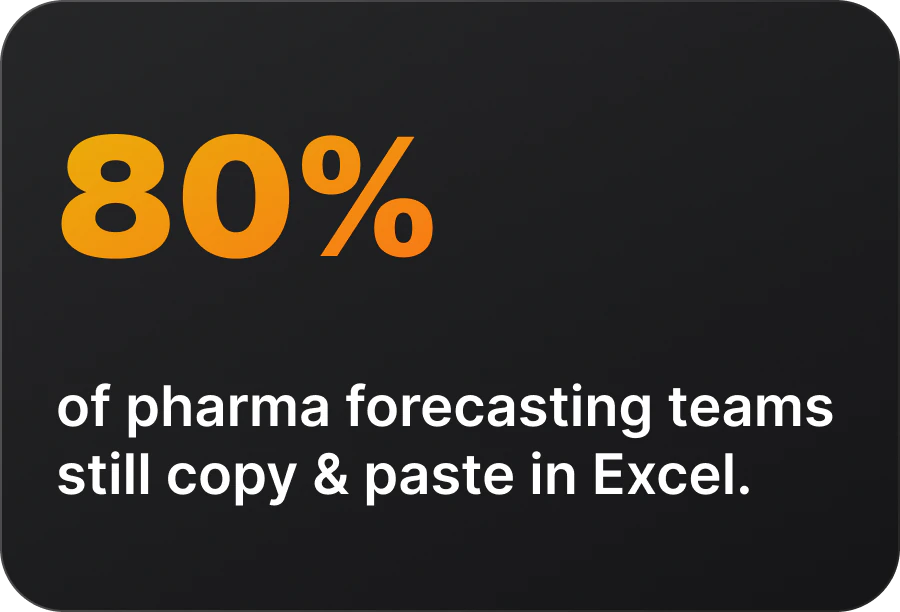
Given the chaos, it’s no surprise that planners reach for what they know. The reality is that planners are drowning in manual work, with studies showing over 80% of pharma forecasting teams use Excel to manually copy and paste data[1]. Spreadsheets are familiar, infinitely flexible, and feel “free.” When you have a unique problem, it’s tempting to build a custom solution in Excel.
But that flexibility is a trap. While spreadsheets offer total control, that control is an illusion. Spreadsheet-based planning inevitably breaks under complexity. What starts as a simple model becomes a web of interlinked files, fragile VLOOKUPs, and hidden macros. Version control descends into chaos. Is “Final_Forecast_v3_J.T.O_edits.xlsx” the real one? This isn’t a hypothetical; it’s a daily reality for too many teams.
Worse, it’s a massive compliance risk. An error in a formula is a potential GxP violation with serious consequences. There’s no audit trail to trace why a decision was made. You cannot build a resilient supply chain on a foundation that can be broken by one accidental keystroke.
Step 1: Build a Resilient Demand Planning Process
Fixing demand planning isn’t about finding a mythical, perfect forecasting algorithm. It’s about building a better, more resilient process supported by modern tools. The goal isn’t to chase a perfect number but to build a collaborative system that embraces reality. From my experience working with planners to design better systems, this comes down to three core principles.
Decode Demand Signals Instead of Chasing a Number
Too many planning meetings get bogged down in arguments over a single number. The real goal of demand sensing is to understand the signals driving that number. A large order from a distributor, for example, is often to fill their own warehouse (channel fill), not because of a sudden spike in prescriptions. If you react to that order as if it’s new end-patient demand, you’ll create a classic bullwhip effect that sends shockwaves through your supply chain.
To fix this, you need to segment your demand. A modern process separates firm customer orders from the statistical forecast. It distinguishes between different markets, channels, or tenders. When you have consolidated global demand visibility, you can see if a dip in one region is offset by growth in another. This clarity lets you understand what’s truly driving your business and escape the friction in the relationship between demand and supply planning.
Measure Forecasts to Improve, Not to Blame
This sounds cynical, but it’s liberating: your forecast will always be wrong. No model, no matter how advanced, will ever be 100% accurate. The goal is not perfection; it’s to be less wrong and to react faster when reality inevitably deviates from the plan. This shift starts with how you measure performance, moving beyond the industry baseline where historical surveys found pharma SKU forecasts had a 26% Mean Absolute Percentage Error (MAPE) for a 1-month horizon[2]. Instead of just looking at forecast accuracy as a pass/fail grade, use it as a diagnostic tool.
We focus on two key metrics: Error and Bias. Error tells you the magnitude of the misses — how far off were you? Bias tells you the direction — are you consistently over-forecasting or under-forecasting? High error with low bias means your demand is volatile but your forecast is centered, with misses on both sides that cancel out. High bias means the misses consistently lean one way, like a sales team that always pads its numbers, so the error never averages away. You can learn more about this in our documentation on forecasting performance evaluation. Understanding this distinction is the first step to reducing forecast errors in a meaningful way.
Unify Planning with a Structured S&OP Cadence
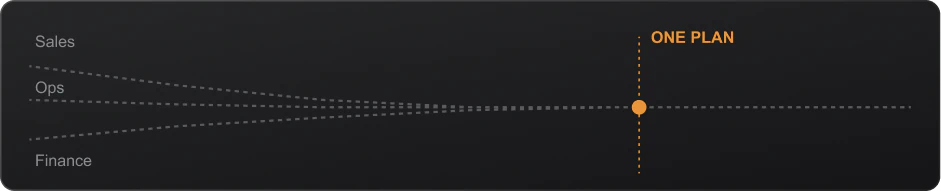
The most accurate forecast in the world is useless if it exists in a silo. True alignment happens when sales, marketing, finance, and operations all commit to a single, unified plan. This process is called Sales and Operations Planning (S&OP), and it’s the forum where the real work of building a resilient business happens. It’s not about endless meetings; it’s a structured monthly cadence that forces the right conversations, which is critical when 97% of sales and finance leaders say their teams need to work better together to improve forecasting.
An effective S&OP process, sometimes called Integrated Business Planning (IBP), is where you debate the forecast, model different scenarios, and agree on one consensus plan. It’s where you make trade-offs visible and decisions deliberate. For example, if marketing wants to pull a product launch forward, the S&OP forum is where operations can immediately show the impact on API procurement and line capacity. With modern tools, this becomes a collaborative workspace for consensus planning, not just another PowerPoint deck. Everyone sees the same numbers and understands the consequences of their decisions, turning planning into a true team sport.
Step 2: Equip Your Team with Modern Planning Tools
A new process requires a new toolkit. The principles of modern planning — treating demand as a signal, embracing imperfection, and collaborating through S&OP — are only feasible with technology that automates grunt work and connects the plan to reality. Spreadsheets can’t do this, but modern platforms can.
Use AI to Automate Grunt Work and Elevate Planners
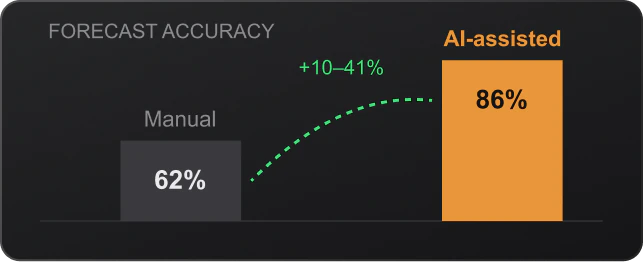
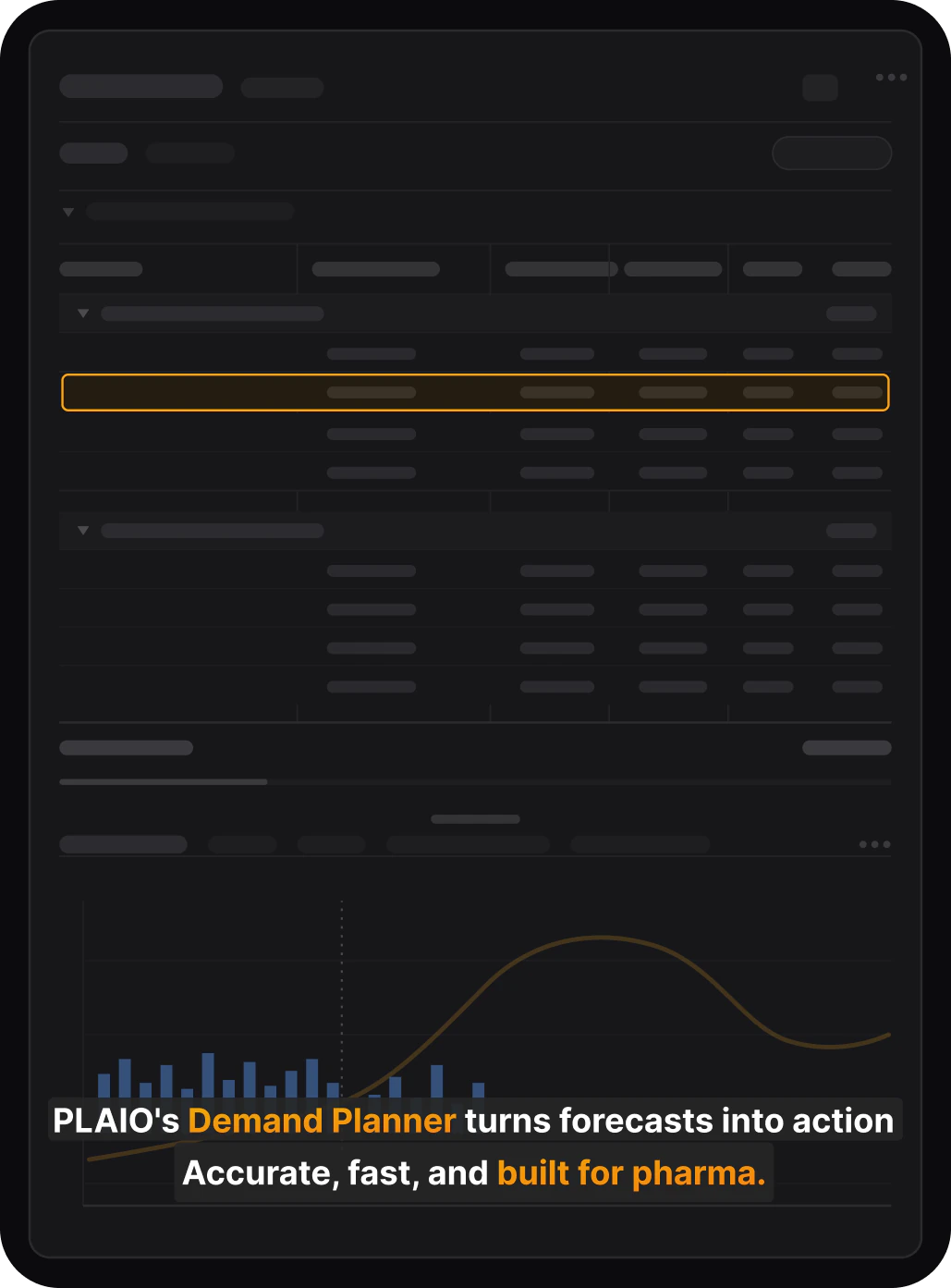
There’s a lot of hype around how AI and machine learning are transforming demand planning. From a practical standpoint, the biggest benefit of AI-powered predictive analytics is automating the low-level, time-consuming work to elevate the planner. An ML model can analyze years of sales data, detect subtle seasonality, and generate a baseline statistical forecast for thousands of SKUs in minutes, with research showing that machine learning algorithms can improve pharmaceutical demand forecasting accuracy by 10% to 41%[3].
Test Plans Instantly Against Real-World Constraints
A demand plan is a hypothesis about the future. A unified planning system is how you test that hypothesis against the hard constraints of reality — instantly. Once you have a consensus demand plan, it must be translated into a feasible execution plan that respects all the real-world pharma constraints we discussed earlier, from manufacturing capacity to safety stock levels.
Do we have enough raw materials? Is there available capacity on the packaging line? In a connected system, a 10% increase in a forecast doesn’t just change a number in a cell; it automatically shows you the required purchase orders and the impact on your production schedule. This is the goal of unified planning: to create a digital twin of your supply chain where you can run scenario planning and see the end-to-end impact of a decision before committing to it.
Step 3: Empower Planners to Shift from Firefighter to Strategist
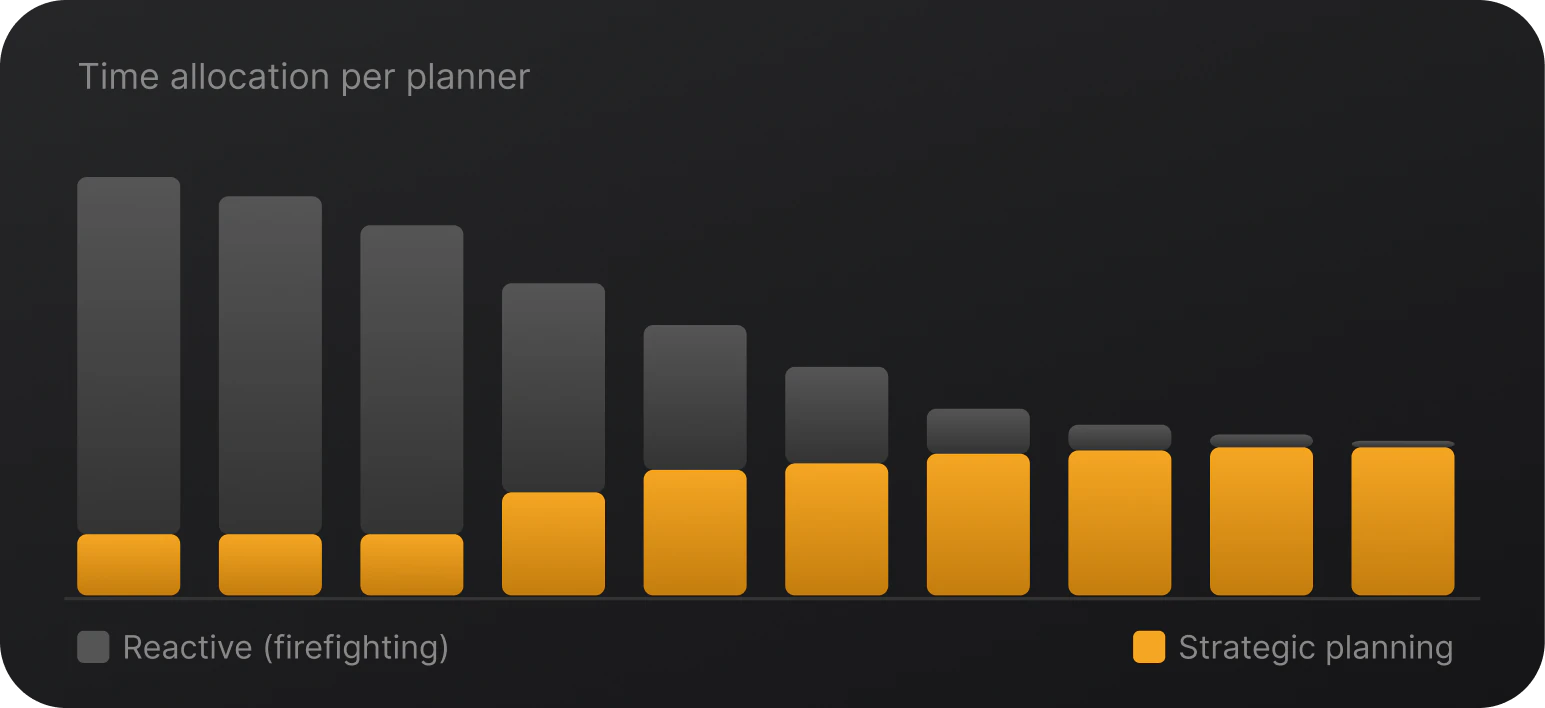
Let’s go back to the planner trapped in “spreadsheet hell.” He was stuck in a reactive loop, constantly fighting fires and explaining past failures. His days were consumed by reconciling data from last month, leaving no time to think about next quarter. This is not a sustainable way to run a pharmaceutical supply chain, nor is it a fulfilling job.
A resilient process, enabled by modern tools, transforms the very nature of that work. It moves planners from being data mechanics to being business strategists. When a machine learning model generates the baseline forecast, the planner’s time is freed up to focus on higher-value questions. They can now analyze the risks of a single-source API, model the supply plan for a new product launch, or work with sales to understand a sudden dip in a key market. Their value shifts from reconciling the past to shaping the future.
This is where my background in design comes full circle. The best tools don’t just automate tasks; they empower the user to do their best, most valuable work. For a pharma demand planner, that means turning down the noise of data chaos so they can focus on the signal that matters. It’s about giving them the visibility and confidence to make strategic decisions that have a real impact on the business and, ultimately, on patient care.
Building a More Resilient Healthcare System
The path to fixing demand planning in the pharmaceutical industry is clear. It requires a decisive move away from fragmented spreadsheets and a commitment to a new way of working. By unifying the demand signal, embracing imperfection through better metrics, and connecting the plan to reality, pharmaceutical companies can do more than just improve efficiency. They can build a more reliable and resilient supply chain for essential medicines, ensuring that a stockout is a rare exception, not a routine crisis. That is the work we’re doing at PLAIO, and it’s a mission worth the effort. If you’re ready to move beyond the spreadsheet, let’s talk.
References
- Johnston, Rick, David Wolter, and Alexandra Tataru. “Commercial Pharma Forecasts Are Surprisingly Inaccurate: Here Are 5 Ways to Make Them Better.” IQVIA (blog), 6 February 2020. https://www.iqvia.com/blogs/2020/02/commercial-pharma-forecasts-are-surprisingly-inaccurate-here-are-5-ways-to-make-them-better
- Kolassa, Stephan. “Can We Obtain Valid Benchmarks from Published Surveys of Forecast Accuracy?” Foresight: The International Journal of Applied Forecasting, Fall 2008. No. 11, pp. 6–14. International Institute of Forecasters. https://forecasters.org/wp-content/uploads/Valid-Benchmarks-from-Published-Surveys-of-Forecast-Accuracy_Foresight11.pdf
- Yani, Luh Putu Eka, and Ammar Aamer. “Demand Forecasting Accuracy in the Pharmaceutical Supply Chain: A Machine Learning Approach.” International Journal of Pharmaceutical and Healthcare Marketing, 2023. Vol. 17, no. 1, pp. 1–23. doi:10.1108/IJPHM-05-2021-0056. https://www.emerald.com/ijphm/article/17/1/1/459755/Demand-forecasting-accuracy-in-the-pharmaceutical