
Key Takeaways
-
Planning is no longer a data problem. It is an execution problem.
-
Scenario planning is becoming essential to avoid coordination delays during disruptions.
-
Agentic AI is shifting from insight to action, handling exceptions and re-planning automatically.
-
Production scheduling remains the biggest operational gap, especially in batch environments.
-
Mid-market pharma companies are moving away from spreadsheets toward systems that reflect real constraints.
Companies with well-established planning systems are still finding it hard to respond when conditions change. The main challenge is getting teams, systems, and decisions aligned quickly enough to act with confidence.
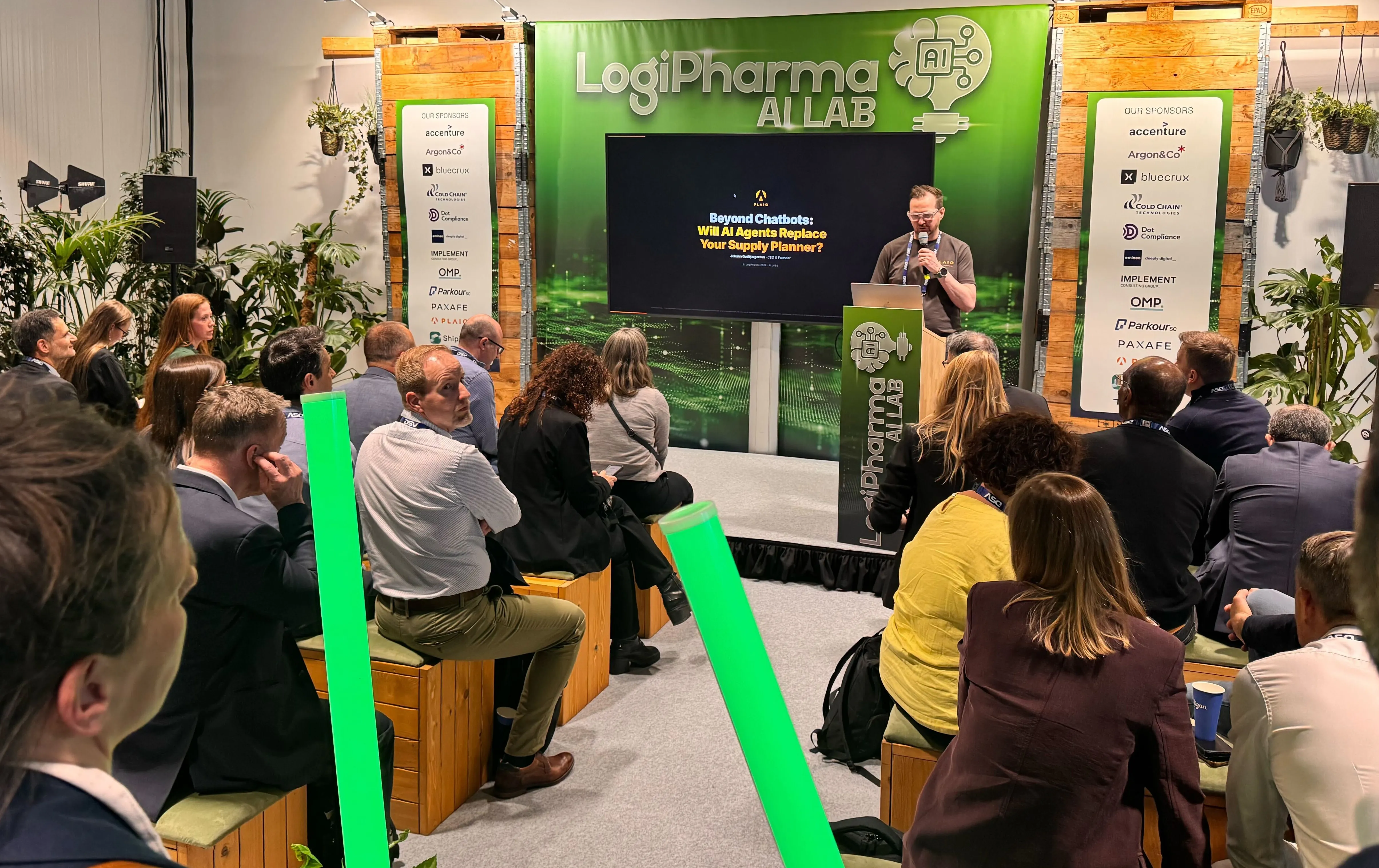
That came up again and again at LogiPharma 2026.
Across sessions and conversations, there was a consistent theme. Planning environments are becoming more complex, with more inputs, more dependencies, and more pressure to react faster. But the way teams coordinate their work hasn’t kept pace with that change.
This gap is especially visible in mid-sized pharmaceutical companies that find themselves to large for spreadsheets and too small for larger cross-industry solution vendors out there.
Companies are still relying too heavily on spreadsheets or working with tools that were never fully implemented across the organization. When something shifts, it becomes difficult to understand the impact, agree on a plan, and move forward without delays.
What’s becoming clear is that planning needs to change. Static workflows and disconnected tools aren’t enough anymore. Teams need structured context that helps them understand what’s happening, what it means, and what to do next.
In this post, we break down the key takeaways from LogiPharma 2026 and what they tell us about how pharma supply chains are evolving.
Scenario Planning Is Now an Operational Requirement
Scenario planning has shifted from a periodic exercise to a continuous operational capability. When disruption hits, teams face a coordination problem before they face a decision problem. Data must be validated. Assumptions must be checked. Ownership must be clarified. This creates a delay at the exact moment speed is required.
Organizations that invest in scenario preparation avoid this. They already understand:
-
Where risk sits across suppliers and production
-
Which contingency plans are viable
-
How trade-offs impact cost and service
This preparation removes the need to rebuild context under pressure. The impact is practical:
-
Faster execution during supply disruptions
-
Reduced cognitive load on planning teams
-
Clear ownership across functions
Scenario planning is no longer about predicting outcomes. It is about enabling immediate response when conditions change.
The Mid-Market Planning Gap Is Driving Immediate Action
The planning gap in mid-market pharma is real, and it is moving. Many companies still operate with Excel-based demand planning, manual capacity/supply planning and production scheduling, and limited integration across planning layers. These setups do not just slow teams down. They break under complexity.
Multi-site operations, regulatory constraints, and product variability create dependencies that spreadsheets cannot manage effectively. Planning tools often cover only part of the workflow, while production scheduling remains disconnected.
A large portion of planning effort is still spent on coordination work, including integration management, exception triaging, and reconstructing context across systems.
As a result, S&OP cycles lag behind operational reality. Companies are no longer maintaining these setups. They are replacing them, and faster than before. The requirement is practical. Systems must reflect operational complexity without introducing the overhead of large enterprise platforms.
Agentic AI Is Moving from Insight to Action
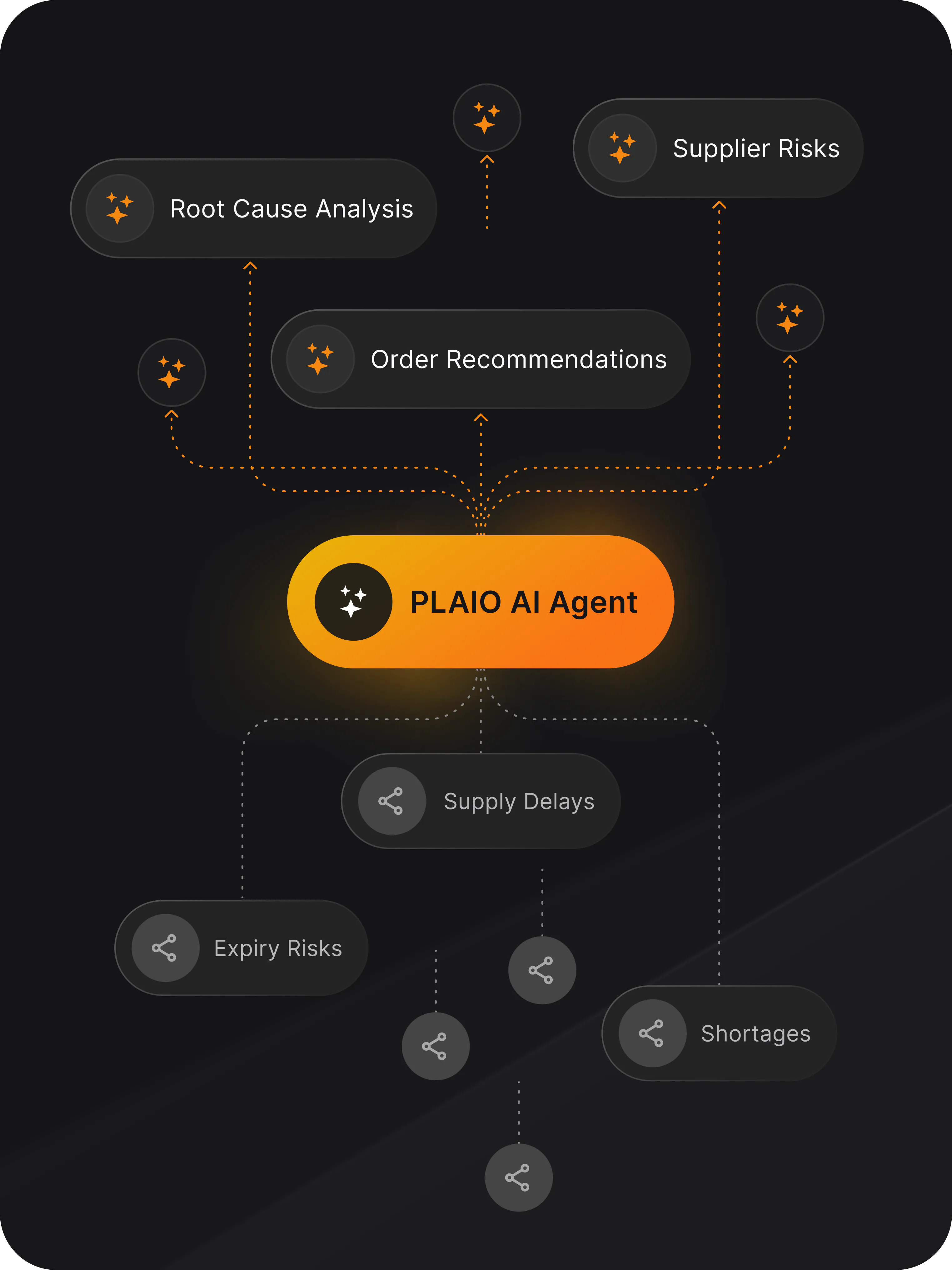
AI is no longer evaluated based on reporting capability. The focus has shifted to execution. Agentic AI introduces a different operating model. It does not stop at surfacing insights. It preemptively provides options and acts on them.
The sequence is structured:
-
Detect what changed in the supply chain
-
Provide context on why it changed
-
Provide options and guide users through steps
-
Trigger appropriate actions
This reduces the need for planners to manage routine coordination tasks. In practice, this can look like:
-
A delay in raw material supply triggers an automatic re-plan of production
-
A demand spike is adjusting supply allocation across sites
-
Integration issues are being resolved without manual intervention
These actions remove friction from the planning process. Explainability remains essential. In a regulated environment, every recommendation must be traceable to its underlying assumptions. A broader shift is also emerging. The priority is moving from collecting more data to building systems that provide context for decision-making.
Production Scheduling Remains the Core Constraint
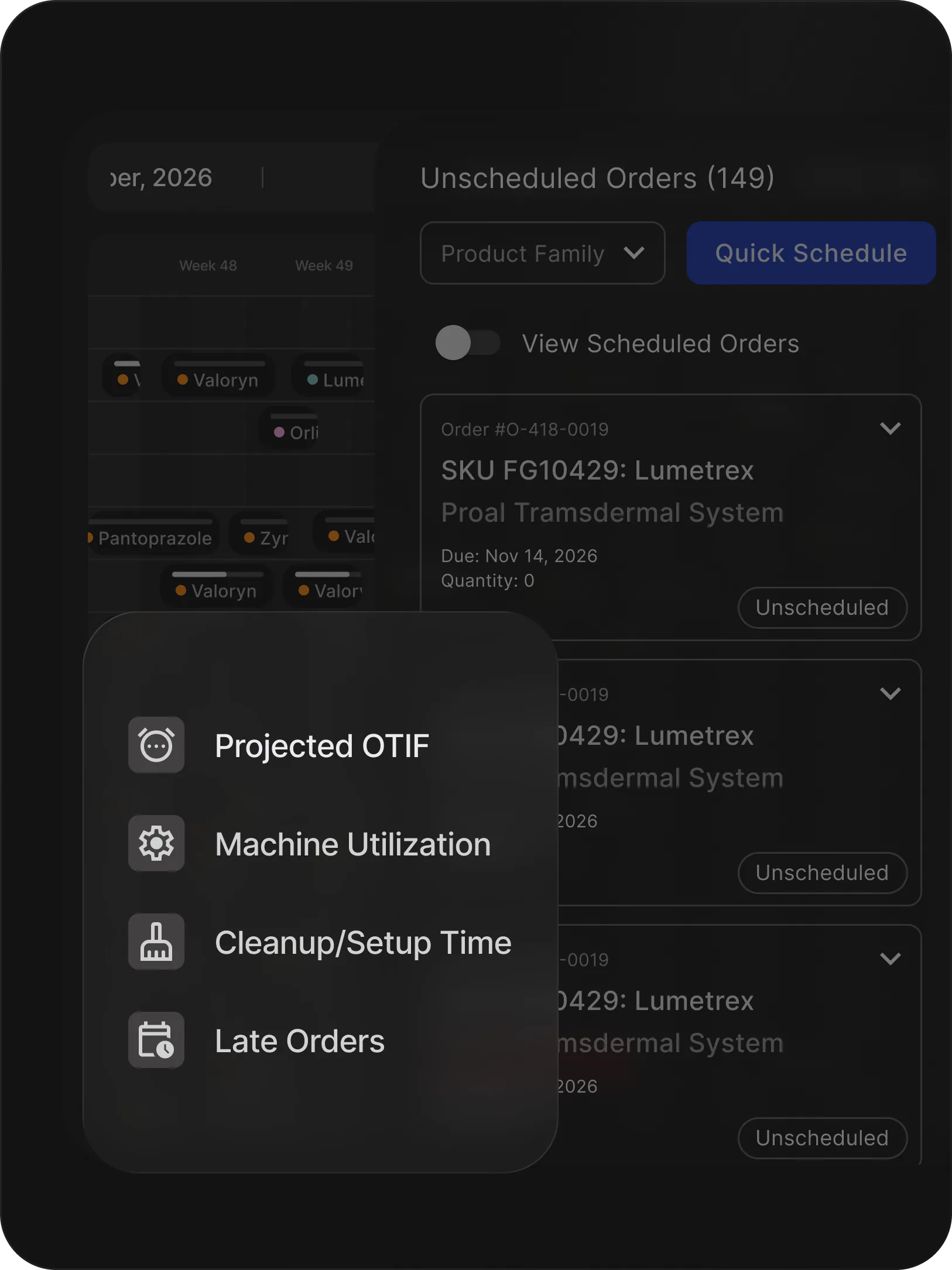
Production scheduling remains the most consistent operational bottleneck. Pharma manufacturing introduces constraints that are difficult to model:
-
Batch production with fixed campaign structures
-
Cleaning and changeover requirements
-
Expiry-driven inventory limitations
-
Regulatory release timing
Many planning systems do not fully account for these constraints. As a result, scheduling is often managed manually or through disconnected tools. This creates misalignment between demand and production, limits visibility across sites, and leads to inefficient campaign sequencing.
Even companies with enterprise systems report gaps at the shop floor level. Coverage often stops at high-level planning, leaving production execution under-supported. This highlights a clear need. Planning systems must extend into production scheduling and reflect real manufacturing constraints.
External Pressures Are Increasing Planning Complexity
Supply chain challenges are increasingly driven by external forces. Several pressures are shaping planning decisions:
-
Tariff volatility affecting sourcing strategies
-
Regulatory changes linked to the EU Pharma Package
-
Continued reliance on global API supply chains
These factors introduce uncertainty that cannot be managed with static plans. Organizations are responding by increasing focus on risk visibility. This includes:
-
Monitoring supplier health
-
Understanding component-level dependencies
-
Identifying contingency options
A key limitation remains. Many systems return data without context. This shifts the burden of interpretation to planners. That approach no longer scales. Planning systems must connect data points and present a clear view of risk and impact.
S&OP Is Moving Into the Leadership Layer
Sales and Operations Planning is becoming more central to business decision-making. Participation is expanding beyond planning teams. It now includes:
-
Supply chain leadership
-
Commercial stakeholders
-
Senior executives
This shift reflects the direct impact of supply chain performance on revenue and service levels. Key changes include:
-
Faster decision cycles
-
Increased use of scenario comparison
-
Greater alignment between commercial and operational priorities
S&OP processes struggle in this environment. Static reporting and manual coordination slow down decision-making. Planning systems must support faster cycles and provide clear, actionable insights.
Talent and AI Adoption Are Becoming Linked
Technology adoption is influenced by how teams perceive and use it. There is still hesitation around AI in some environments. In certain cases, it is viewed as a shortcut rather than a tool. This affects how quickly teams adopt new capabilities.
At the same time, the skill profile for supply chain roles is evolving. Key capabilities include:
-
Strong judgment in decision-making
-
Ability to connect data with operational context
-
Curiosity toward new technologies
-
Adaptability in uncertain conditions
AI does not reduce the need for these skills. It increases their importance. Organizations that combine strong domain understanding with effective use of AI are better positioned to adapt.
Where PLAIO Fits in This Shift
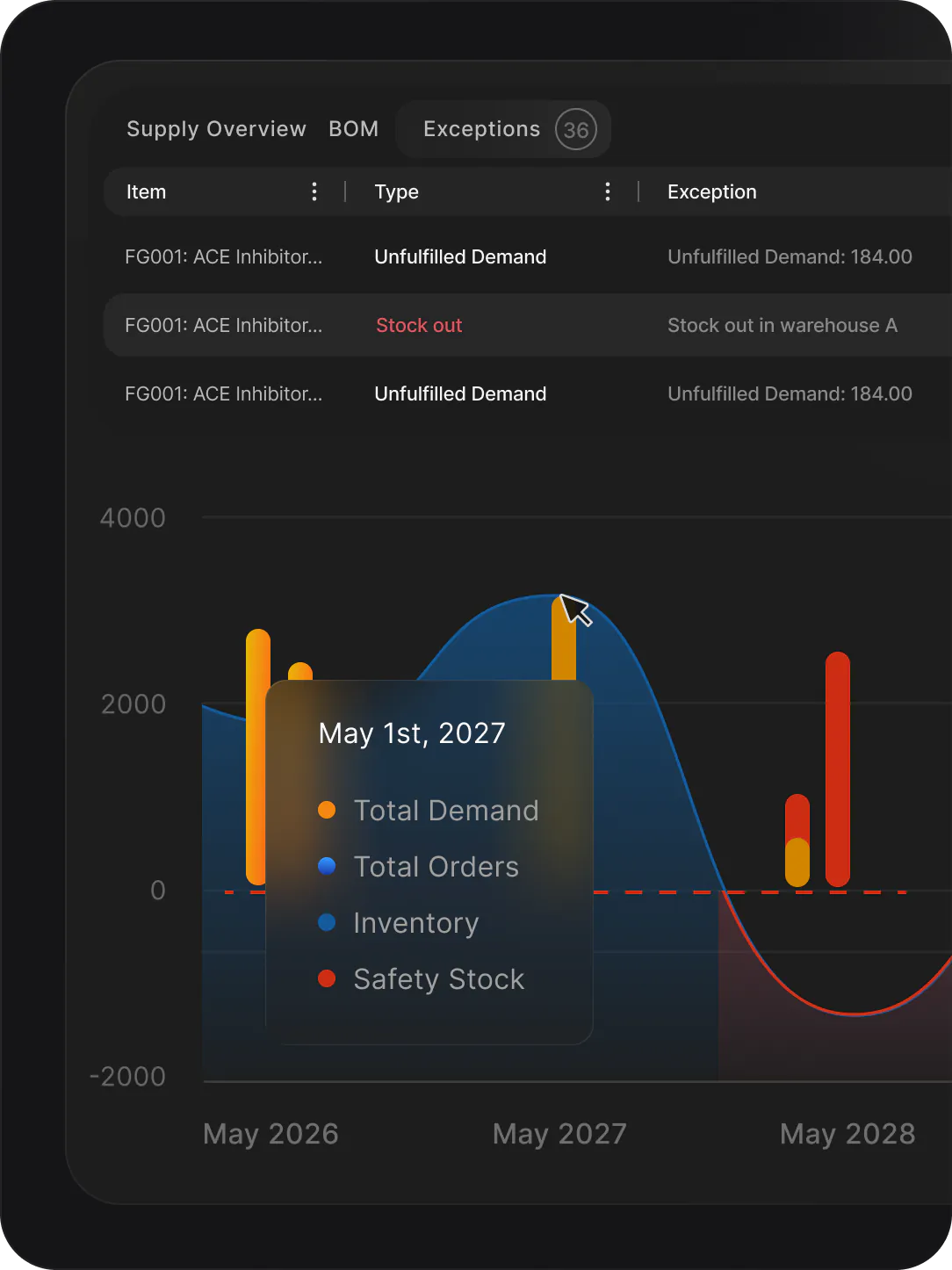
The gap between spreadsheets and large enterprise systems remains a consistent issue for mid-sized pharmaceutical companies. PLAIO operates in this space, focusing on planning environments that reflect pharma-specific constraints without the overhead of large enterprise platforms.
Observed needs focus on:
-
Planning systems designed for pharma-specific constraints
-
Strong production scheduling capabilities
-
Interfaces that present context clearly
There is also a clear interest in reducing manual coordination work through automation. This aligns with a broader shift in expectations. Planning systems are no longer evaluated only on functionality. They are evaluated on how effectively they reduce workload and support execution.
The Shift Is Toward Execution, Not More Data
Pharma supply chain planning is moving in a clear direction. More data is not solving the problem. Execution is.
The teams that operate effectively are not the ones with the most advanced models. They are the ones who have built context into their planning processes, reduced coordination overhead, and prepared for disruption before it happens.
Scenario readiness, production-level visibility, and the ability to act quickly are becoming baseline requirements. Existing tools are no longer keeping pace with operational complexity. The focus is moving toward systems that allow teams to respond with clarity instead of rebuilding context under pressure.
FAQs
What is LogiPharma and why is it important?
LogiPharma is a leading global event focused on pharmaceutical supply chain operations. It brings together industry leaders to share insights on planning, technology, and emerging challenges, making it a strong indicator of where the industry is heading.
What are the biggest trends in pharma supply chains today?
Key trends include the shift from data to execution, increased adoption of AI, and growing complexity from global supply risks and regulatory changes. These factors are driving the need for faster, more connected planning systems.
What is agentic AI in pharma supply chain planning?
Agentic AI refers to systems that go beyond reporting by identifying changes, explaining context, and triggering actions automatically. This reduces manual coordination and allows planning teams to focus on higher-value decisions.
Why is scenario planning critical in pharma supply chains?
Scenario planning enables organizations to prepare for disruption in advance. By defining risks, responses, and ownership early, teams can act quickly without needing to rebuild context during critical moments.
What challenges do pharma companies face in supply chain planning?
Companies are managing increasing complexity from multi-site operations, regulatory requirements, and legacy systems. Manual processes and disconnected tools make it difficult to align demand, supply, and production effectively.