For CDMOs

See suite conflicts before you commit the slot

CDMO production planning that puts sponsor demand, shared suite capacity and long-lead materials in one live plan, so every slot you promise is one you can run.
Book a demo
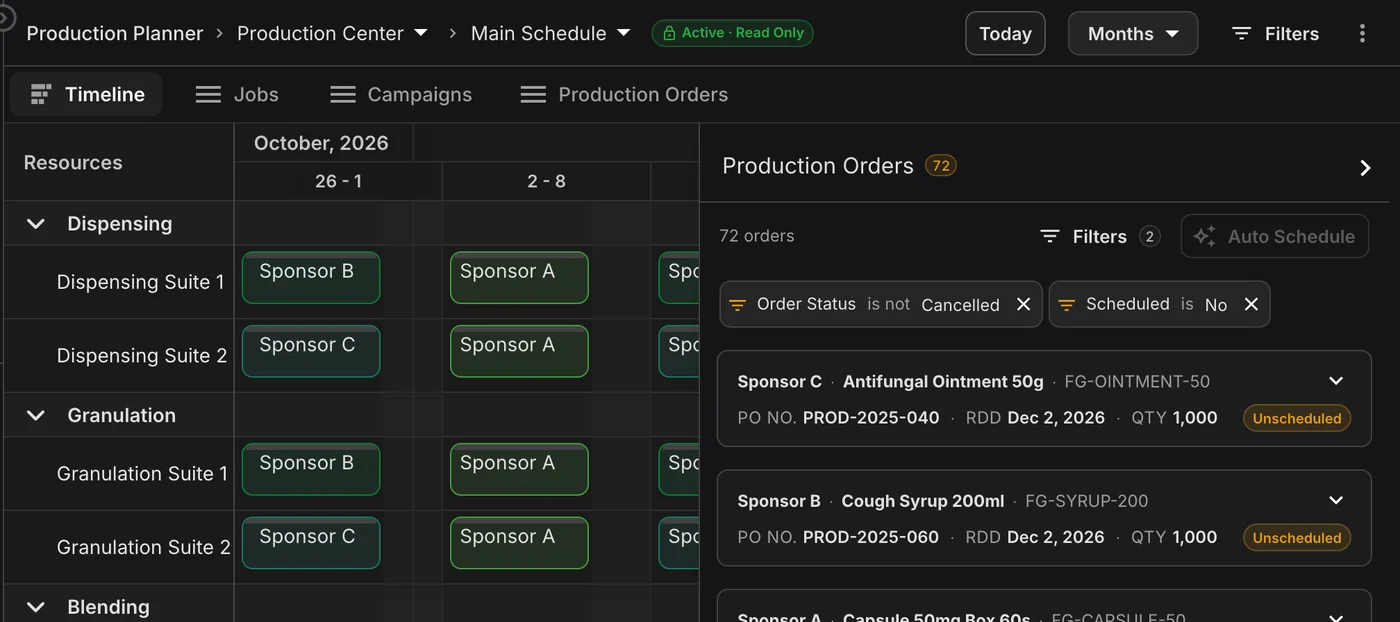
Production schedule with Sponsor A, B and C campaigns sharing the same dispensing, granulation and blending suites, next to a list of unscheduled orders from each sponsor

Three sponsors. One suite. Same October slot.

On paper, October is fine. In reality the suite is running over capacity, and March is worse. By the time that shows up in a spreadsheet, the slot has already been promised to someone.

Sponsor demand, suite capacity and materials live in different places. That is where the collision hides.

Now it is a phone call, a slipped batch and a sponsor who remembers. The problem was never the schedule. It is that nobody sees the collision until it lands on the shop floor.

In PLAIO every sponsor's orders and forecasts feed one plan for the site, scheduled against the same suites and lines, with the API, excipients and packaging behind every batch planned on the same horizon.

Why it matters:

A CDMO sells capacity. Every slot you promise and then move costs you twice: once on the line, once in the relationship.
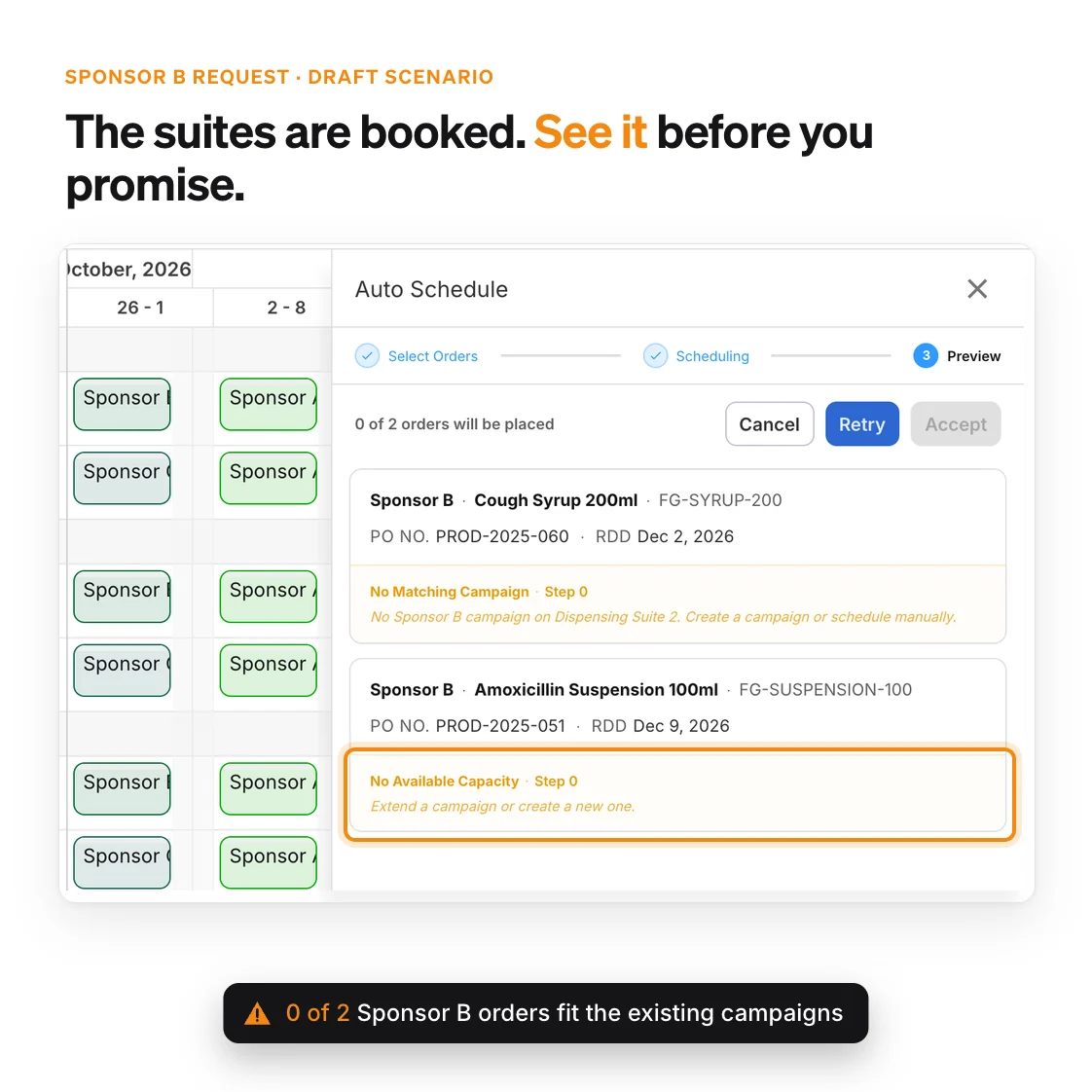
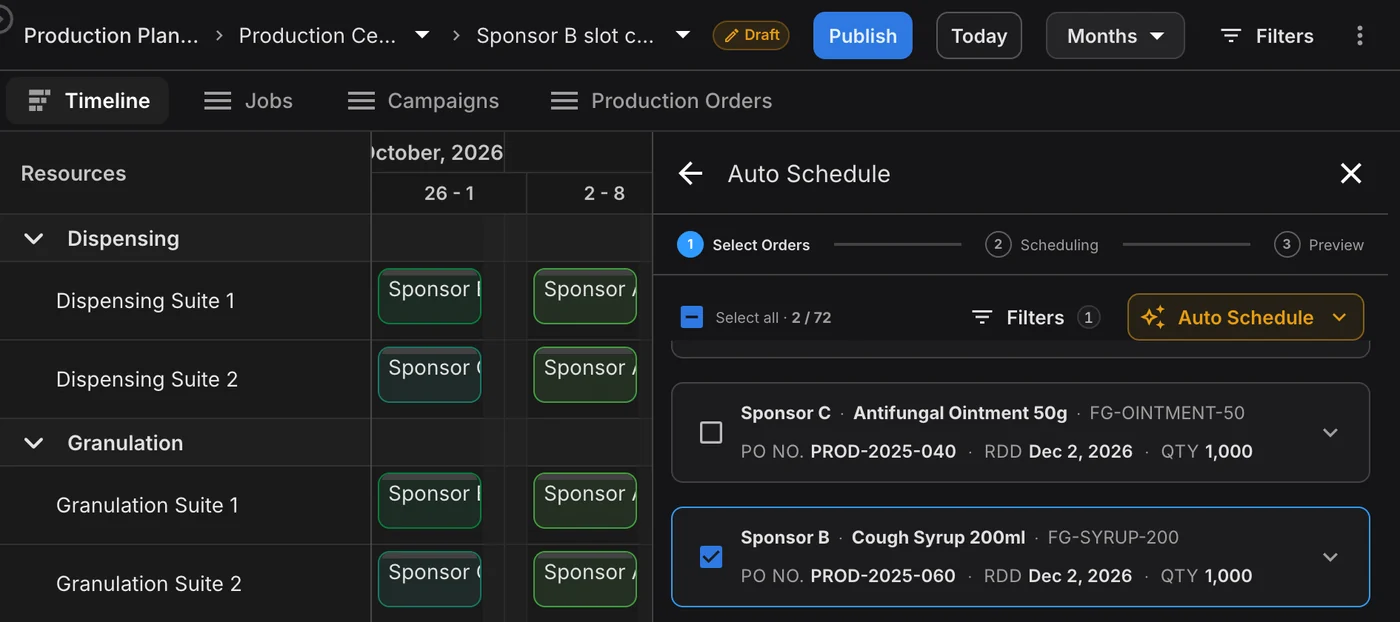
Auto Schedule preview in a draft scenario showing that neither of two new Sponsor B orders fits the suites already booked by other sponsors

What CDMO planners do with PLAIO

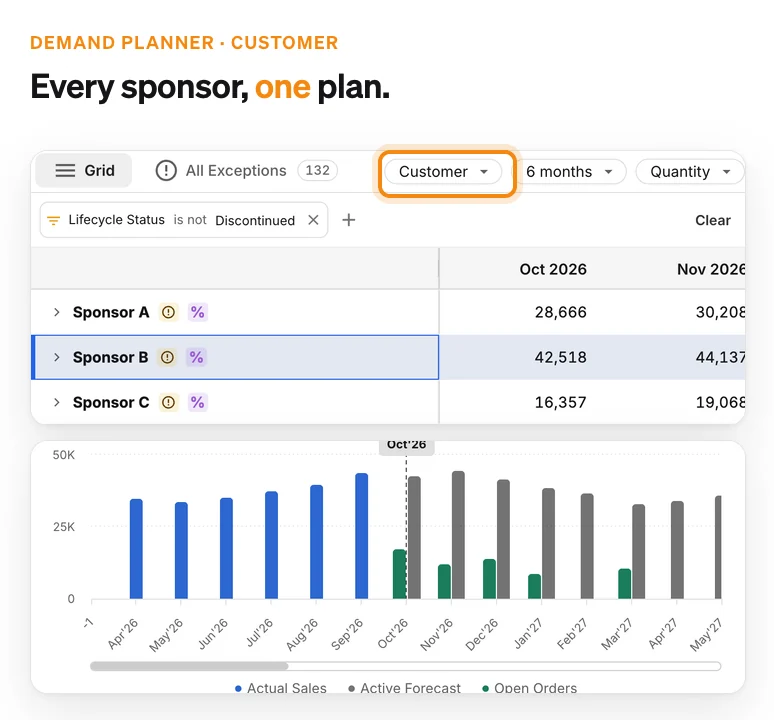
Demand plan grouped by customer with one row per sponsor and a chart of one sponsor's sales, forecast and open orders

Every Sponsor on One Plan

Firm orders and forecasts from each sponsor, planned against the same suites and lines instead of in a spreadsheet per account. Tag demand with a customer dimension and group the plan by sponsor in one click.
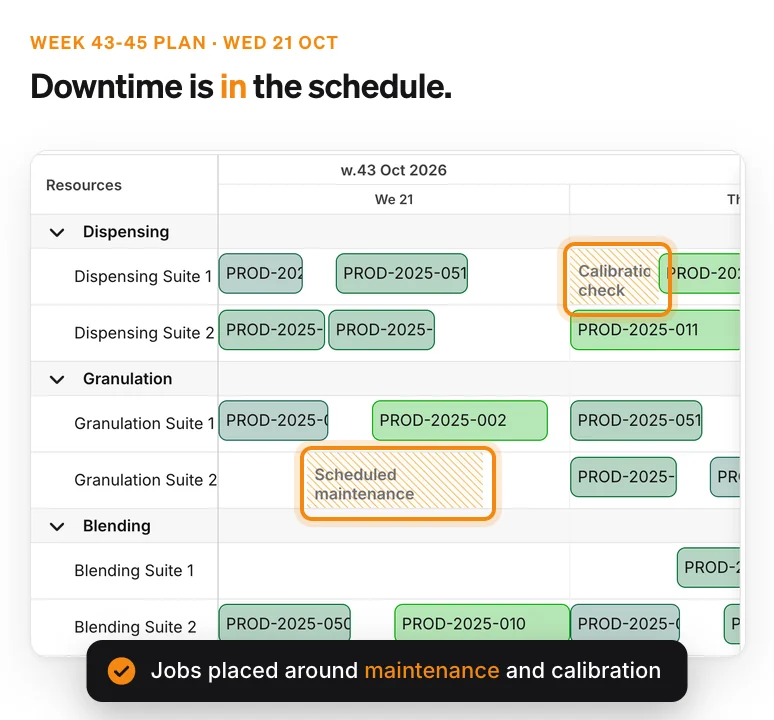
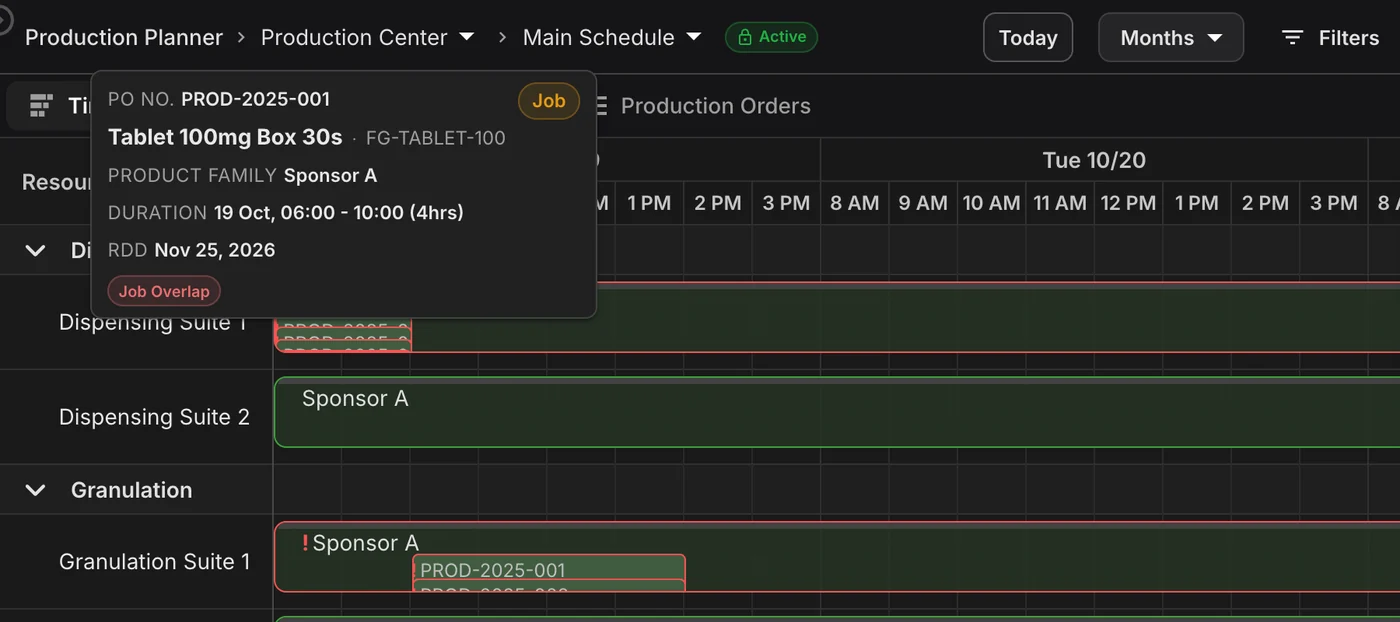
Shared suites schedule with a maintenance block and a calibration check, and the jobs placed around them

Check the Slot Before You Promise It

Routings, cleaning times, changeovers, shifts and downtime are part of the schedule, so you know whether a slot is real before it goes to the sponsor.
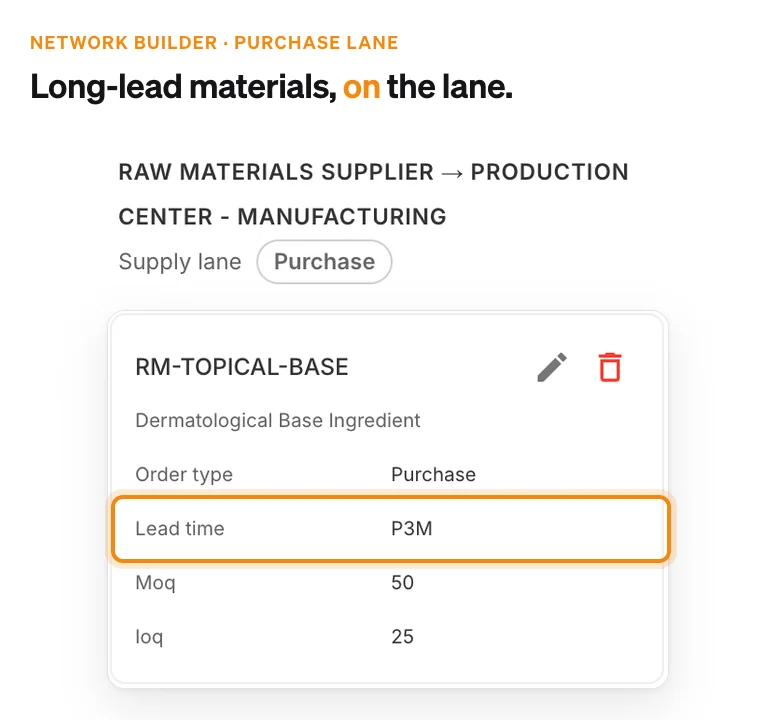
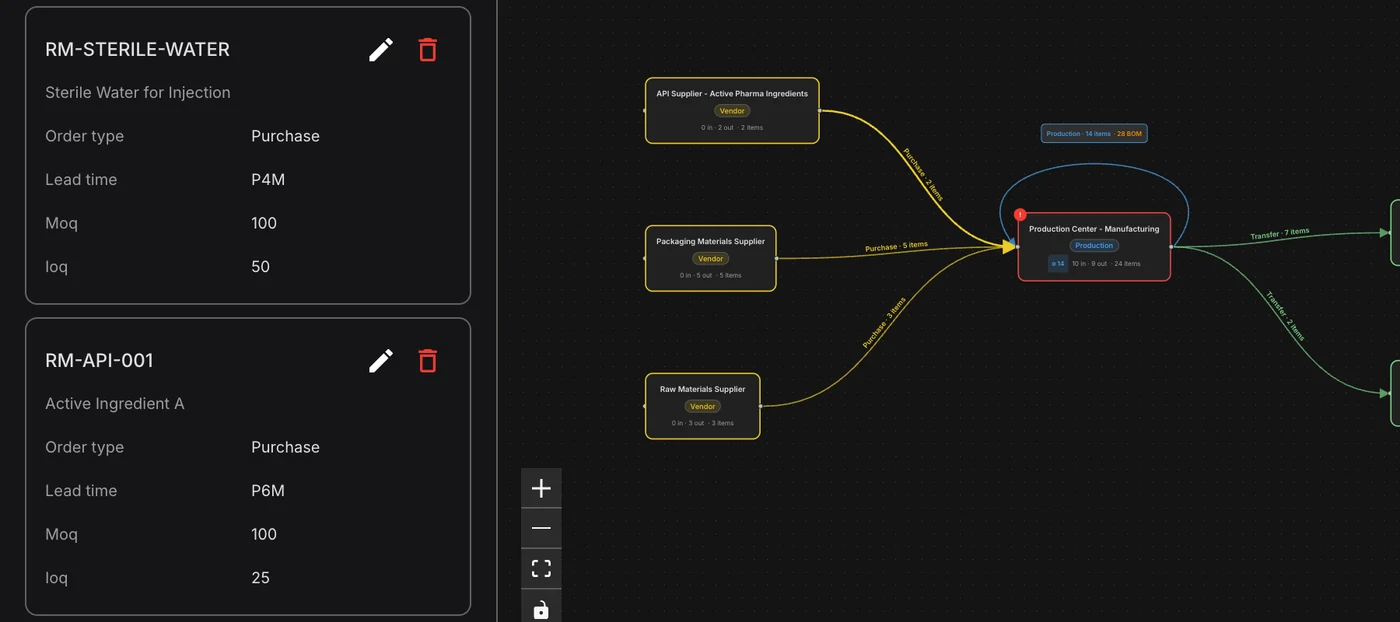
Purchase lane from a raw materials supplier with a three-month lead time, a minimum order of 50 and order steps of 25

Line Up the Long-Lead Materials

API, excipients and packaging planned with their real lead times, MOQs and order increments, so the slot you commit is one you can supply.
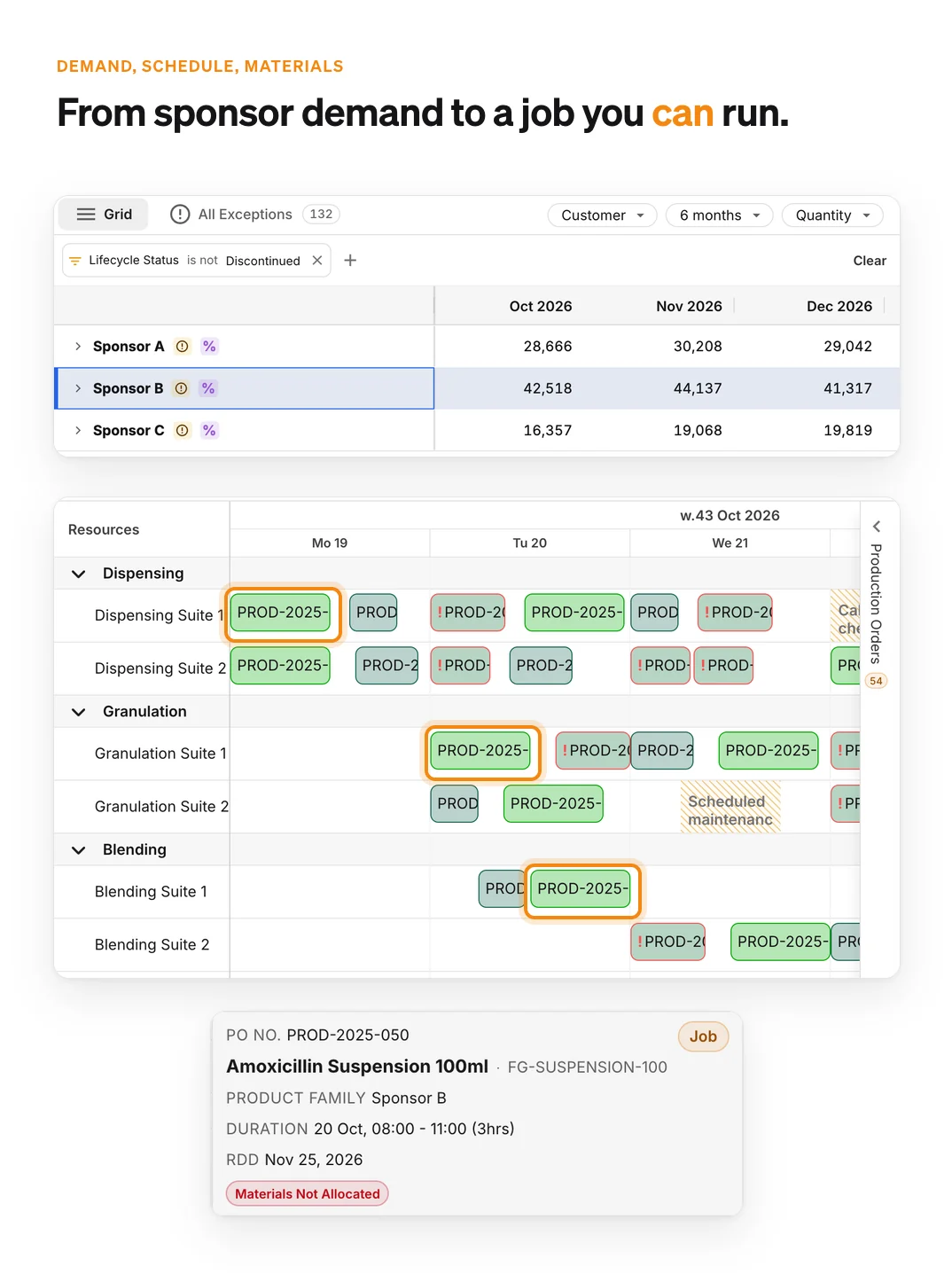
How PLAIO plans a multi-sponsor site

Demand grouped by sponsor, a schedule with one order routed through dispensing, granulation and blending, and a job flagged because its materials are not allocated

Sponsor demand in, orders and forecasts

Firm orders and each sponsor's forecast feed one demand plan. In the Demand Builder, open orders can be the base for the months a sponsor has confirmed and their forecast after that, so the schedule is built from everything coming at the site.

A schedule that respects the shop floor

Routings, sequence-dependent changeovers, cleaning times, minimum and maximum waits, shifts and planned downtime are checked on every job, so what you see is what the site can actually run.

Materials checked against the slot

Production orders come from the supply plan, so start dates, materials and capacity stay aligned. PLAIO flags a job the plan has no material for, or whose material will not be ready by the step that needs it.

For site and supply chain heads

See the overload while you can still move it

  • Utilization per line against the capacity left after shifts and downtime, and a rough-cut capacity plan that projects demand onto each resource months ahead.
  • Exceptions for overlapping jobs, late orders, wait-time breaches, missing changeovers and material not ready, across every sponsor's work.
  • Draft scenarios for a new sponsor request: test the slot before you answer, then publish the schedule you commit to.

Why it matters:

You find out a quarter is overbooked while there is still time to move a campaign, not when a sponsor calls about a missed date.
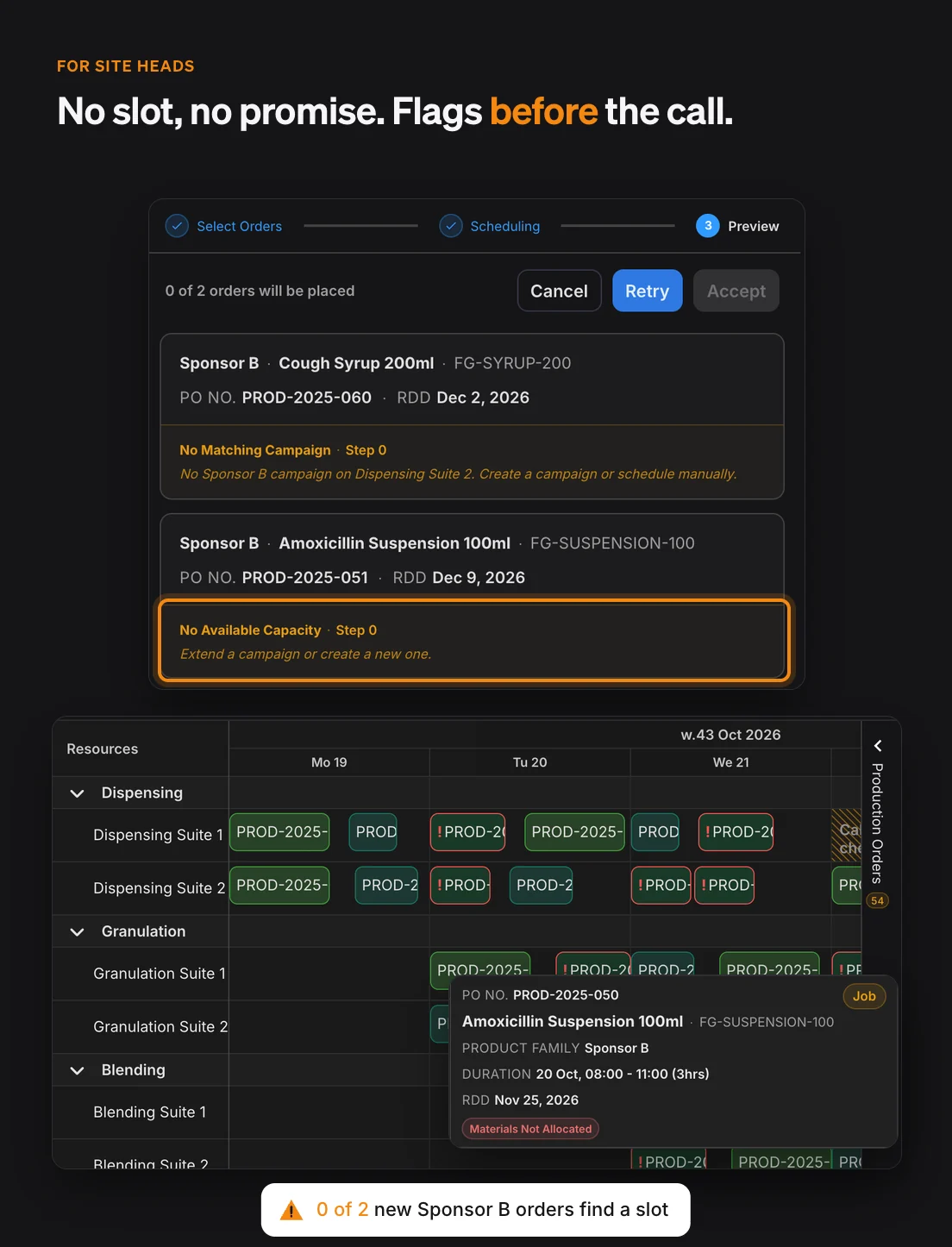
Capacity check showing no room for two new sponsor orders, above a schedule with jobs flagged for missing materials

CDMO Planning FAQ

Yes. PLAIO is built for pharmaceutical manufacturing, and contract manufacturers schedule the lines they run for their clients on it. For a CDMO that means sponsor demand, shared production capacity and materials planned together, with pharma constraints such as order quantities, cleaning times, changeovers and shelf life built in.

Yes. Demand can carry your own dimensions, such as customer, so you plan the site as a whole and still group the plan by sponsor to see what each one is asking for and when. Forecast accuracy can be grouped the same way.

Yes. Create a draft scenario, add the request and auto schedule it around the work already committed. The published schedule stays untouched, so you see the effect on capacity, materials and existing commitments before anyone replies to the sponsor.

Each production step records which lines can run it, with setup, processing and cleaning times, and changeover times are set per product sequence on each line. Shifts and downtime form the calendar every schedule is built on, and a job placed without enough changeover time is raised as an exception.

Yes, with Reservations, an optional module. You block time on a line for a product family, for example one sponsor's products, and Auto Schedule places matching orders into those blocks. PLAIO flags a reservation that is over-utilized or overlaps another.

No. PLAIO plans and your ERP executes. Orders, stock and master data come in through the Integration API or from uploads, approved supply orders go back to the ERP, and posting and financial control stay where they are today.

Commit only to the slots you can hit

See your sponsors, suites and materials in one plan, and where next quarter is already overbooked.

Book a demo
Connect the Dots Across Your Planning Process

Keep production on schedule.

Align supply with optimized, line-level schedules using Production Scheduling Software

Production

Optimize supply with precision.

Turn your forecast into feasible, constraint-ready plans with our Supply Planning Software

Supply

Cookie settings

To enhance your experience on our site and to analyze traffic, we use cookies. By clicking "Accept All," you agree to the storing of cookies on your device for analytics purposes. You can manage your settings or learn more in our Privacy Policy.

Manage Settings
  • Your Privacy Matters to Us

    We use cookies to improve your browsing experience and analyze how our website is used. These cookies allow us to understand trends, monitor website traffic, and gather insights to make the site better for you.

    We respect your privacy and are committed to transparent data usage.

    Why Do We Use Cookies?

    Necessary Cookies: These ensure that the website functions properly.

    Analytics Cookies: These help us track site traffic, user behavior, and performance metrics. The data collected is anonymous and allows us to continuously optimize the site.

    Preferences Cookies: We may use cookies to remember your preferences and tailor your experience.

    Marketing Cookies: We may use cookies for marketing purposes.

    Your Control, Your Choice

    By clicking "Accept All," you consent to the use of all cookies. If you prefer, you can customize your choices and opt out of certain cookies. You can learn more about how we handle data and cookies in our Privacy Policy.