Production planning for contract manufacturers: client forecasts and firm POs, shared lines, campaigns and changeovers, and the materials each client's batches need, in one schedule you can promise from.
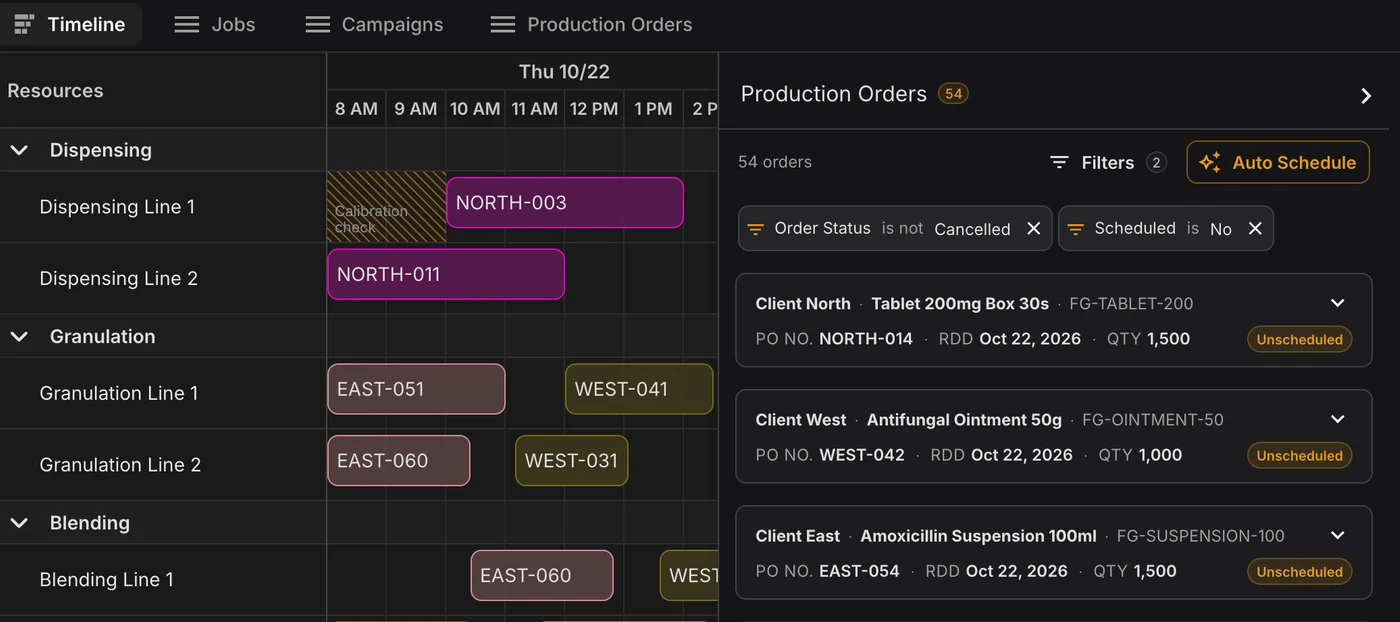
A CMO runs many clients' products on the same lines. One client pulls an order forward, another sends a forecast that never becomes a PO, and packaging for a third arrives late. In a spreadsheet, every change means rebuilding the week by hand, and the cost shows up as a missed delivery date.
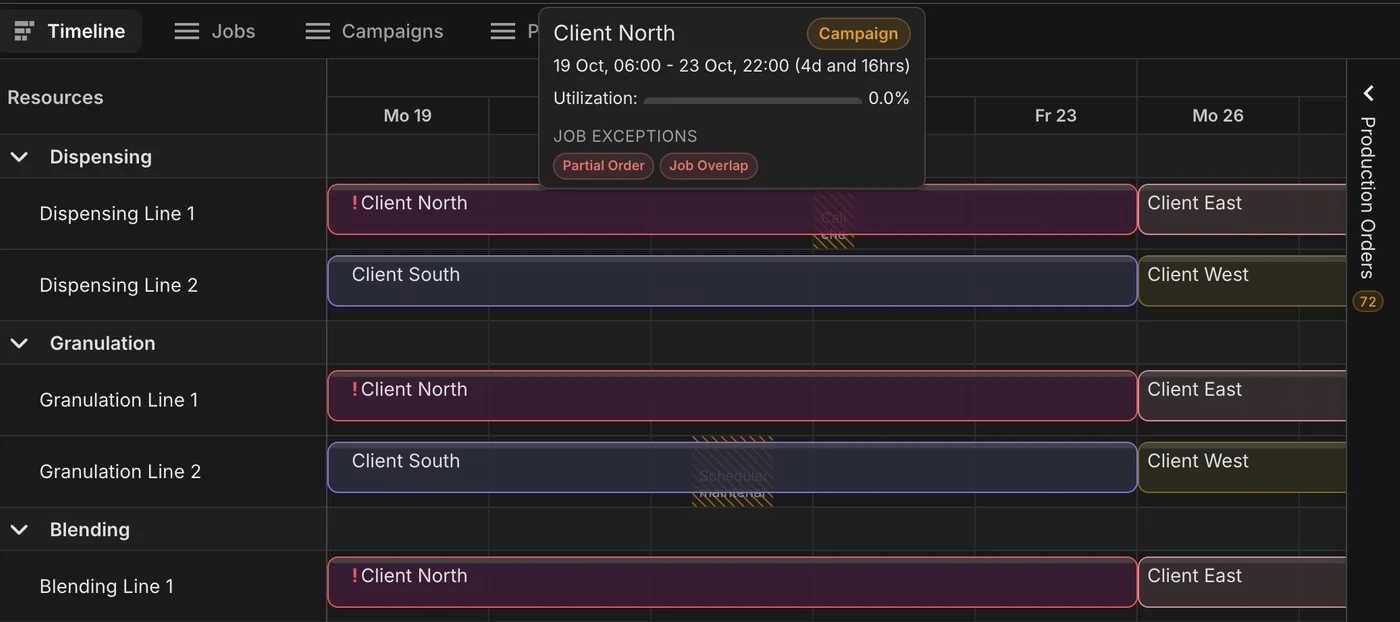
A cream followed by a tablet on the same blender needs time to change over. Granulation has to start within a set window after dispensing. Every client's batches compete for the same equipment, and every switch between them costs cleaning and changeover time.
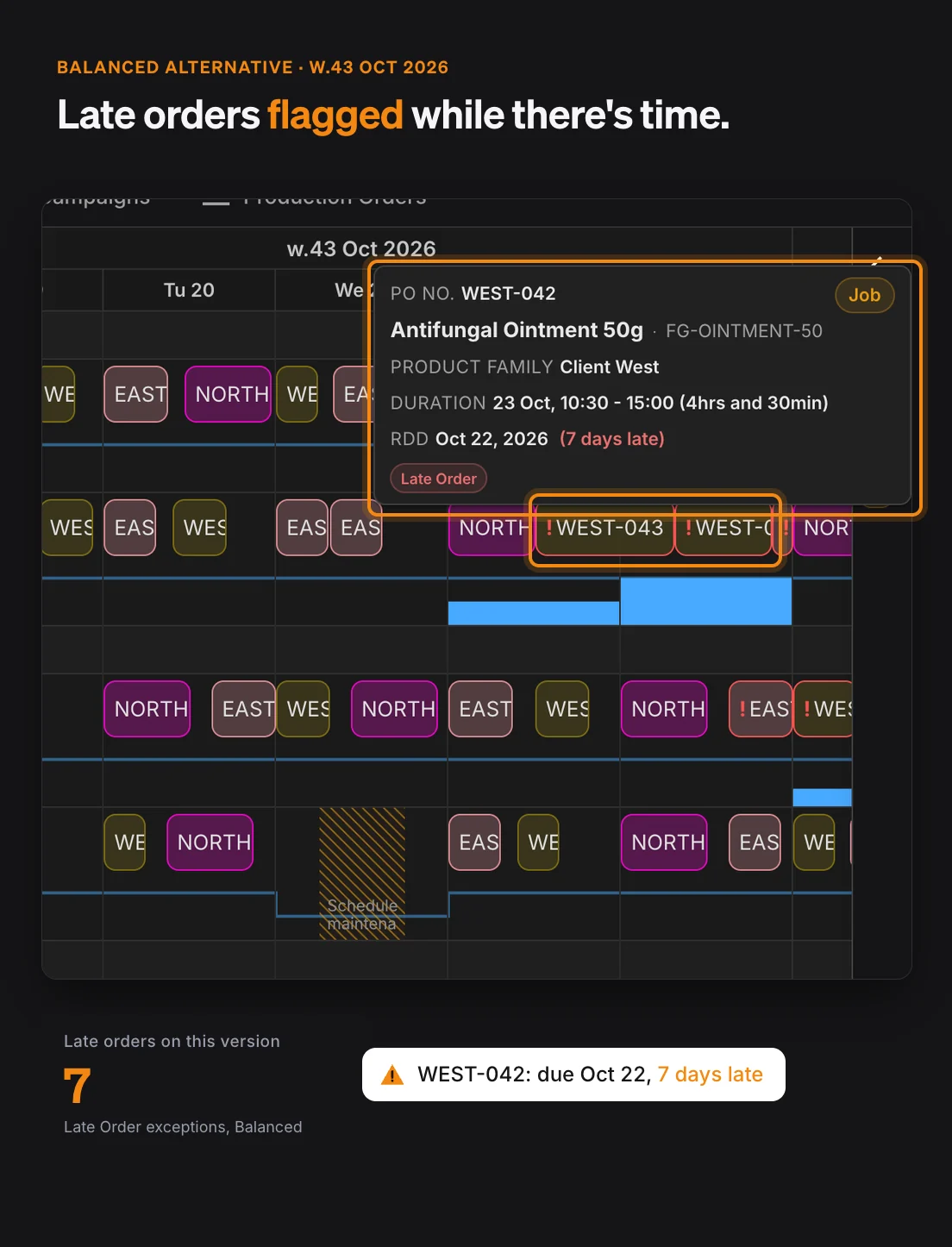
PLAIO schedules every client's orders on one Gantt, checks each job against routings, changeovers, waits, shifts and downtime, and flags the one that does not fit before it reaches the floor.
On-time delivery is what your clients buy. You find the conflict at your desk on Monday, not when a client asks where their batch is.
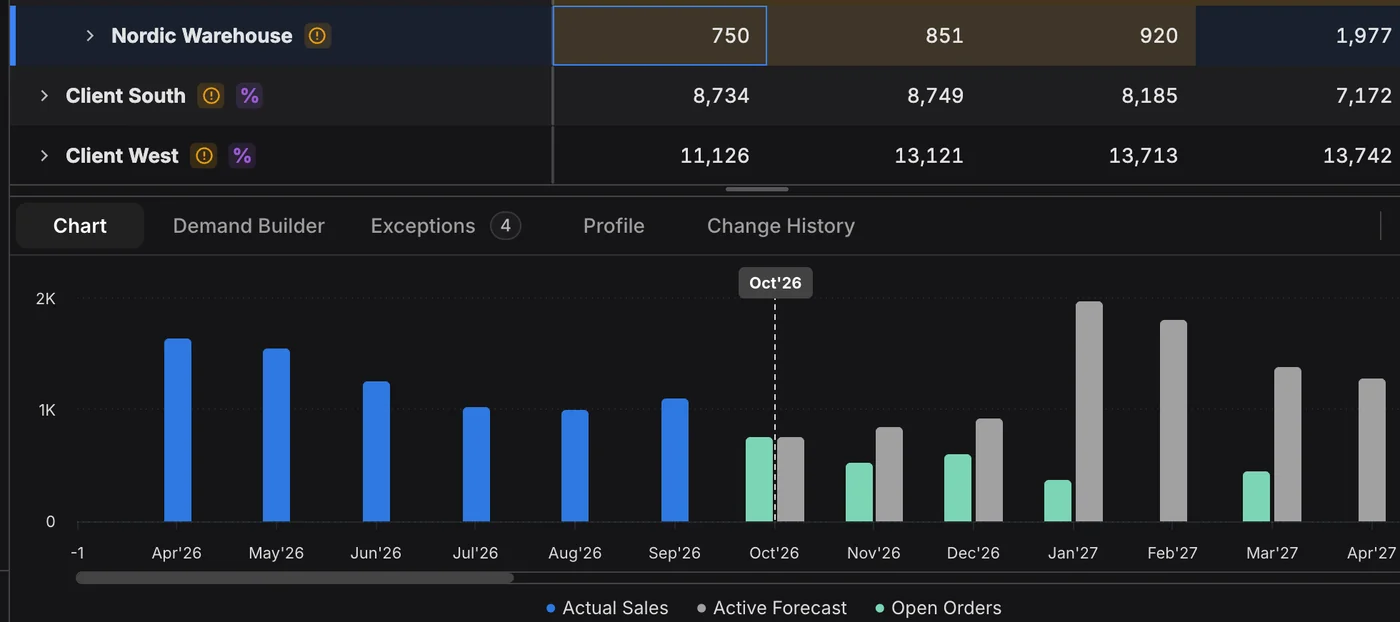
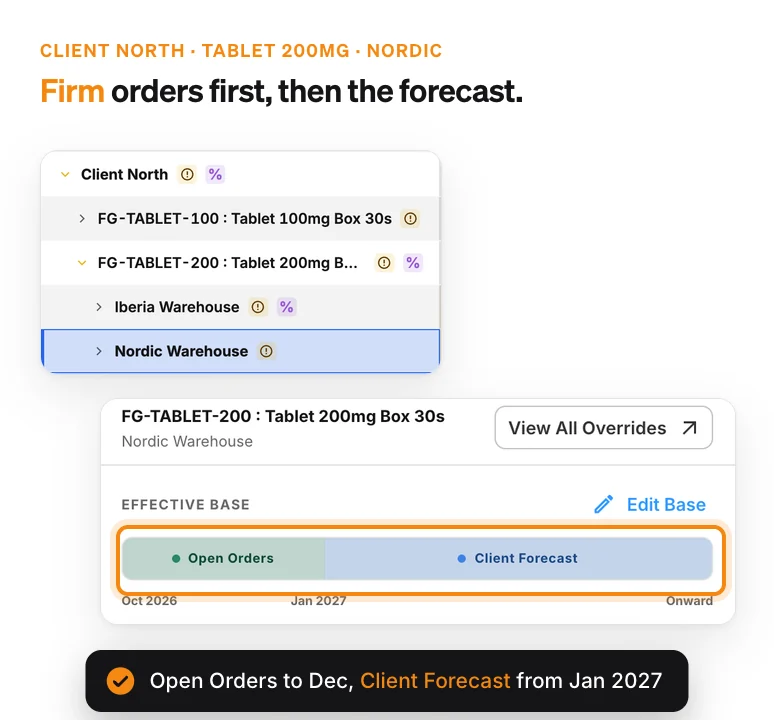
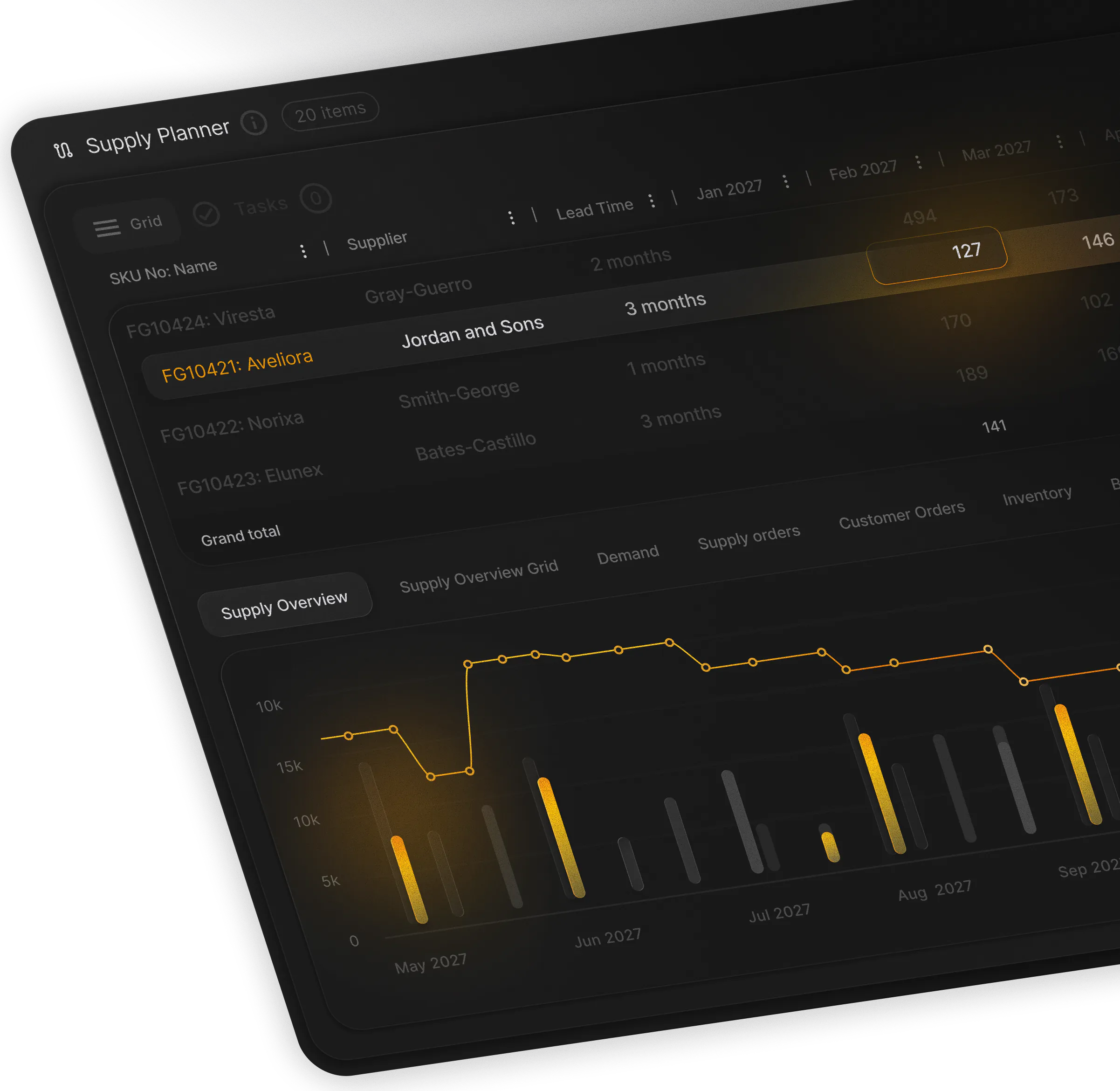
In the Demand Builder, use open orders as the base for the months a client has confirmed and their forecast after that. A customer dimension groups the plan by client, so you see how much of next quarter is already firm.
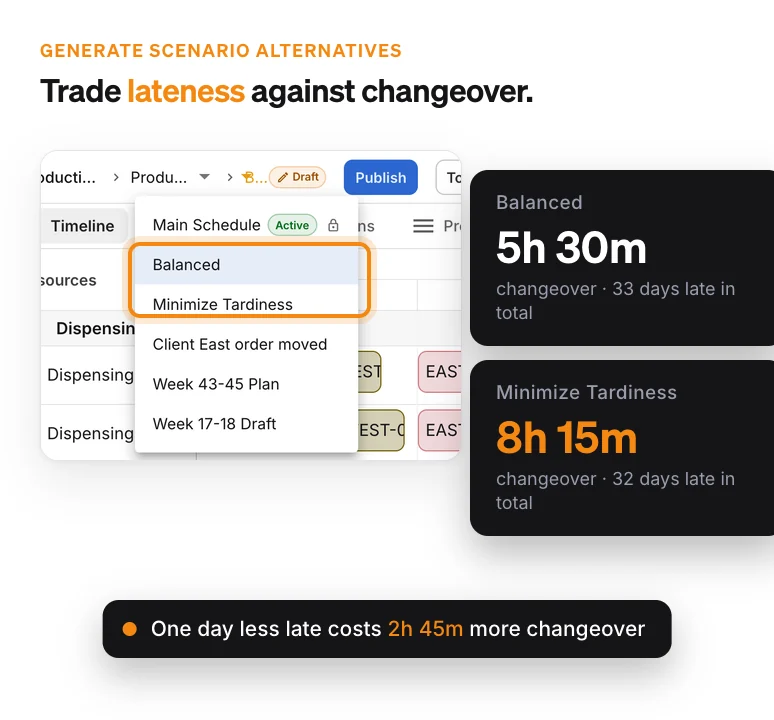
Changeover times are set per product sequence on each line. Generate schedule alternatives that trade late orders against changeover time, then keep the one that suits your week.
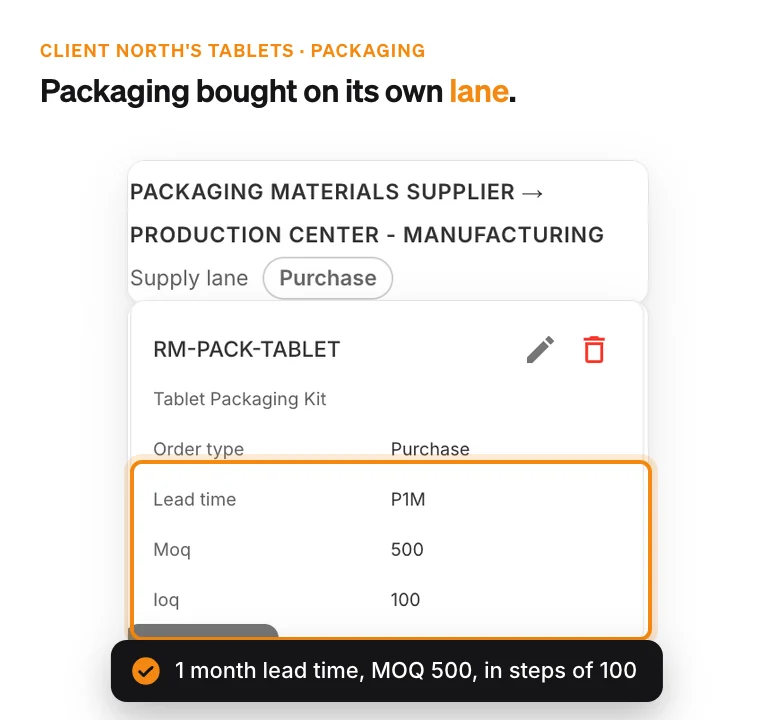
Each product's components and packaging sit in its bill of materials, bought on supply lanes with lead times and MOQs. A job is flagged when its material won't be ready in time.
Production orders carry an item, a quantity and a required delivery date. Scheduling one creates a job for every routing step on a specific line, and Auto Schedule places the orders you select around shifts, changeovers and downtime.
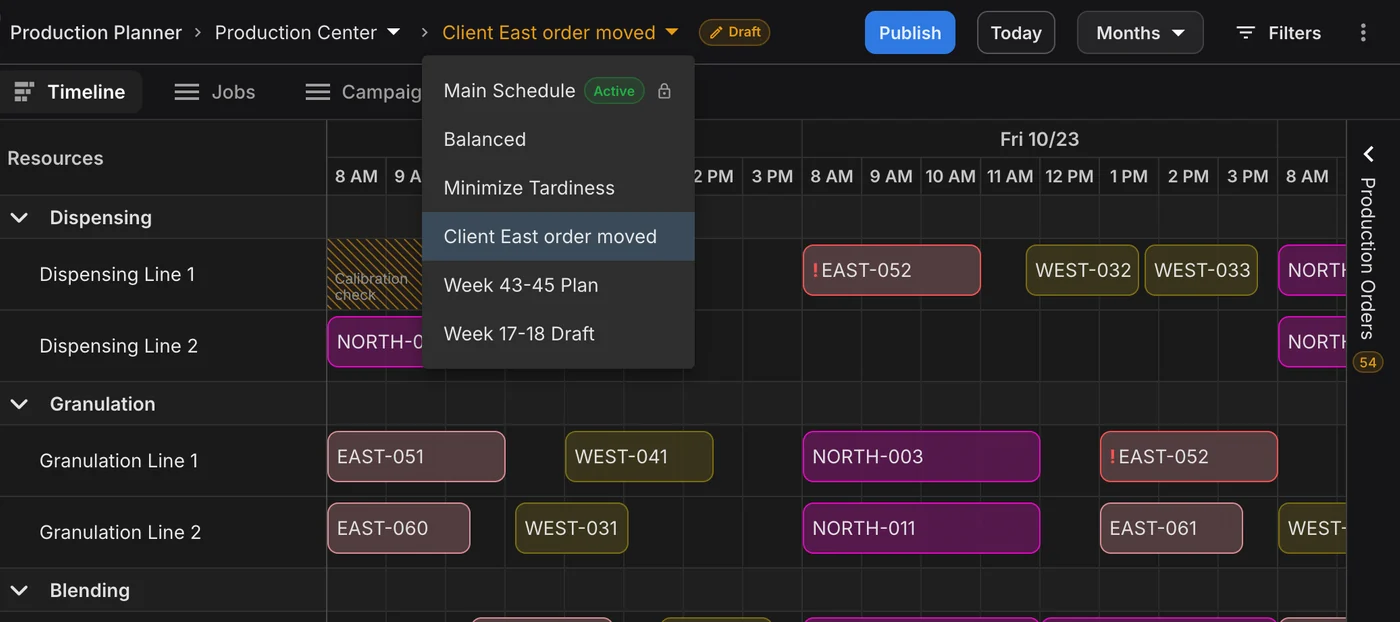
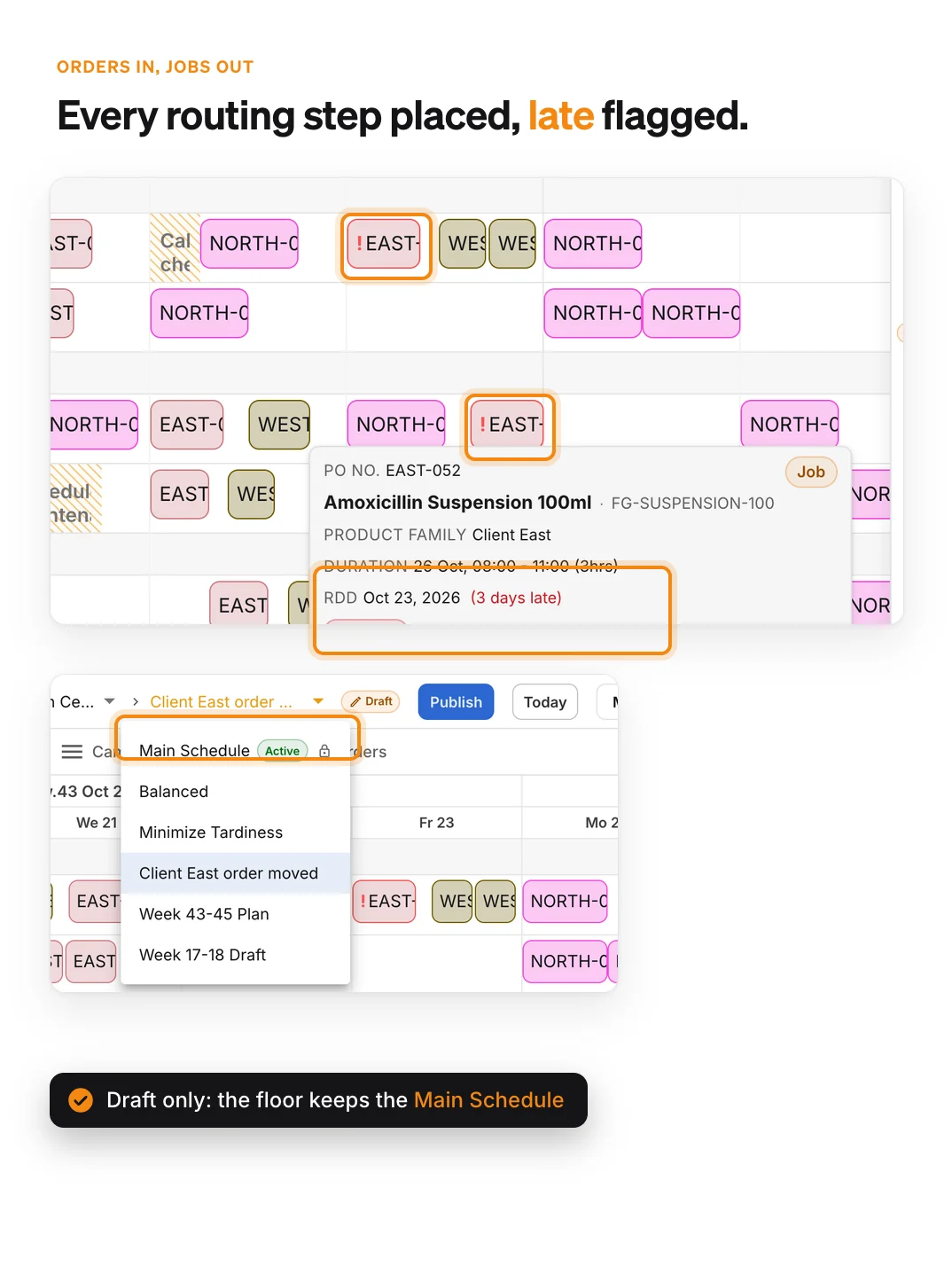
When a client moves an order, drag the jobs or try the new date in a draft scenario next to the published schedule. Until you publish, the floor keeps reading the active schedule.
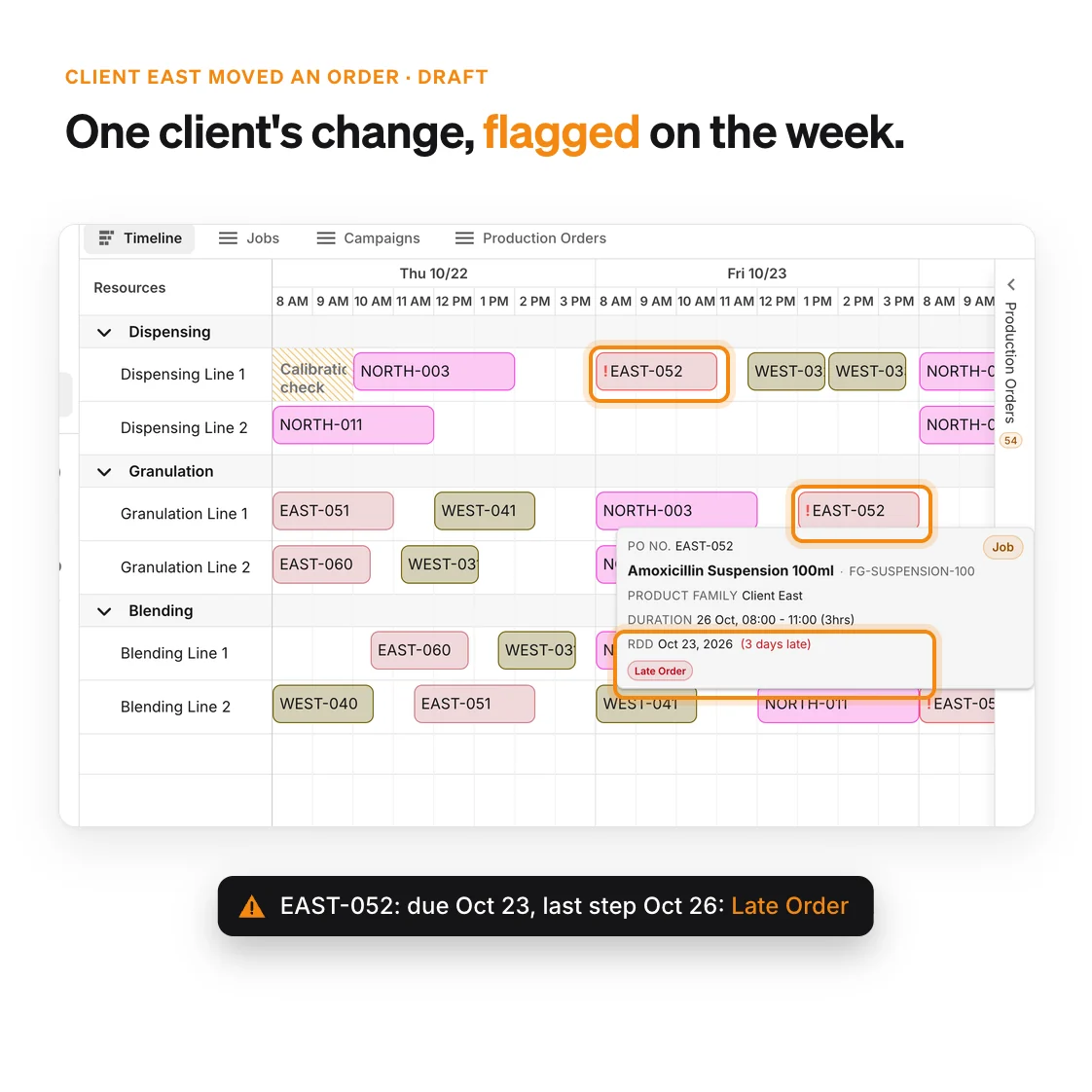
Every schedule version is checked for late orders, overlapping jobs, wait-time violations, missing changeovers and material not ready, so you see which delivery is at risk while you can still act.
On-time, in-full delivery is the number your clients judge you on. Seeing late orders while the week can still be rearranged is how you protect it.
To enhance your experience on our site and to analyze traffic, we use cookies. By clicking "Accept All," you agree to the storing of cookies on your device for analytics purposes. You can manage your settings or learn more in our Privacy Policy.
Manage SettingsWe use cookies to improve your browsing experience and analyze how our website is used. These cookies allow us to understand trends, monitor website traffic, and gather insights to make the site better for you.
We respect your privacy and are committed to transparent data usage.
Necessary Cookies: These ensure that the website functions properly.
Analytics Cookies: These help us track site traffic, user behavior, and performance metrics. The data collected is anonymous and allows us to continuously optimize the site.
Preferences Cookies: We may use cookies to remember your preferences and tailor your experience.
Marketing Cookies: We may use cookies for marketing purposes.
By clicking "Accept All," you consent to the use of all cookies. If you prefer, you can customize your choices and opt out of certain cookies. You can learn more about how we handle data and cookies in our Privacy Policy.