For Virtual Pharma

Planning for a company with no plants

Your products are made at CMOs and CDMOs, under their lead times and minimum orders. PLAIO plans each market's demand against those terms and the shelf life the market needs. The plan shows which market runs short and in which month, up to 18 months ahead.

Book a demo

A market shortfall, seen early

Projected stock in each market is held against safety stock and flagged by SKU and month. There is still time to order.
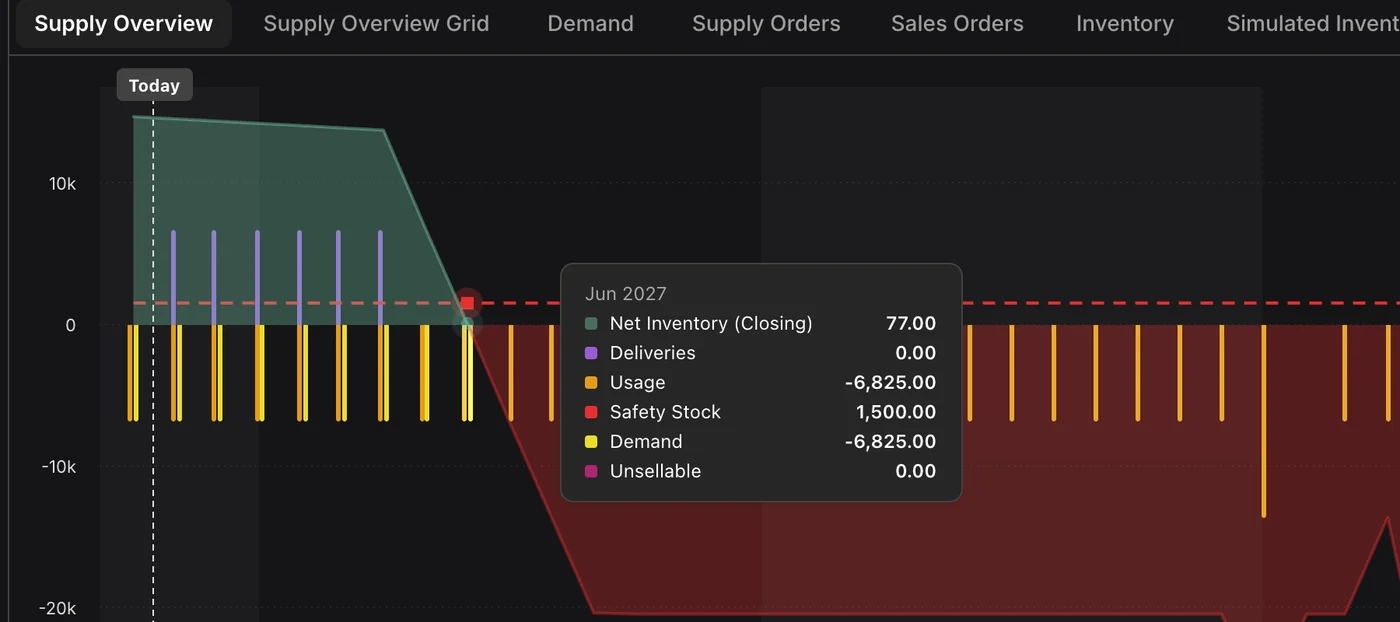
Supply chart for Cough Syrup 200ml in the Iberia market falling below safety stock, with June 2027 at 77 bottles against a safety stock of 1,500.

Someone else makes every batch you sell

Each batch comes from a CMO, on its lead times and in its campaign slots. Demand comes from many markets at once, with tenders and launches on top. If the forecast sits in one place and the CMO terms in an inbox, you end up short in one market and writing stock off in another.

Ordering for a slow market means guessing between a stockout and expired stock.

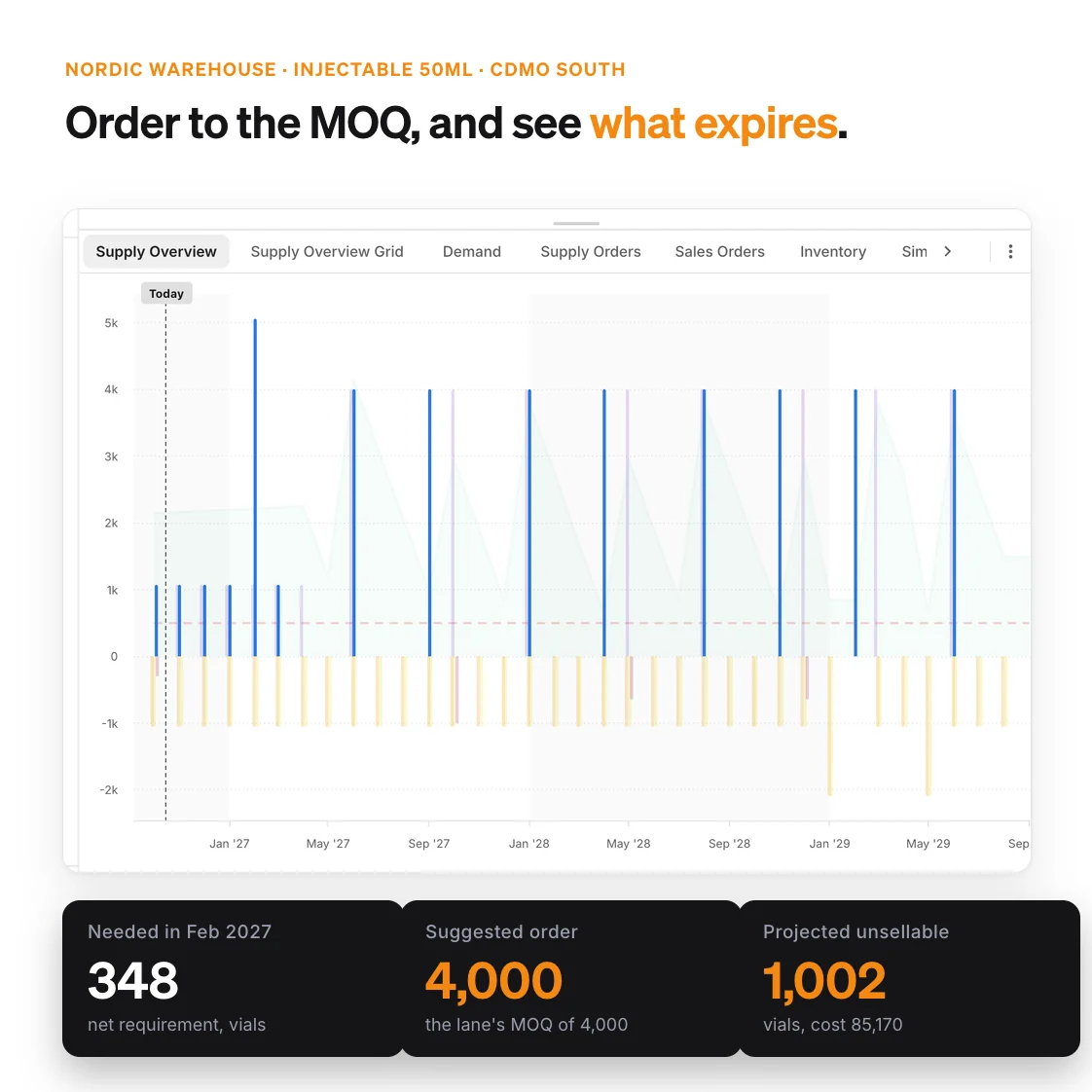
Take a CMO with a four-month lead time and a full batch as its minimum order. Order late and the market runs short. Order the whole batch for a slow market and some of it expires on the shelf.

PLAIO plans each market against the CMO's terms and the shelf life that market needs, and sizes order suggestions to match. Stock projected to expire before it sells is marked unsellable. Both risks are visible months ahead.

Why it matters:

You can't speed up a CMO's line. What you can control is when you order and how much, and that depends on seeing shortfalls and expiry early.

Supply chart for Injectable 50ml in the Nordic market with tiles showing a 348-vial need rounded up to a 4,000-vial minimum order, of which 1,002 vials are projected to go unsellable.

How virtual pharma teams use PLAIO

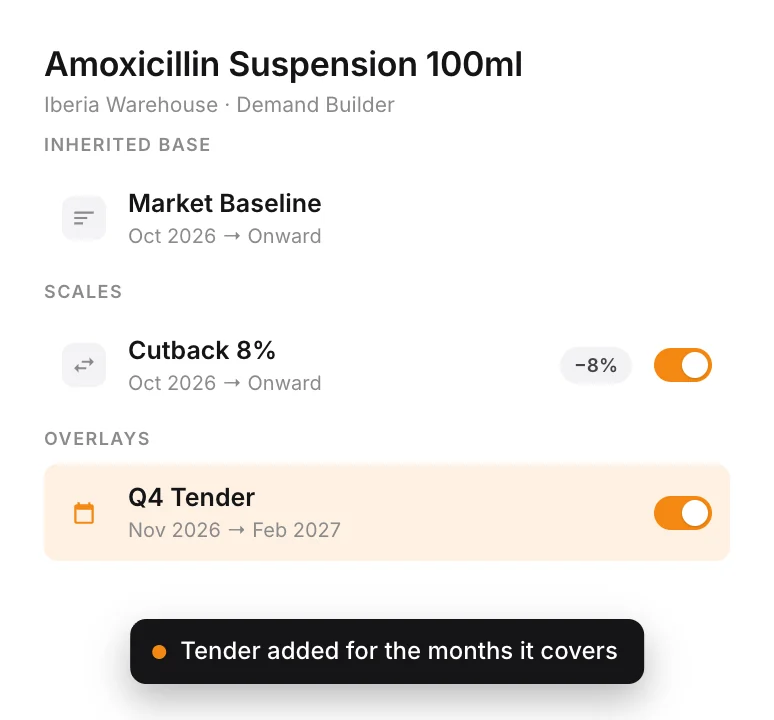
Demand Builder for Amoxicillin Suspension in the Iberia market: a market baseline, an 8% cutback and a Q4 Tender overlay for November to February.

Demand, market by market

Each market gets its own forecast in the Demand Builder. Start from the ML forecast, open orders, your commercial plan or a partner's numbers. Tenders and launches sit on top as overlays for the months they cover.

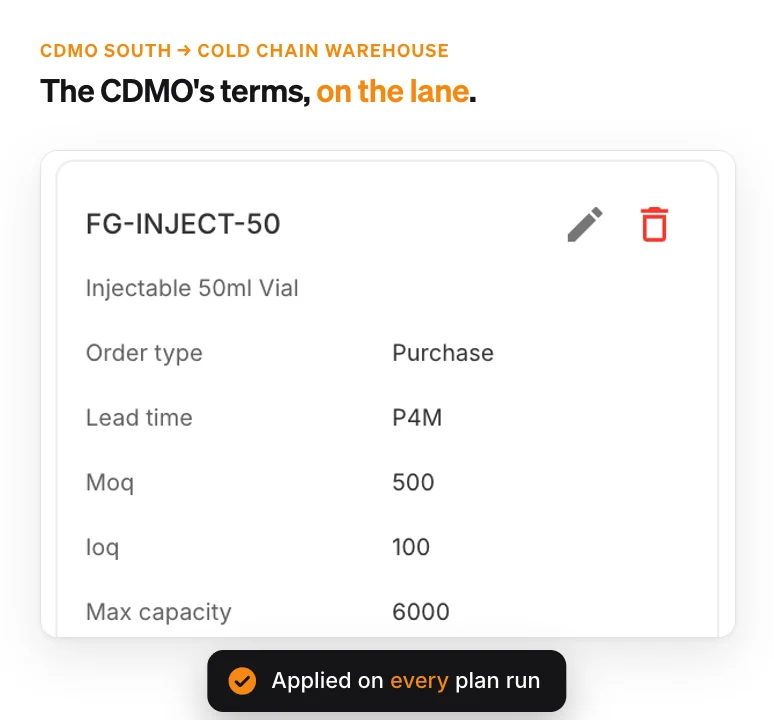
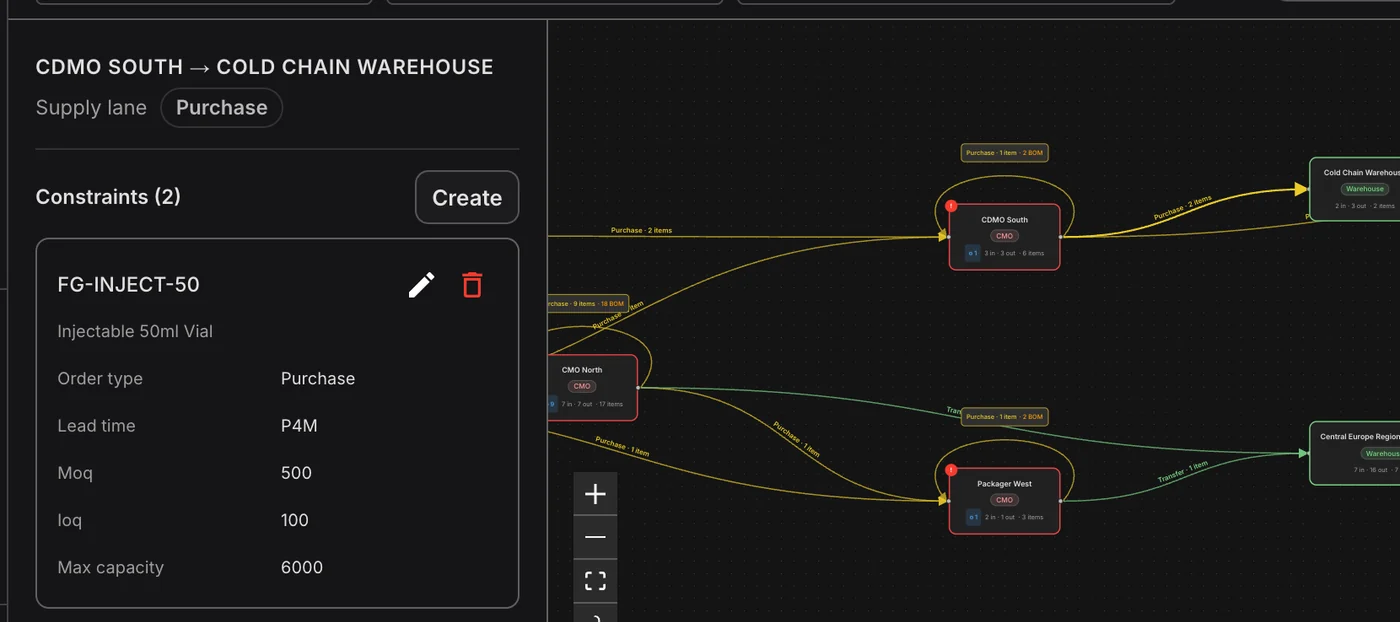
Supply lane rules for a CDMO: purchase lane, four-month lead time, minimum order 500, steps of 100, maximum 6,000 per order.

Your CMOs' terms, written down

A supply lane stores the CMO's lead time, MOQ, order increment, maximum order and frozen period. If you supply the API or packaging yourself, the purchase can consume its bill of materials and those get planned as well.

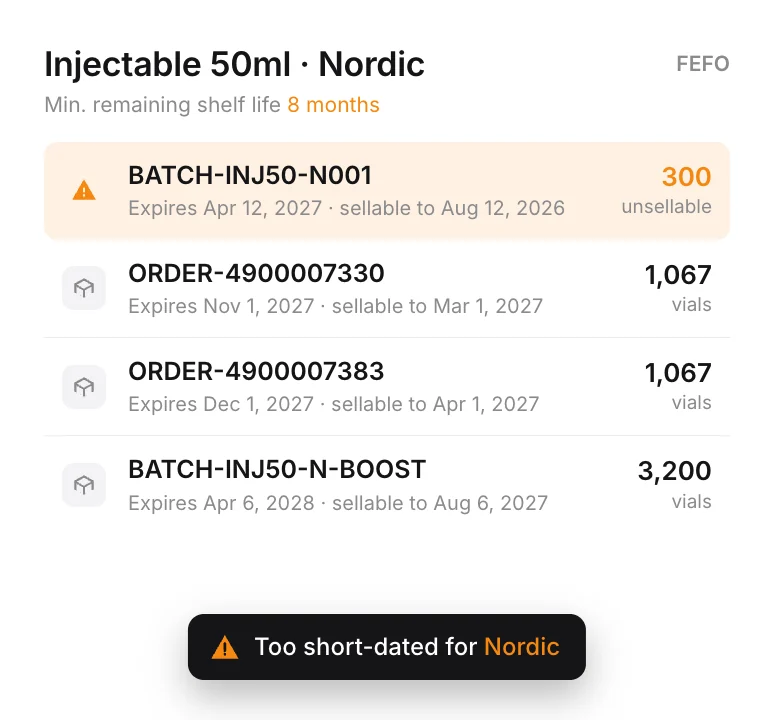
Batches of Injectable 50ml in the Nordic market in first-expiry-first-out order; the first batch, 300 vials, is too short-dated for the market's 8-month minimum and is shown as unsellable.

Shelf life set per market

Set a minimum remaining shelf life per item and location. Batches are used first expiry, first out. Stock that is too short-dated for a market no longer counts as sellable there.

A partner network, planned in PLAIO

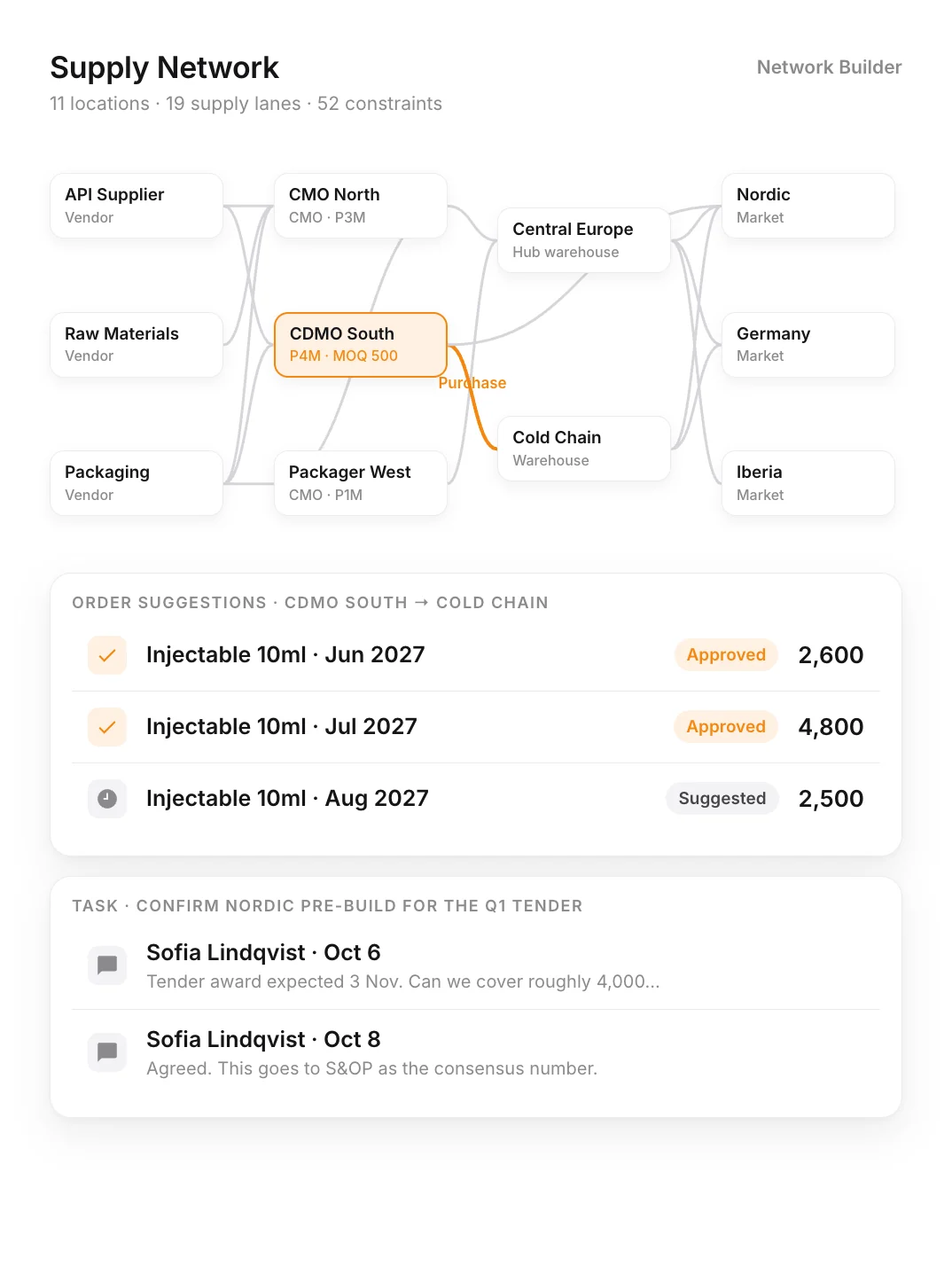
Network of vendors, CMOs, a CDMO, a packager and market warehouses, with order suggestions on the CDMO lane and a task thread about covering a tender.

Every partner on one map

The Network Builder draws your CMOs, packagers and market warehouses with the lanes between them. You can follow a product from the plant that makes it to the market that sells it, with the terms on each lane.

Suggestions each partner can accept

The plan runs month by month for each market, against demand, stock, open orders and safety stock. Suggestions are sized to the lane they use. Once approved, they go to your ERP as purchase orders.

Changes agreed on the row

Say a CMO moves a delivery. The task and the discussion about it sit on that plan row, with an owner. The change history keeps who changed the number and the reason they gave.

For heads of supply

See service and write-offs months ahead

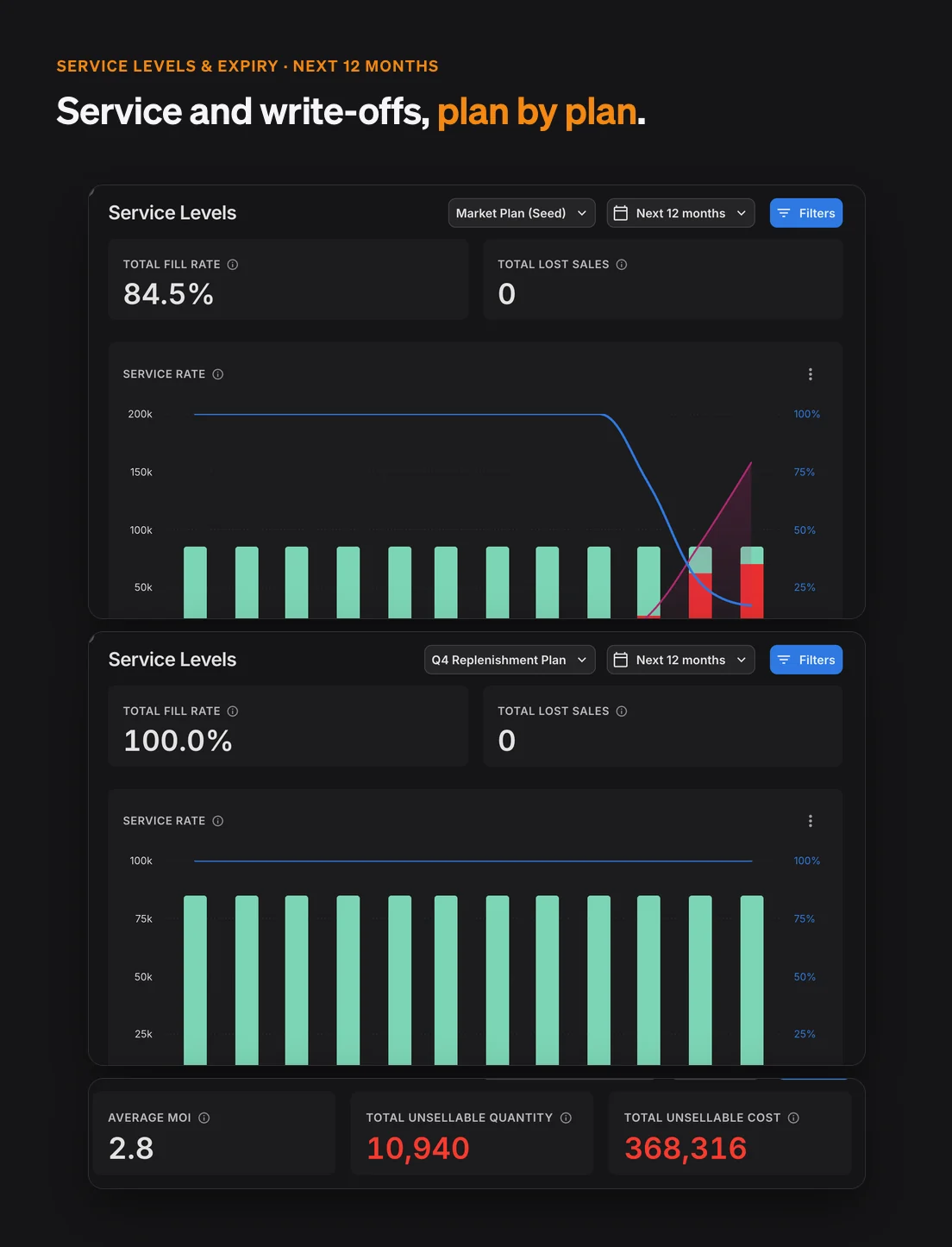
  • Each supply scenario shows its fill rate and lost sales, so S&OP can compare plans on numbers.
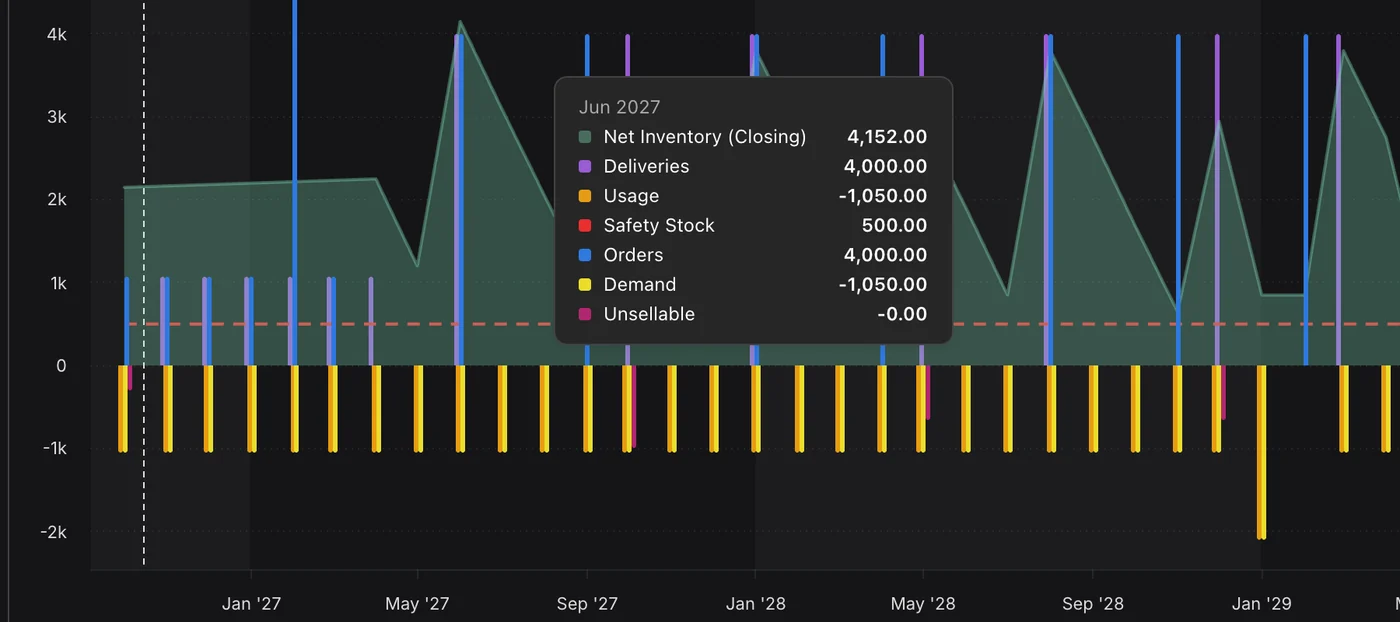
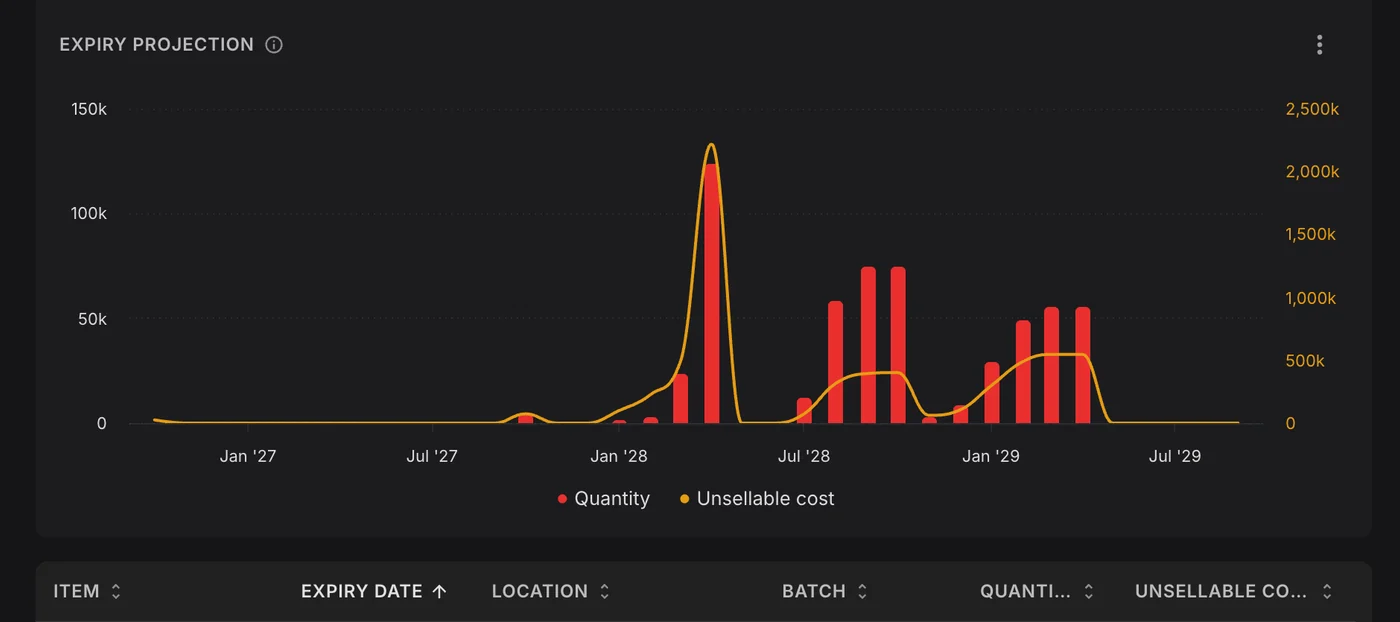
  • Stock heading for expiry is listed by batch with its quantity and cost, well before the write-off.
  • Safety stock can be a fixed quantity, or cover that moves with demand, set per item and market.

Why it matters:

You don't run the plants, yet the service level and the write-offs are still yours to answer for. A single plan across your CMOs and markets lets you see both early.

Two service-level dashboards compared, 84.5% fill rate for the market plan and 100.0% for the Q4 plan, above the Q4 plan's projected unsellable quantity and cost.

Virtual Pharma Planning FAQ

Yes. Supply planning in PLAIO is built on purchase lanes to your CMOs and CDMOs, and each lane carries that partner's lead time and order rules. You plan demand per market and stock across the network. The orders you place with each partner come out of the same plan.

Yes. Every lane has its own lead time, minimum order quantity, order increment, maximum order and frozen period. You can split a lead time into processing and transfer time. Suggestions are sized to those rules before a planner sees them.

Only if the CMO shares it. When it does, you can model its line as a separate shop floor in PLAIO, with its own stages and downtimes. Then you see whether your orders fit before placing them.

PLAIO plans stock by batch, each with its expiry date, and uses the earliest expiry first. You set a minimum remaining shelf life per item and location. Stock too short-dated for a market stops counting as sellable there. The Inventory and Expiry dashboard shows what is heading for expiry and what it would cost.

Yes. A launch or tender goes on top of a market's base forecast as an overlay, for just the months it covers. Try it in a scenario first. Once it becomes the active plan, supply planning works from that number.

No. Stock, open orders and supply lanes come in from the ERP. Approved suggestions go back through the Integration API with the approver and time attached, and the ERP turns them into purchase orders.

Plan your CMO network with us

We'll show you a market's demand, the CMO terms behind it and the orders and expiry risk that follow.

Book a demo

Connect the Dots Across Your Planning Process

Optimize supply with precision.

Turn your forecast into feasible, constraint-ready plans with our Supply Planning Software

Supply

Start with smarter forecasting.

Build better supply plans with accurate, AI-powered Demand Planning Software

Demand

Cookie settings

To enhance your experience on our site and to analyze traffic, we use cookies. By clicking "Accept All," you agree to the storing of cookies on your device for analytics purposes. You can manage your settings or learn more in our Privacy Policy.

Manage Settings
  • Your Privacy Matters to Us

    We use cookies to improve your browsing experience and analyze how our website is used. These cookies allow us to understand trends, monitor website traffic, and gather insights to make the site better for you.

    We respect your privacy and are committed to transparent data usage.

    Why Do We Use Cookies?

    Necessary Cookies: These ensure that the website functions properly.

    Analytics Cookies: These help us track site traffic, user behavior, and performance metrics. The data collected is anonymous and allows us to continuously optimize the site.

    Preferences Cookies: We may use cookies to remember your preferences and tailor your experience.

    Marketing Cookies: We may use cookies for marketing purposes.

    Your Control, Your Choice

    By clicking "Accept All," you consent to the use of all cookies. If you prefer, you can customize your choices and opt out of certain cookies. You can learn more about how we handle data and cookies in our Privacy Policy.