Demand Segmentation

Demand Segmentation Software That Plans Pharma Demand as It Behaves

Hospital, retail and tender demand don't behave alike. Plan and measure each segment separately. See which drives forecast error before it drives a stockout.
Book a demo
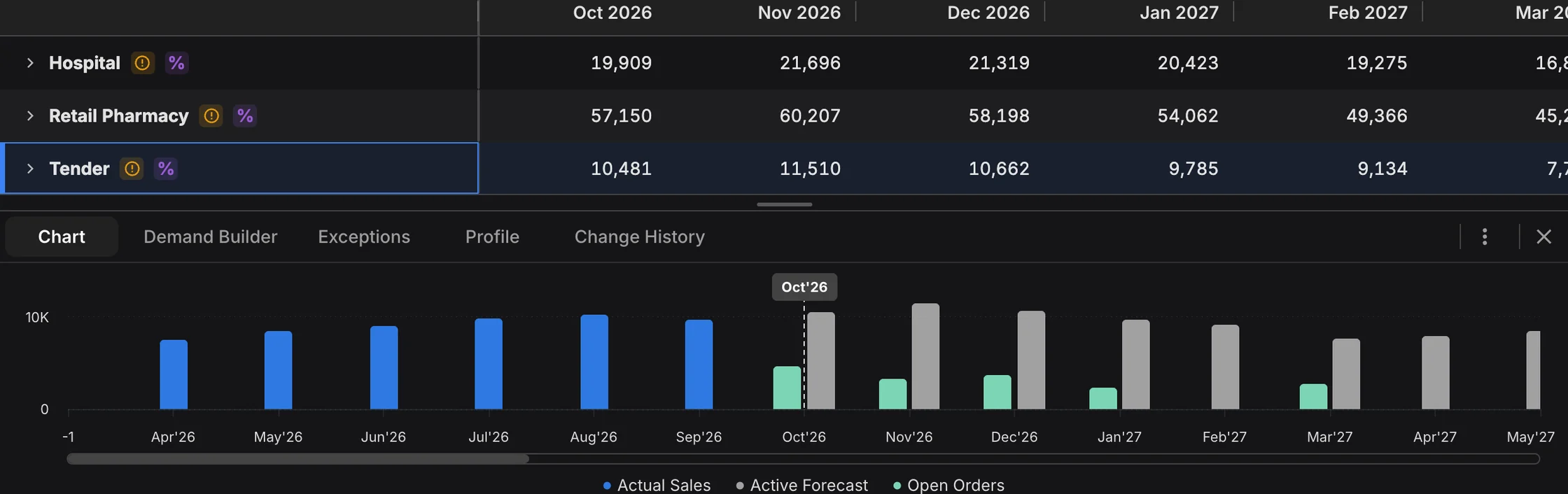
PLAIO Demand Planner cut by channel, Hospital, Retail Pharmacy and Tender, with the tender channel's sales and forecast charted below

In their words

What planning teams say when the plan runs in PLAIO

What a −0.5% bias can hide

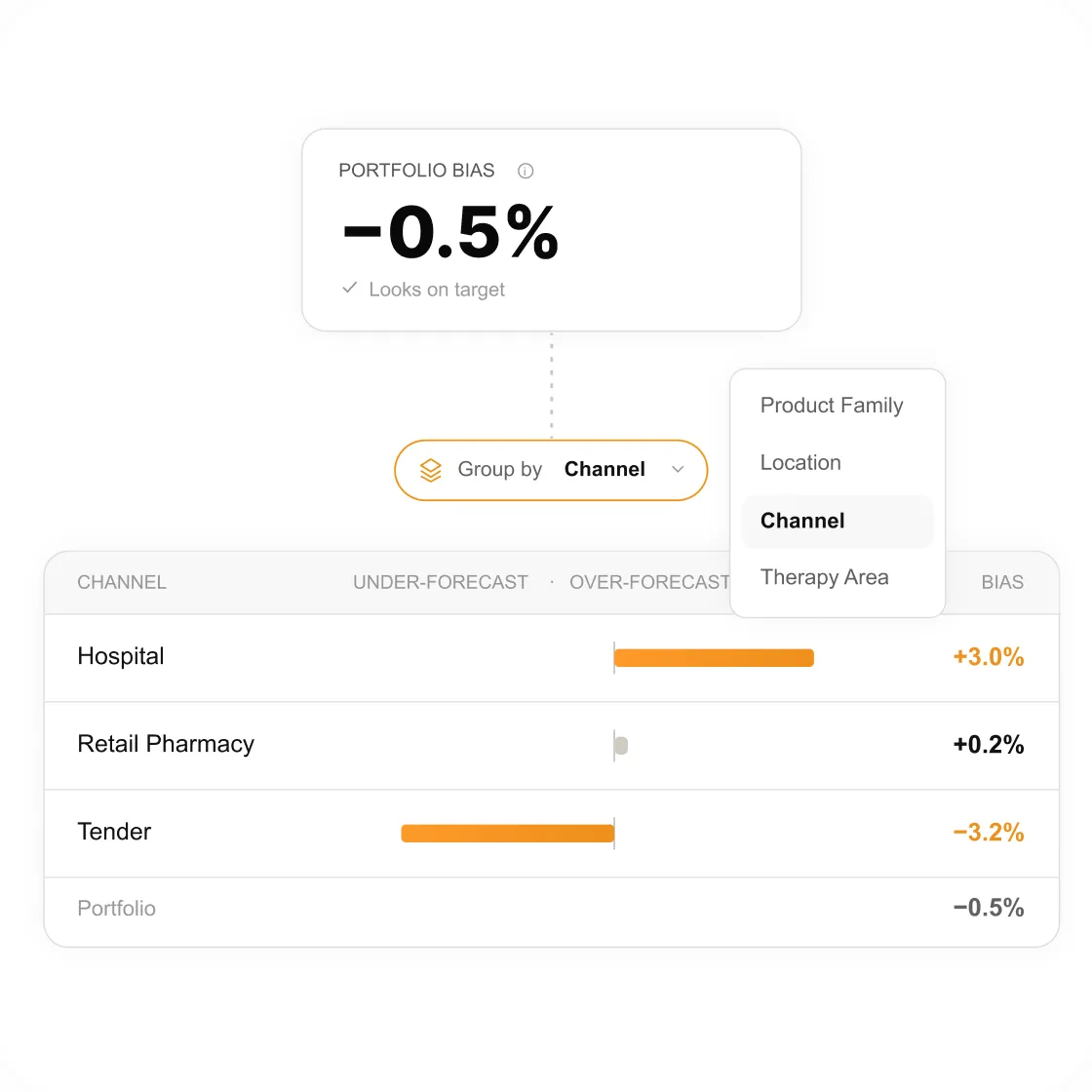
A portfolio forecast bias of −0.5% looks like a team doing its job. By channel, it can be +3.0% on hospital and −3.2% on tender.

Two opposite problems cancel each other out, and neither gets fixed.

That happens when demand is planned as it is reported, not as it behaves. Hospital volume is contract-shaped. Retail pharmacy is seasonal.

Tender is lumpy, binary and enormous when it lands. One averaged line per SKU is wrong in a new way every month.

Why it matters:

You can only fix a forecast problem you can see. Seeing demand drivers shows which segment to fix this month. Supply decisions get more confident.

A portfolio bias of −0.5% grouped by channel: +3.0% on Hospital, +0.2% on Retail Pharmacy and −3.2% on Tender

Segmenting demand in PLAIO

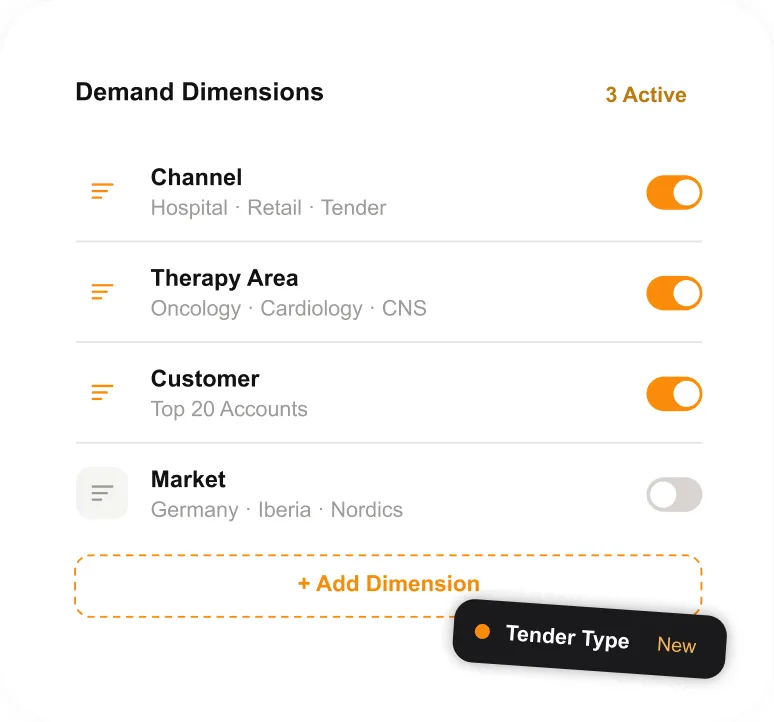
Demand Dimensions list with Channel, Therapy Area and Customer switched on, Market switched off, and a new Tender Type dimension being added

Define the Segments That Matter

Channel, therapy area, customer, market: you define the demand dimensions you plan by. It is your catalog, not a fixed list we ship.

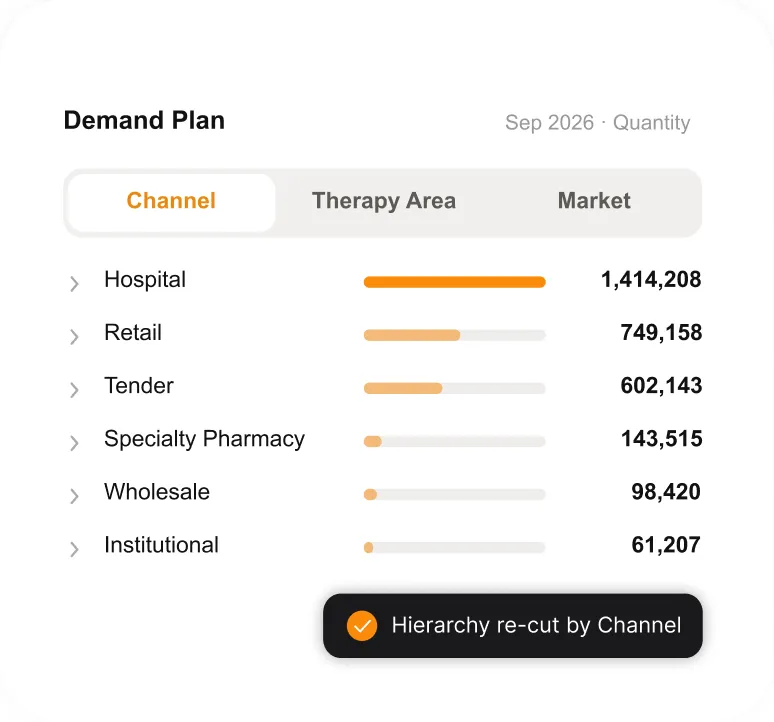
Demand Plan re-cut by channel into Hospital, Retail, Tender, Specialty Pharmacy, Wholesale and Institutional

Re-cut the Whole Plan in a Click

Switch the grouping and the whole demand hierarchy re-cuts by that dimension. No rebuild, no export, no second plan to keep in step.

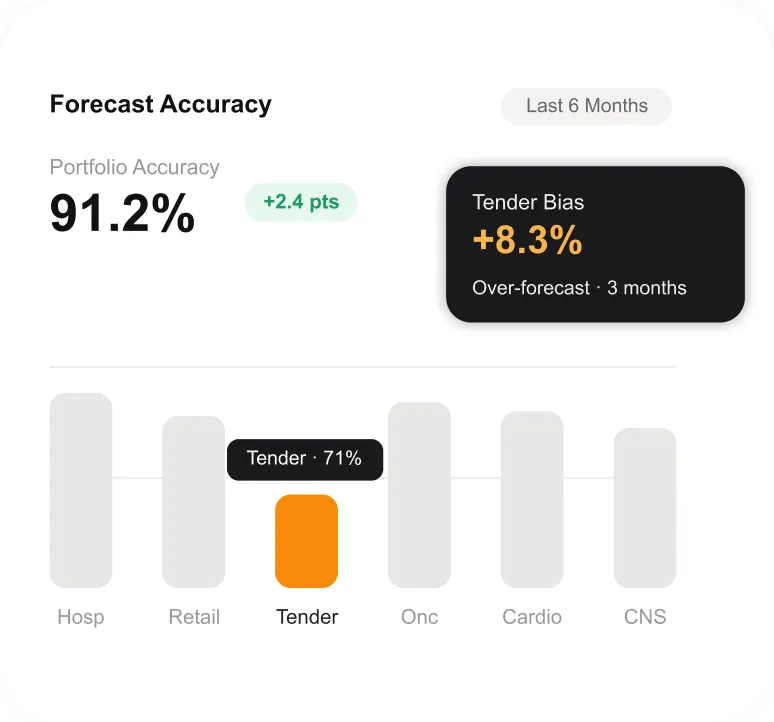
Forecast Accuracy of 91.2% overall, with a bar per channel and Tender highlighted at a +8.3% bias

Measure Accuracy Segment by Segment

Forecast accuracy, error and bias report against the same dimensions as the plan. A healthy portfolio number cannot hide two unhealthy segments.

How demand segmentation works in PLAIO

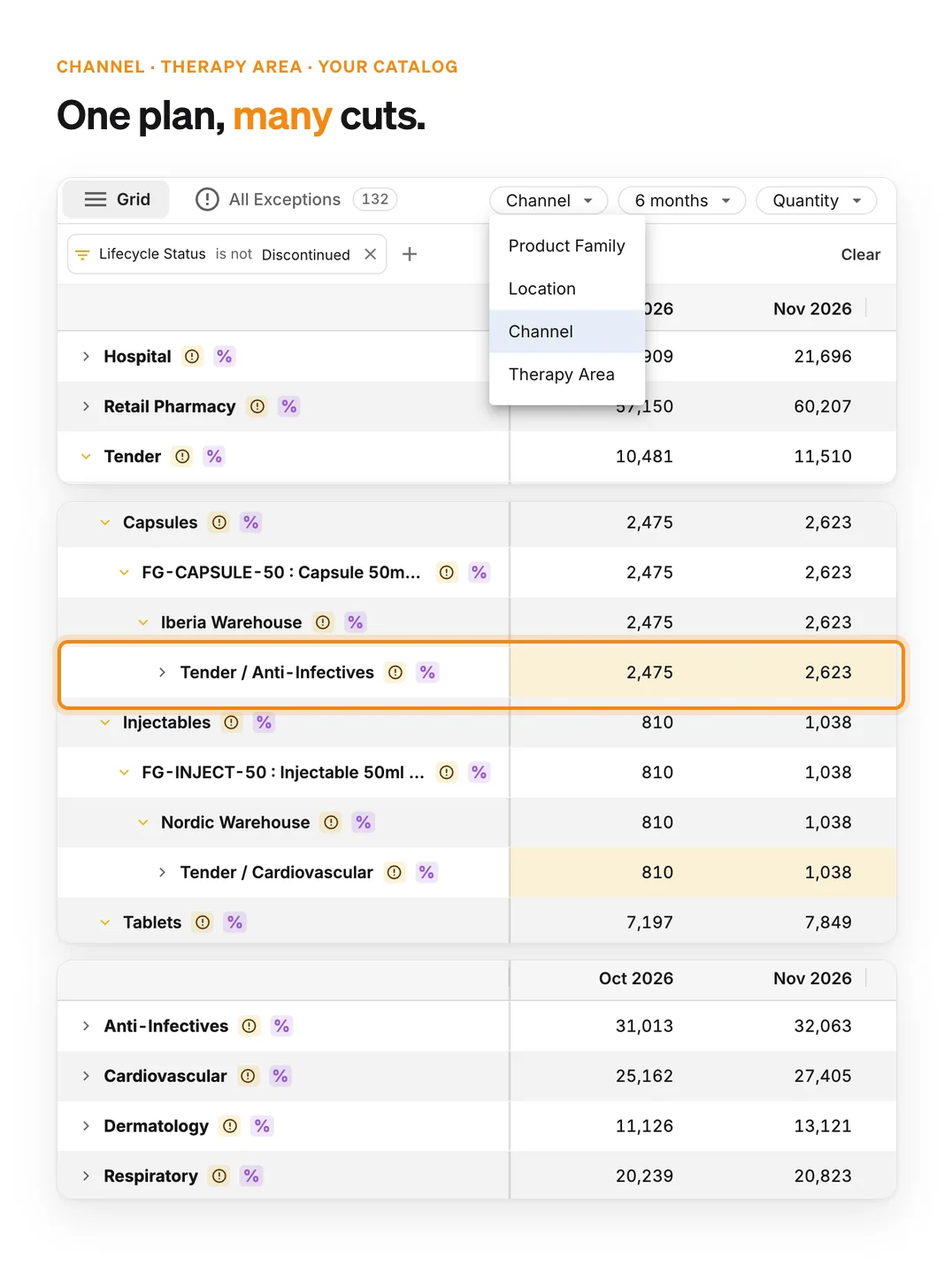
PLAIO Demand Planner regrouped by channel and by therapy area, with each demand node carrying its channel and therapy area

The segment lives on the demand node

A demand node is item × location × your dimensions. So one SKU can be hospital demand in one market and tender in another.

Your dimension catalog, not ours

Channel and therapy area are examples, not built-ins. The catalog is defined per customer. Unknown values are rejected, so segments stay clean.

One plan, many cuts

Group by product family, location, item or any dimension with values on your nodes. Pick one and the plan, drill-downs and numbers follow.

Forecast Accuracy

Accuracy reported the same way the plan is cut

  • Accuracy, error and bias grouped by the same dimensions your plan uses.
  • A portfolio number you can open up, not one you take on trust.
  • Accuracy tracked over time per segment, so an improvement is provable and not anecdotal.

Why it matters:

The forecast review moves from one number to which segment to fix first.

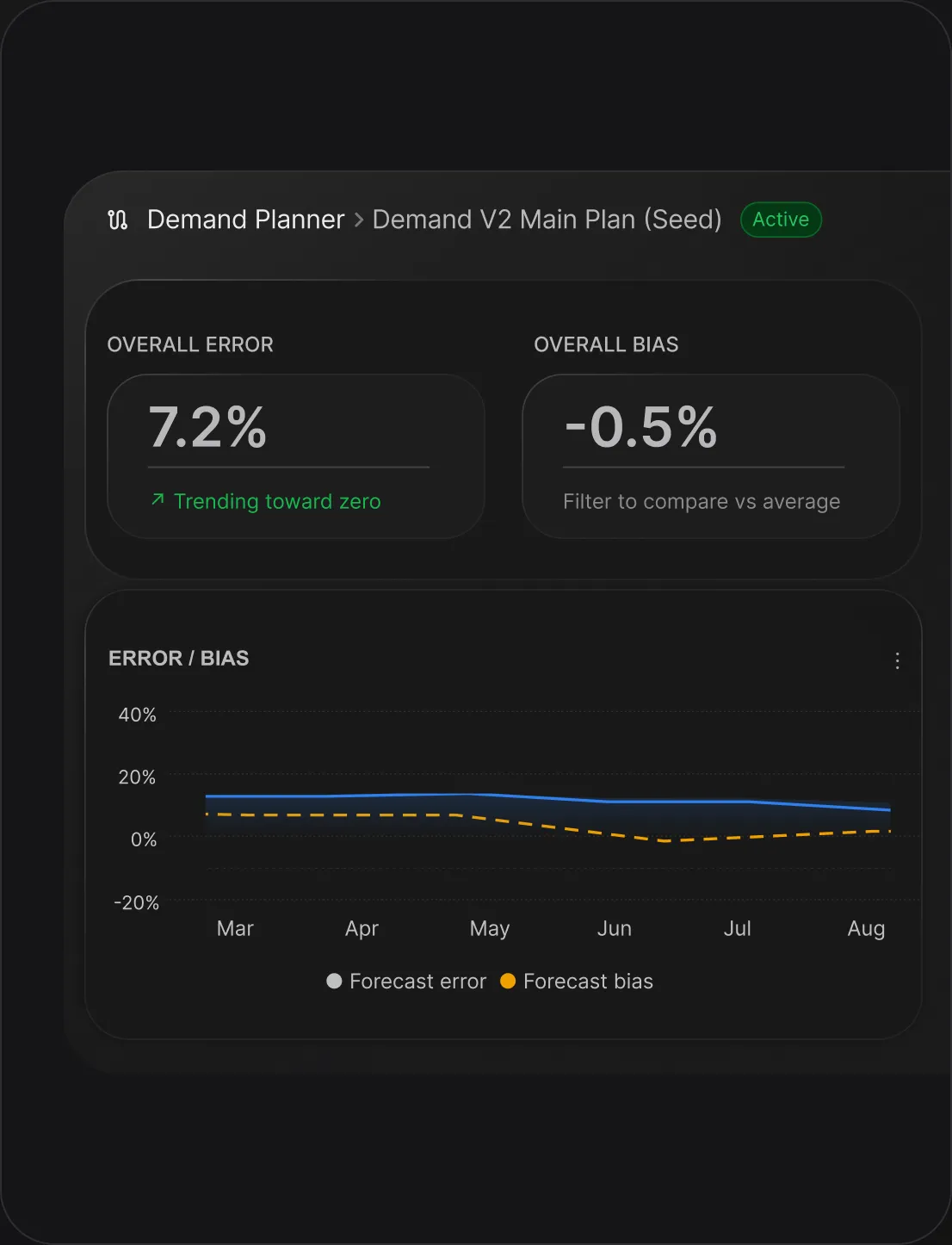
PLAIO's Forecast Accuracy view: overall error of 7.2% trending toward zero, overall bias of −0.5%, and the error and bias trend from March to August

Demand Segmentation FAQ

Demand segmentation is planning and measuring demand as it behaves, not as it is reported. In pharma that usually means splitting a SKU's demand by channel, therapy area, customer or market. A hospital contract, a retail pharmacy season and a tender award follow different patterns.

Whichever ones matter to you. The dimension catalog is defined per customer, so channel and therapy area are examples rather than a fixed list. Alongside your own dimensions, the plan can always be grouped by product family, location and item.

No. There is one demand plan. The segments are part of each demand node's identity. Changing the grouping re-cuts the plan you have, with no parallel copy to reconcile.

Yes. The Forecast Accuracy dashboard groups accuracy, error and bias by the same dimensions the plan uses. That is how a portfolio bias close to zero gets exposed as two opposite errors in different channels.

They come in with your demand data, from your ERP or the spreadsheets you plan with today. They are registered in the dimension catalog first. A value not in the catalog is rejected instead of quietly creating a new demand node. So a misspelled channel never becomes a phantom segment.

No, and deliberately so. You define the dimensions your business plans by. They usually follow commercial and regulatory structures only your team knows. PLAIO carries them through the plan, the drill-downs and the accuracy reporting, with no separate model to maintain for each.

Plan demand the way it behaves

In the demo we cut one demand plan by channel and check each segment's forecast accuracy. Then we look at the supply plan built on it.

Book a demo

Cookie settings

To enhance your experience on our site and to analyze traffic, we use cookies. By clicking "Accept All," you agree to the storing of cookies on your device for analytics purposes. You can manage your settings or learn more in our Privacy Policy.

Manage Settings
  • Your Privacy Matters to Us

    We use cookies to improve your browsing experience and analyze how our website is used. These cookies allow us to understand trends, monitor website traffic, and gather insights to make the site better for you.

    We respect your privacy and are committed to transparent data usage.

    Why Do We Use Cookies?

    Necessary Cookies: These ensure that the website functions properly.

    Analytics Cookies: These help us track site traffic, user behavior, and performance metrics. The data collected is anonymous and allows us to continuously optimize the site.

    Preferences Cookies: We may use cookies to remember your preferences and tailor your experience.

    Marketing Cookies: We may use cookies for marketing purposes.

    Your Control, Your Choice

    By clicking "Accept All," you consent to the use of all cookies. If you prefer, you can customize your choices and opt out of certain cookies. You can learn more about how we handle data and cookies in our Privacy Policy.