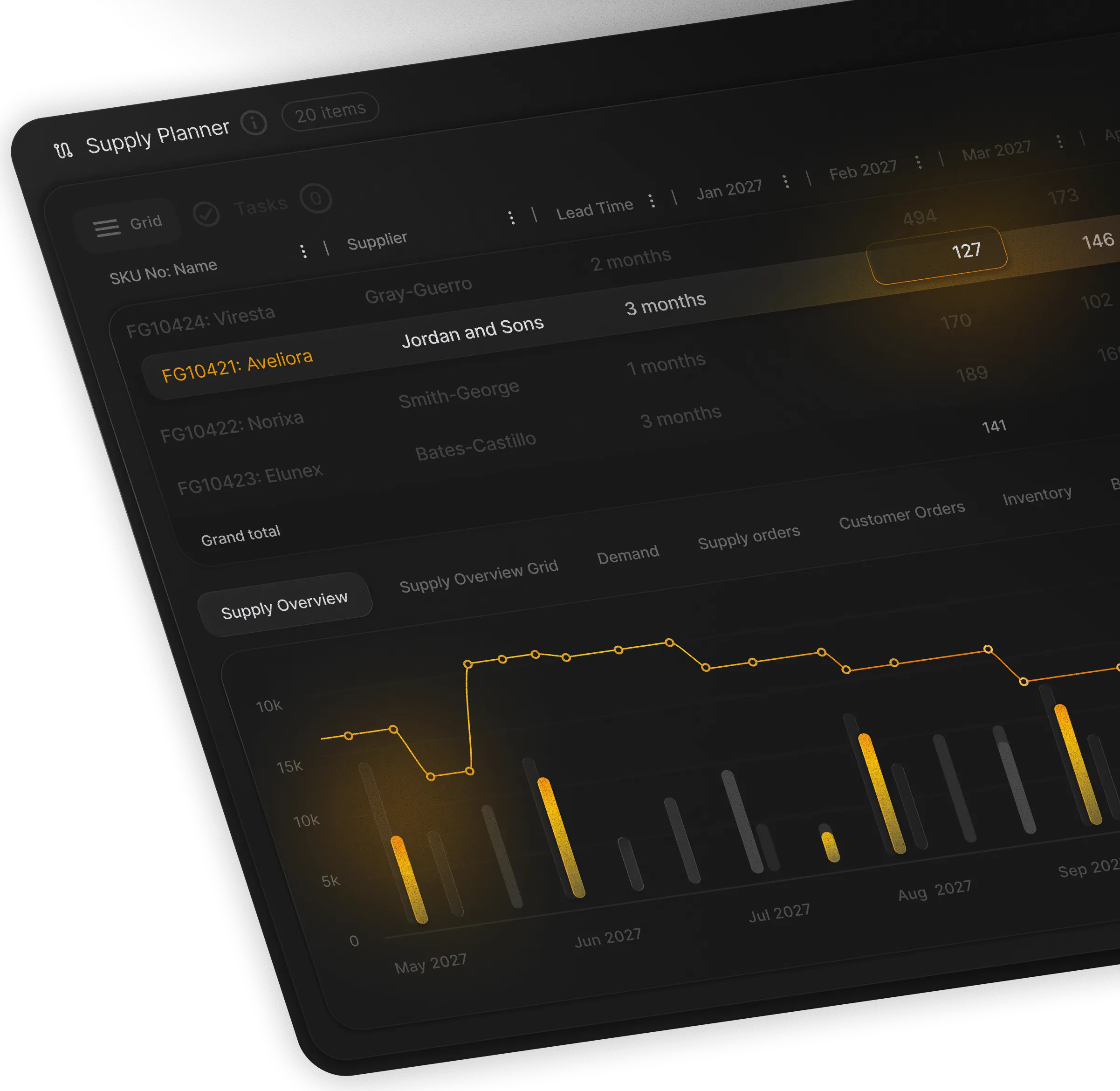
The SAP APO replacement made for pharma
Mainstream maintenance for SAP APO ends in 2027, and years of macros don’t move easily. PLAIO takes over demand and supply planning with shelf life, CMO lead times and MOQs inside the plan. SAP stays your ERP.
See a few of your APO SKUs planned in PLAIO
30 minutes with a PLAIO planning specialist. Bring a few SKUs and a rough idea of what APO does for you today.
Leading pharmaceutical companies






What 2027 means for an APO planning team
SAP APO’s mainstream maintenance ends in 2027. The software is only part of it. Years of macros, CIF models and custom planning books sit on top, and the people who built them are often moving on.
Translating every macro into a new tool, line by line, is the slow way out.
Teams tend to treat the new planning tool as an empty container for the old logic. Plenty of those macros were written for exceptions on products you stopped selling years ago. Carrying them over takes months, and when the new setup gets too hard to change, planners go back to Excel.
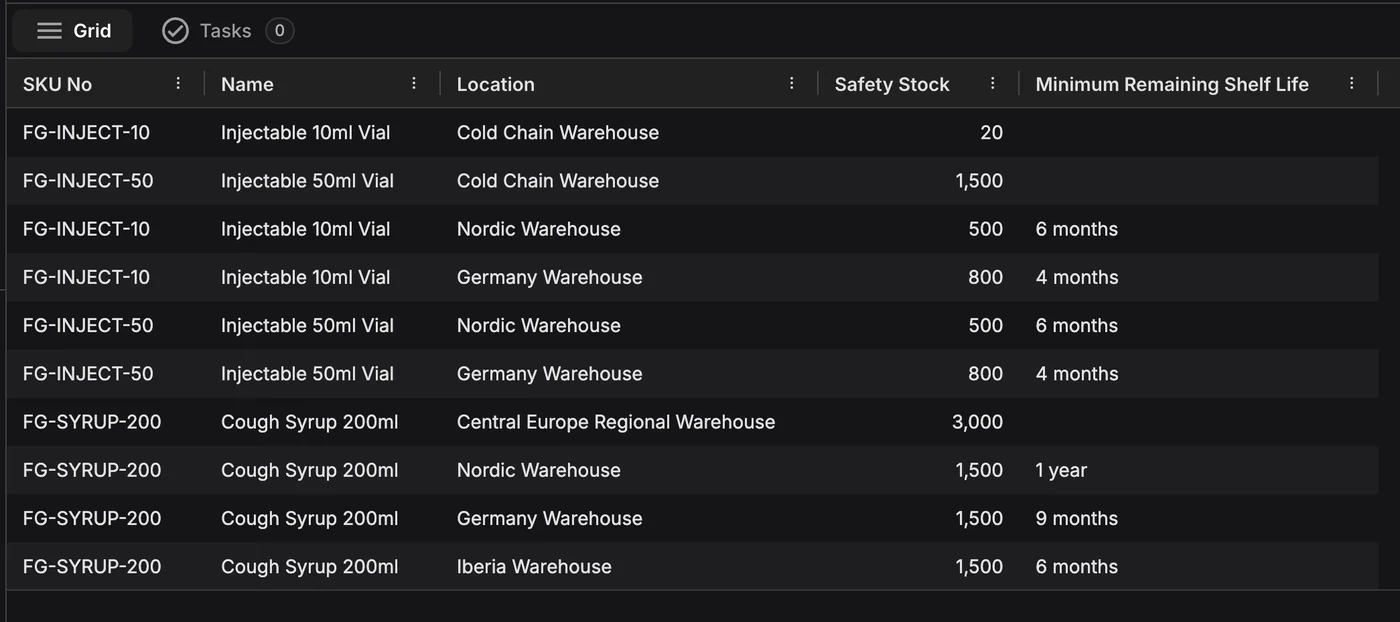
Some of the planning never lived in APO anyway. Minimum remaining shelf life by market usually sits in an offline spreadsheet next to it, and so do the CMO rules.
Why it matters:
The exit is a chance to plan on the network as it runs today: its locations, lanes, lead times and batches. Start there and you’ll see quickly which old logic still earns its place.
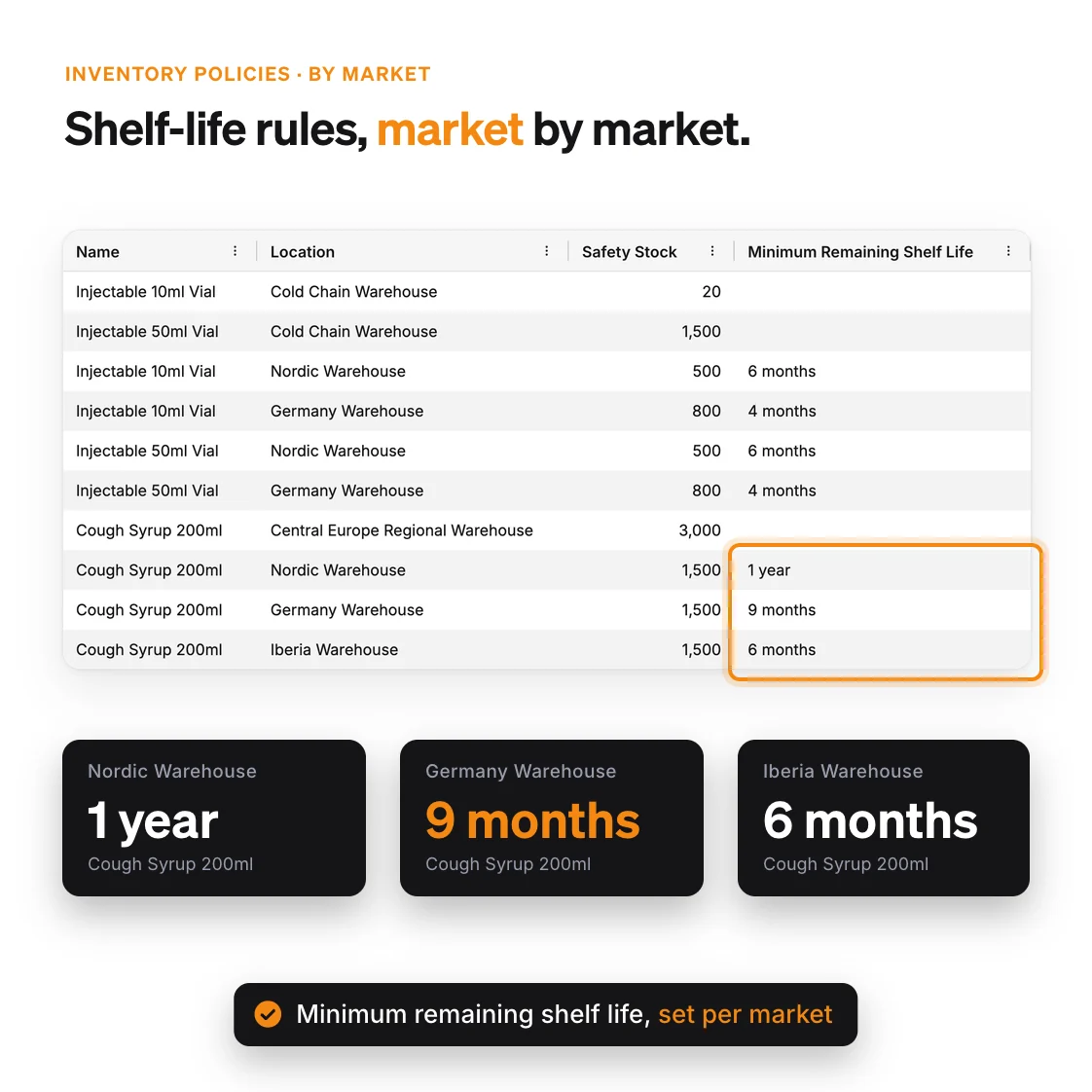
What takes over from APO in PLAIO
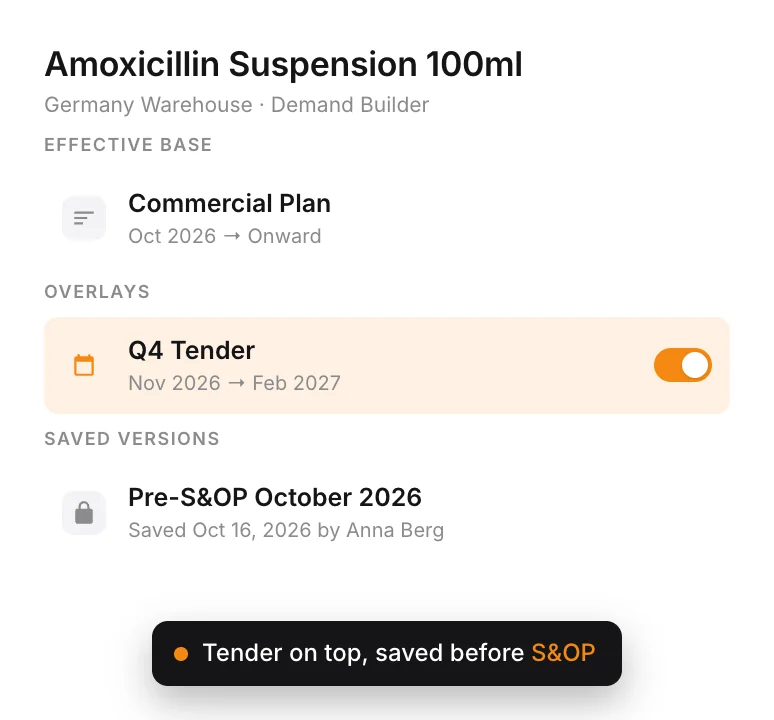
Demand planning without change requests
Build a forecast from a baseline, adjustments and overlays such as a tender, then save it as a version before S&OP. Planners change their own views. Nobody files an IT ticket.
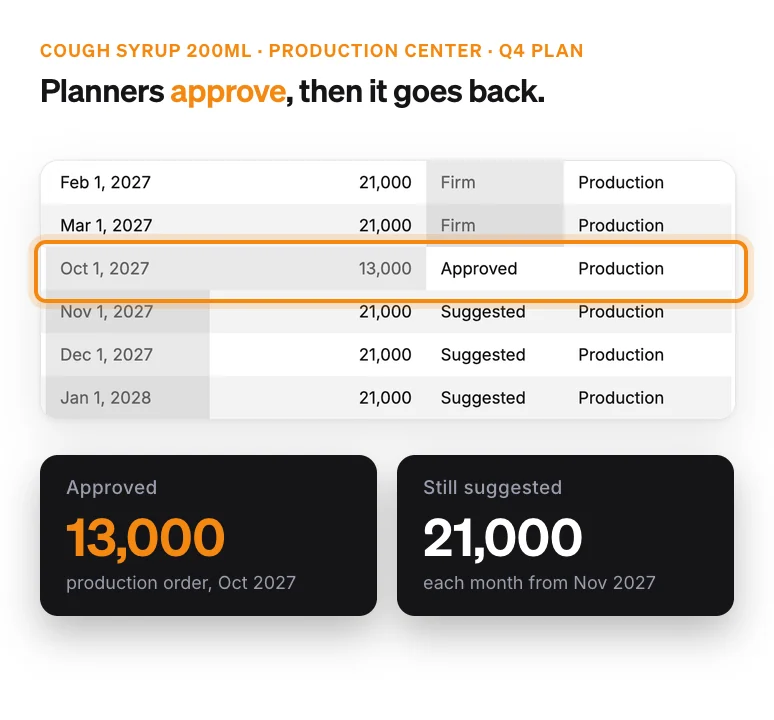
Supply planning lane by lane
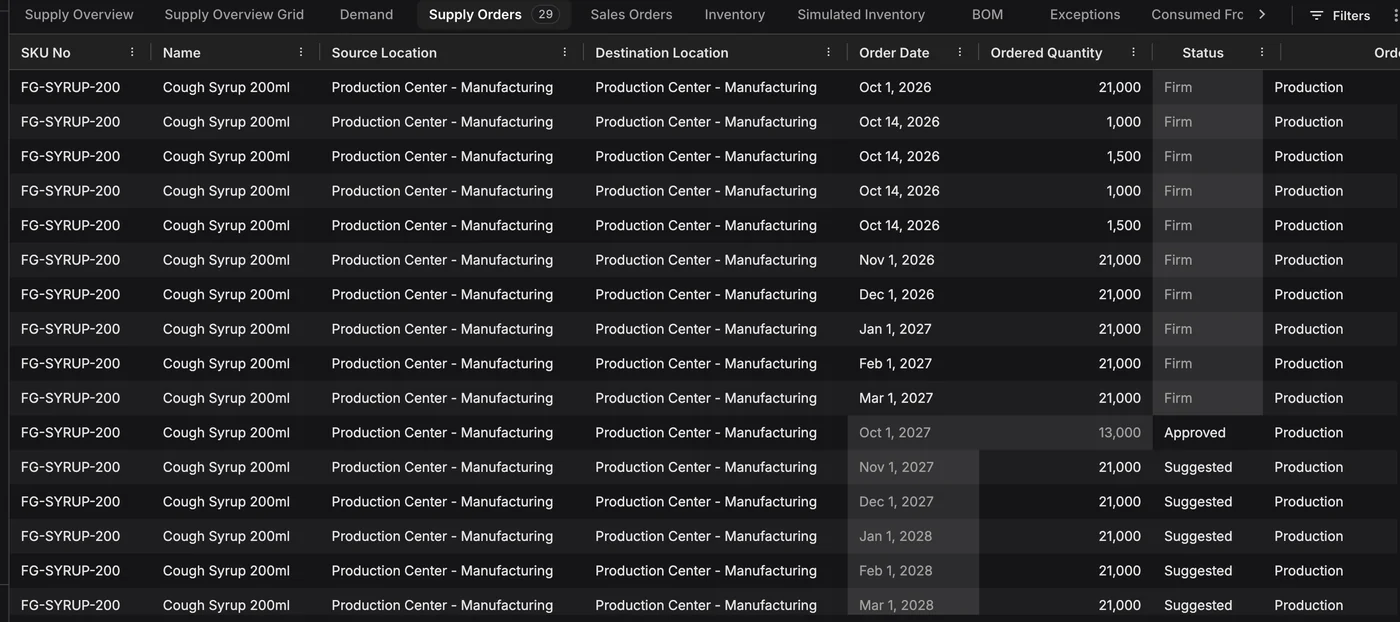
Suggested orders respect each lane’s lead time, MOQ and order increment. A planner approves them, and only approved orders go back to SAP.
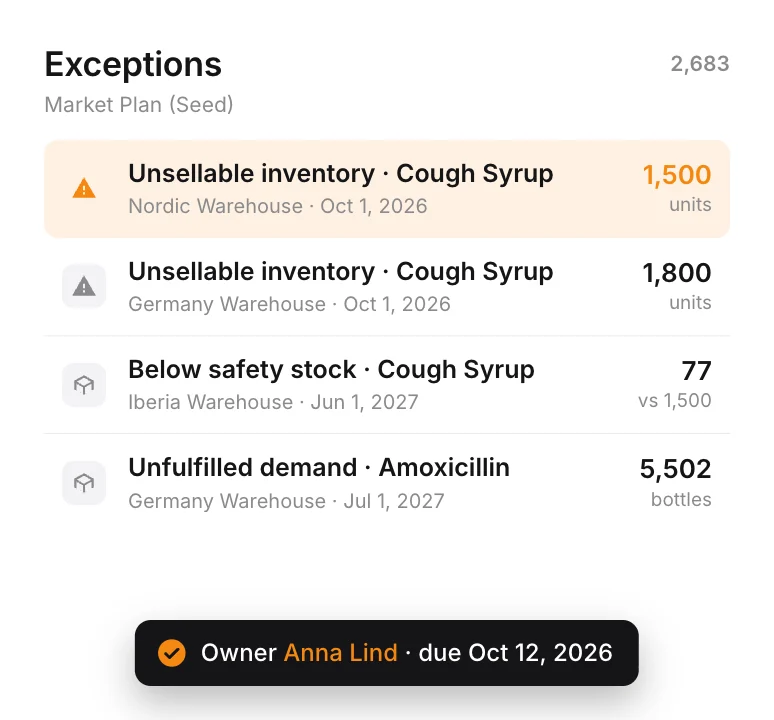
Exceptions you can actually work
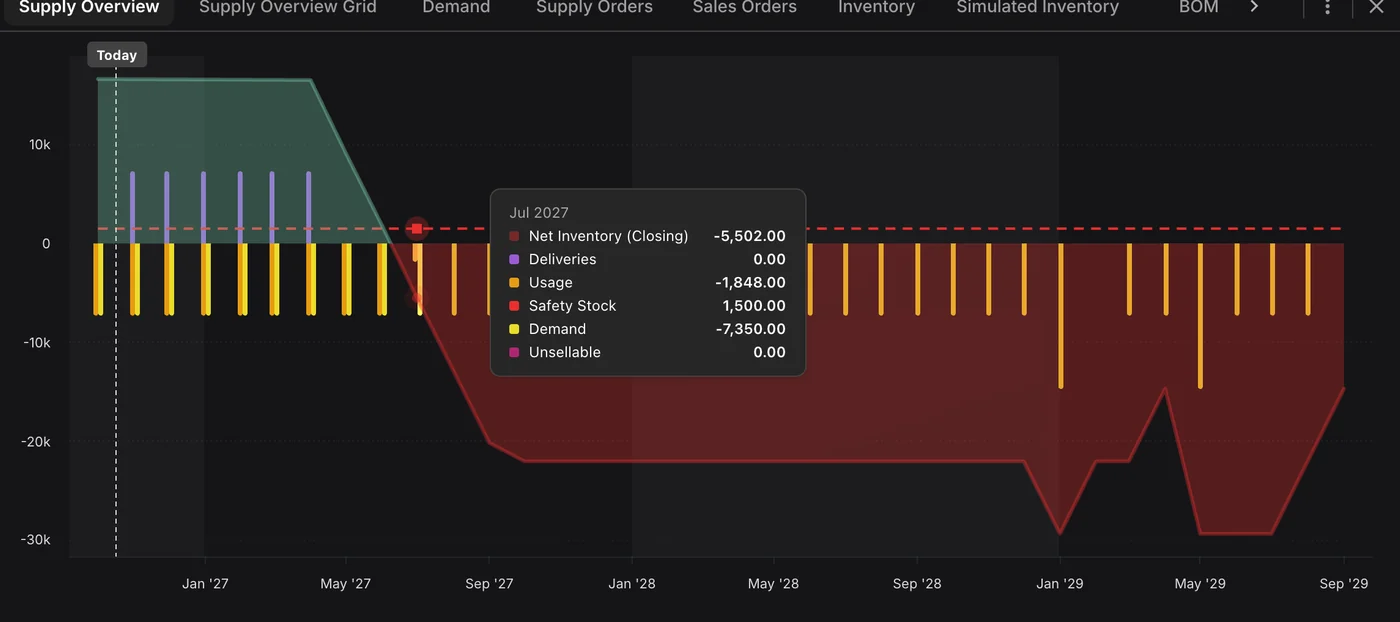
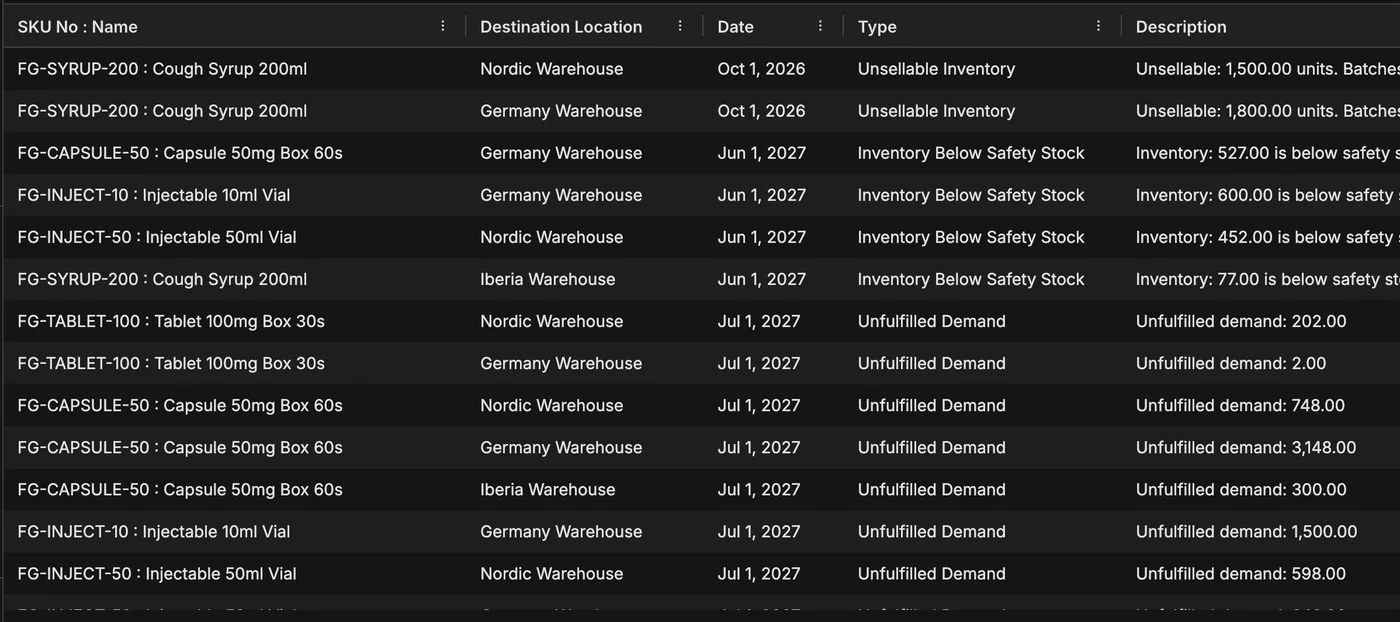
Stockouts, stock below safety stock and unsellable inventory come with their numbers attached. Each one can be given an owner and a due date.
Two ways off APO
Both are real options. Here is how they tend to differ for a mid-market pharma team.
| Topic | PLAIO | Re-platforming to a general-purpose suite |
|---|---|---|
| Built for | Pharma only. Demand, supply and production planning. | Many industries. Pharma rules are set up during the project. |
| Shelf life and CMO rules | Minimum remaining shelf life by market, MOQs, batch increments and CMO lead times are in the data model. | Depends on how the project models them. |
| Your APO logic | Start from the network as it runs today and bring over the logic you still use. | Often scoped as a translation of existing macros and planning books. |
| SAP as ERP | ECC or S/4HANA stays. Approved orders go back as planned orders and purchase requisitions. | SAP stays. Integration to the new platform is part of the project. |
| First plan | Start on spreadsheet exports. Most teams are planning in PLAIO within weeks. | Depends on the scope of the programme. |
| Validation | The planning layer is what gets qualified. SAP stays as it was validated. | The new platform and its SAP integration are qualified. |
A general comparison of two approaches, not of any one vendor’s product.
How PLAIO works with SAP
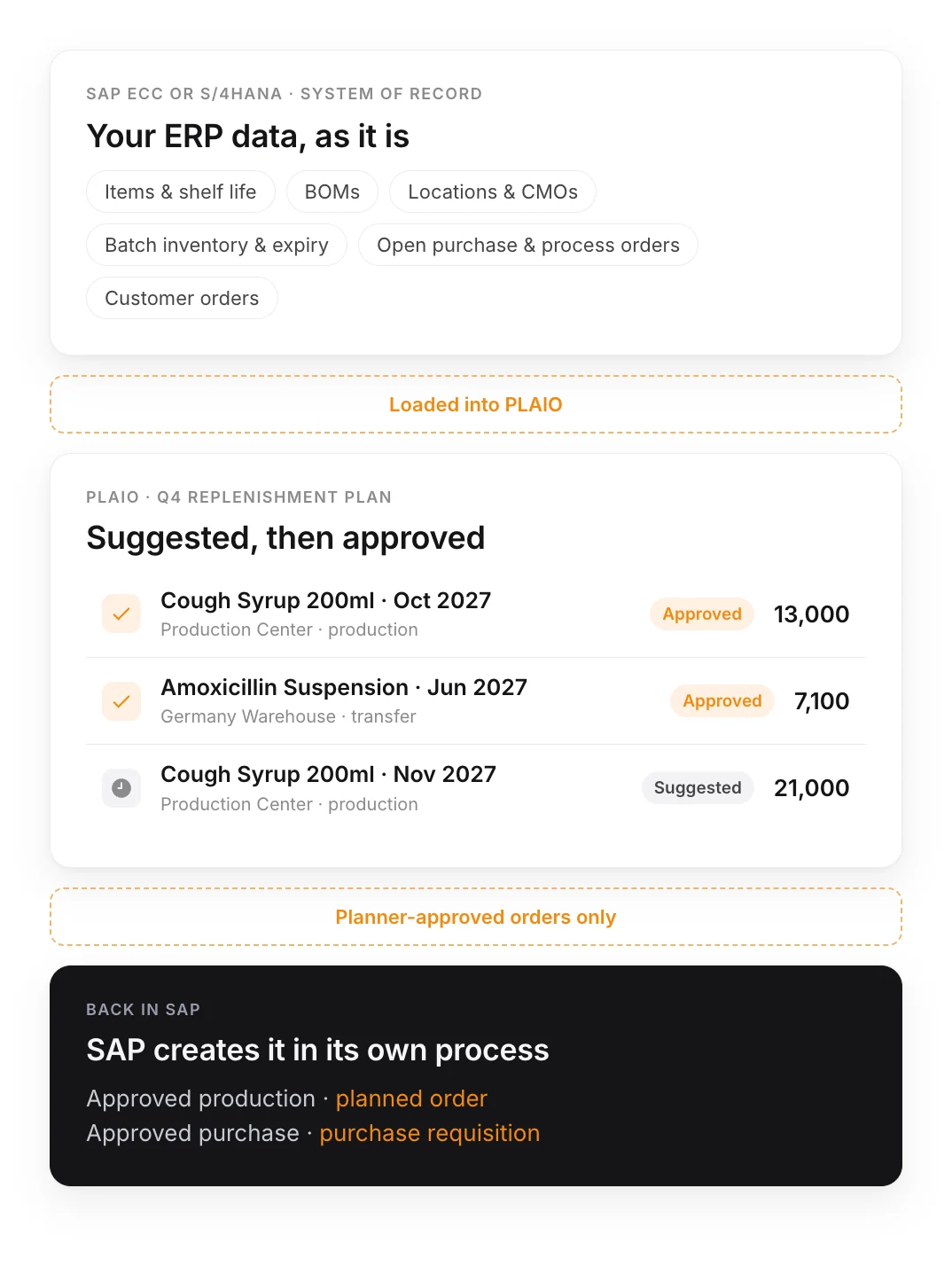
SAP stays the system of record
Orders, stock and financials stay in SAP ECC or S/4HANA. PLAIO plans on items and their shelf life, BOMs, locations including your CMOs, batch inventory with expiry dates, open purchase and process orders, and customer orders.
We connect SAP for you
Your IT team gives us access to SAP or to the data warehouse it feeds. AI drafts the data mapping and one of our consultants checks it. Your item, location and order numbers stay as they are.
Approved orders go back as SAP documents
A planner signs off each suggestion. It goes back to SAP as a planned order or purchase requisition, with the approver’s name and a timestamp, and SAP creates it in its own process.
Run it next to APO first
Plan one product family in PLAIO while APO keeps running. Compare the two over a cycle or two before you switch anything off.
Is your team ready to leave APO?
-
Do you know which of your APO macros still shape live planning decisions?
-
Can your planners change a planning view without raising an IT change request?
-
Is minimum remaining shelf life by market planned in the system, rather than in a spreadsheet beside it?
-
When a CMO or API supplier slips, can you see the effect on stock and service across markets the same day?
-
Do you have a plan for demand and supply planning after 2027 that doesn’t wait on the S/4HANA migration?
Answer the five questions
Two or more “no” answers means the end of APO will hit planning harder than the timeline suggests. Either way, 30 minutes on a few of your own SKUs shows what planning looks like after APO.
Bring a few SKUs. See planning after APO
30 minutes on your own products, markets and CMOs, with SAP staying exactly where it is.
Test it on a few SKUs Prefer to read first? Navigating the SAP APO end of life