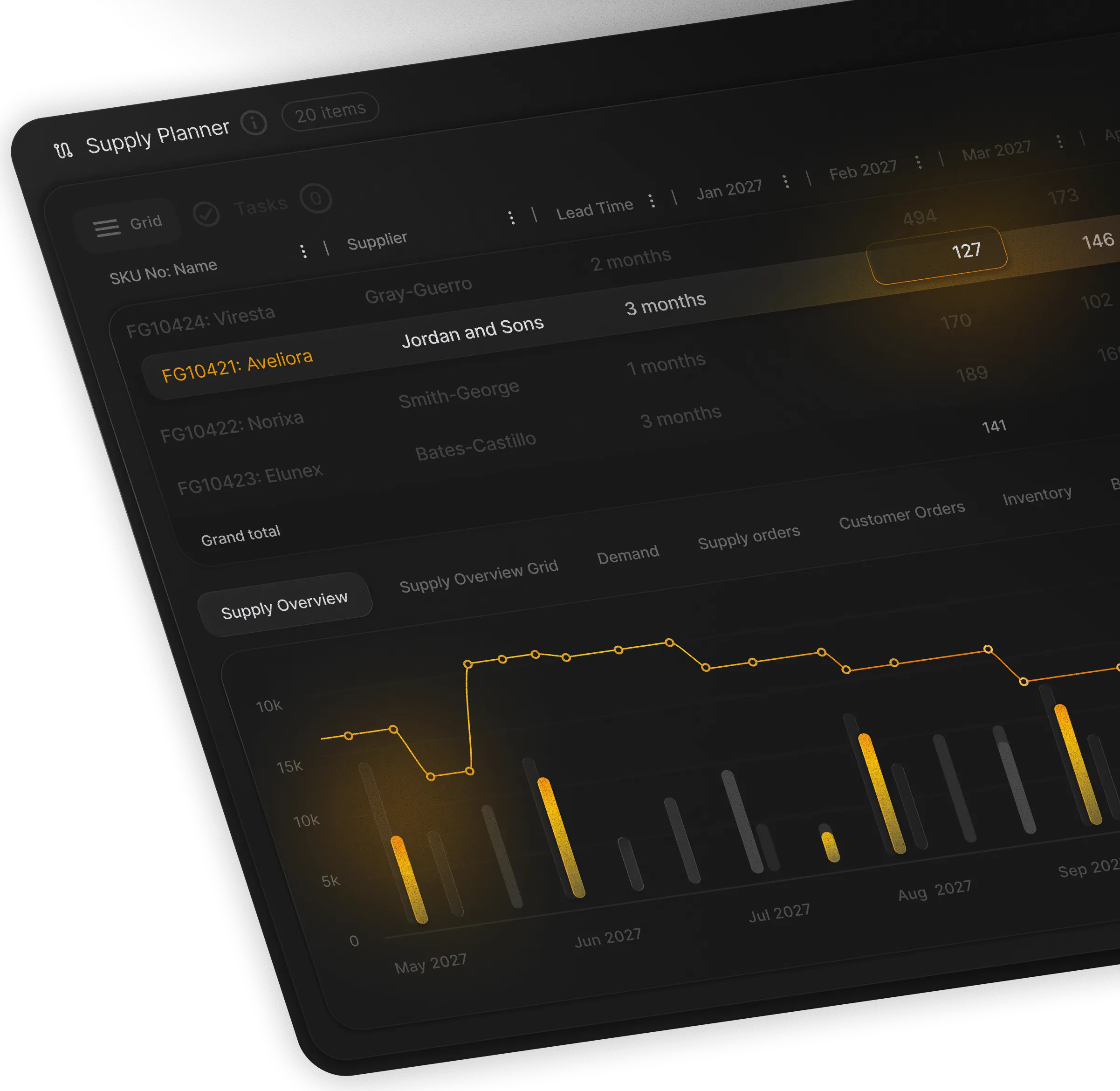
Pharmaceutical inventory management that flags expiry early
Short-dated stock usually turns up at the warehouse, when a customer rejects a delivery or finance writes off a batch. PLAIO plans each batch against the shelf life every market accepts, so you see the write-off months ahead.
See a few of your SKUs planned batch by batch
30 minutes with PLAIO. Bring a few SKUs, their shelf-life rules and the stock report you use today.
Leading pharmaceutical companies






Stock on the shelf isn’t always stock you can sell
A batch can sit in the right warehouse and still be no use to the market that needs it. Each market accepts a minimum remaining shelf life, and a spreadsheet rarely checks that batch by batch.
So the plan counts stock that will be too short-dated by the time it ships.
The ERP shows what is on hand. Planners add safety stock on top to feel covered, and some of that buffer expires on the shelf. A CMO’s minimum order forces a bigger purchase than the market needs, and nobody works out what it does to write-offs.
Usually it surfaces at the quarterly close. By then it is too late to transfer the stock or change the order.
Why it matters:
Expiry belongs in the plan calculation. Once shelf life by market is part of it, write-off risk is a number you review in S&OP each month, while there is still time to move the stock.
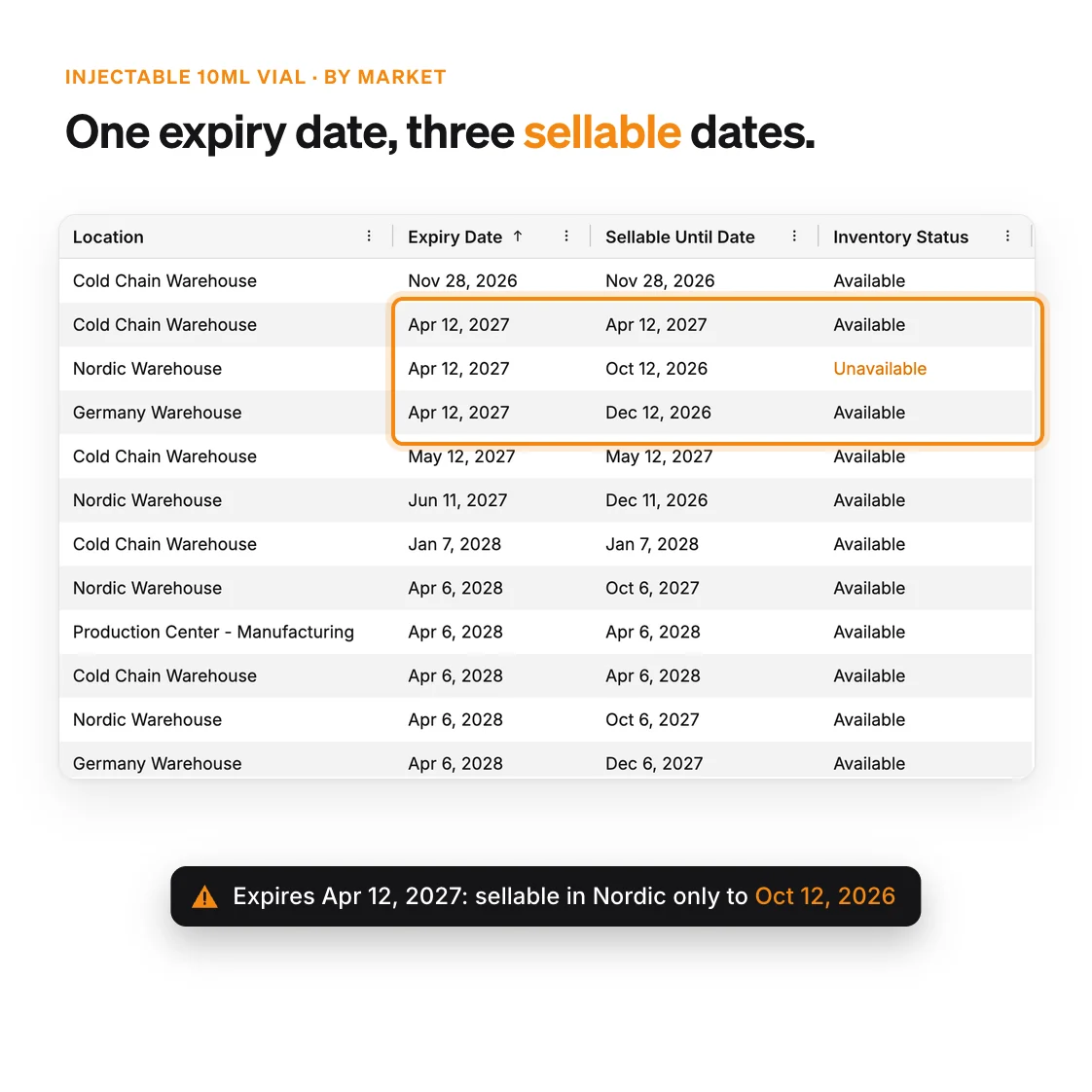
How PLAIO keeps inventory sellable
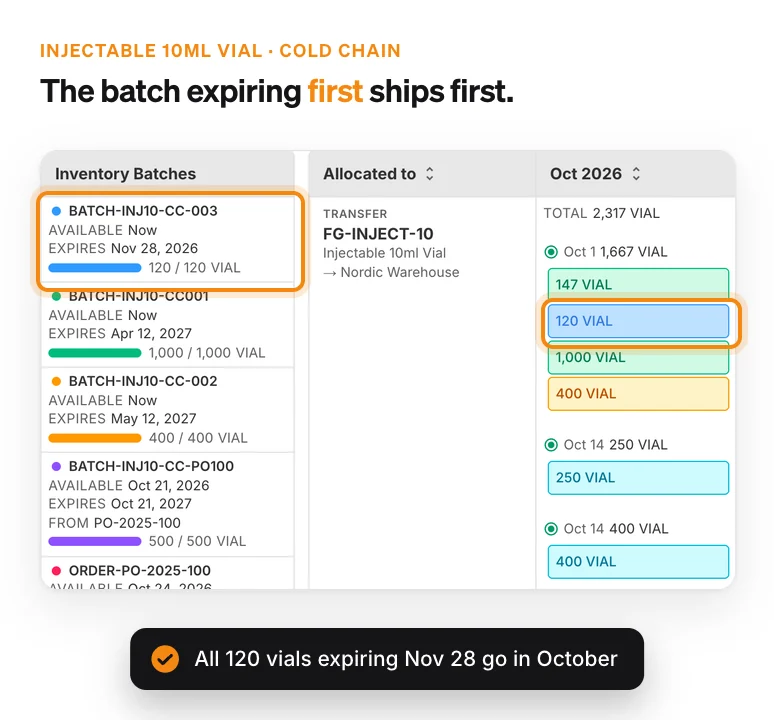
First expiry, first out
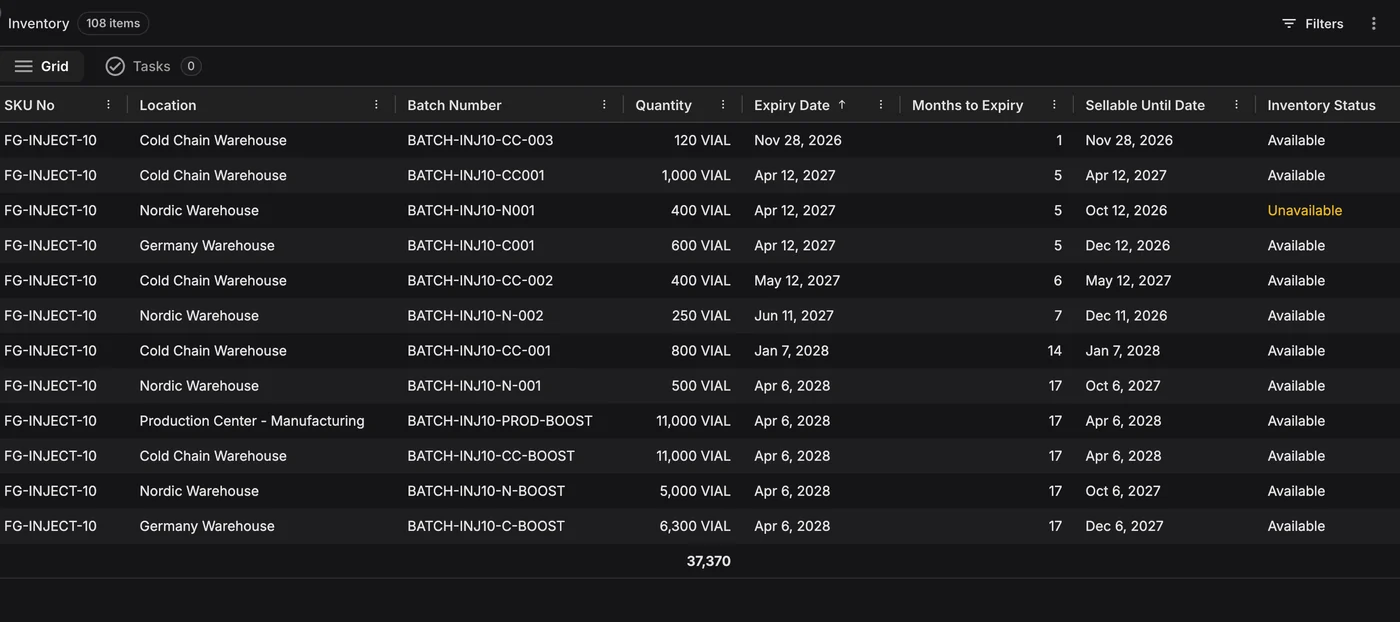
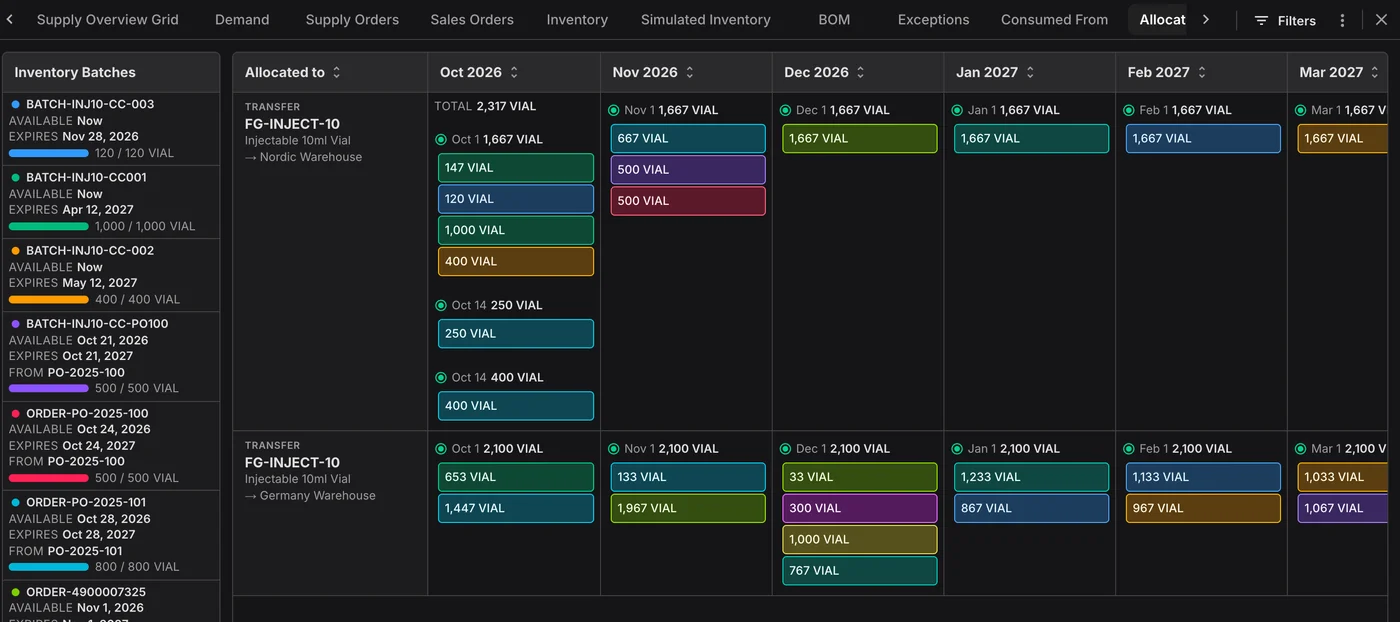
Stock is planned batch by batch, and the earliest-expiring batch is used first. Each batch keeps its own expiry date.
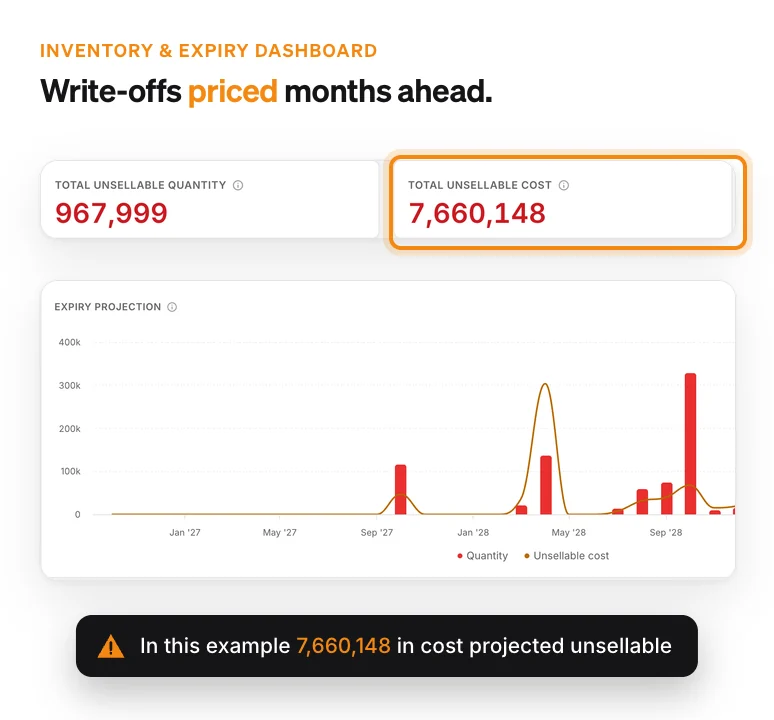
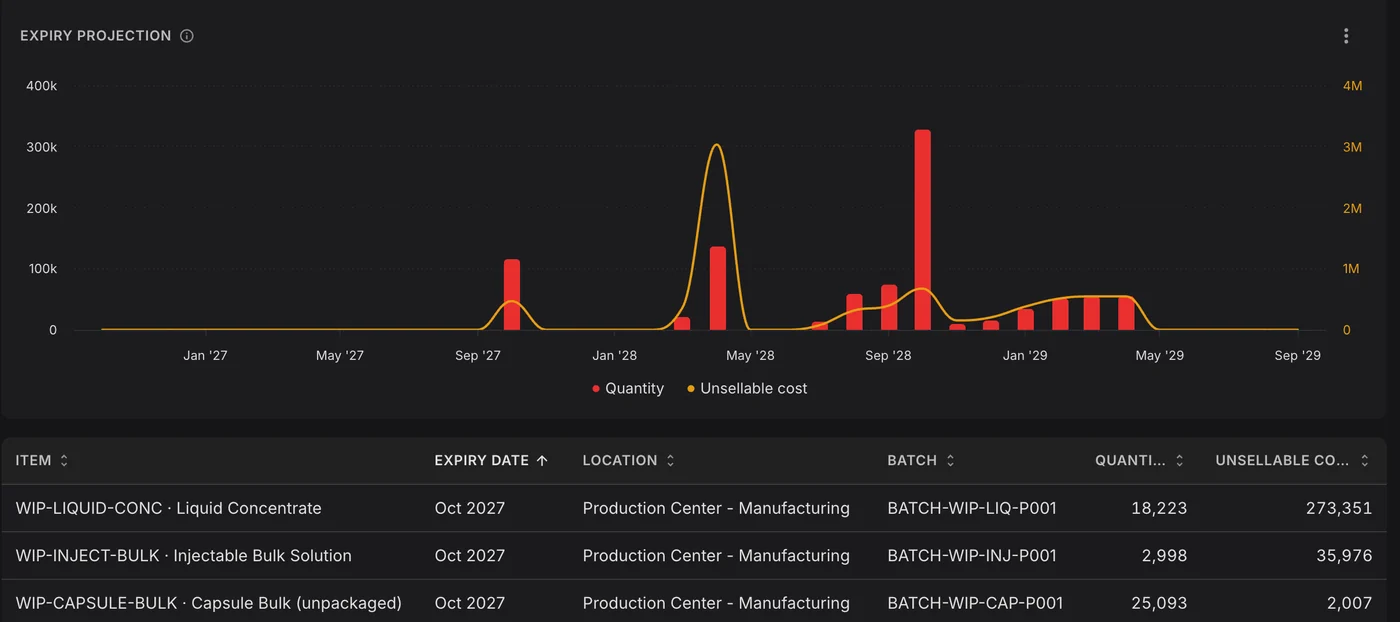
Write-offs priced before they happen
The Inventory & Expiry dashboard projects the quantity and cost heading for expiry, by item, location and batch. Change a rule or an order, re-run the plan, and the projection follows.
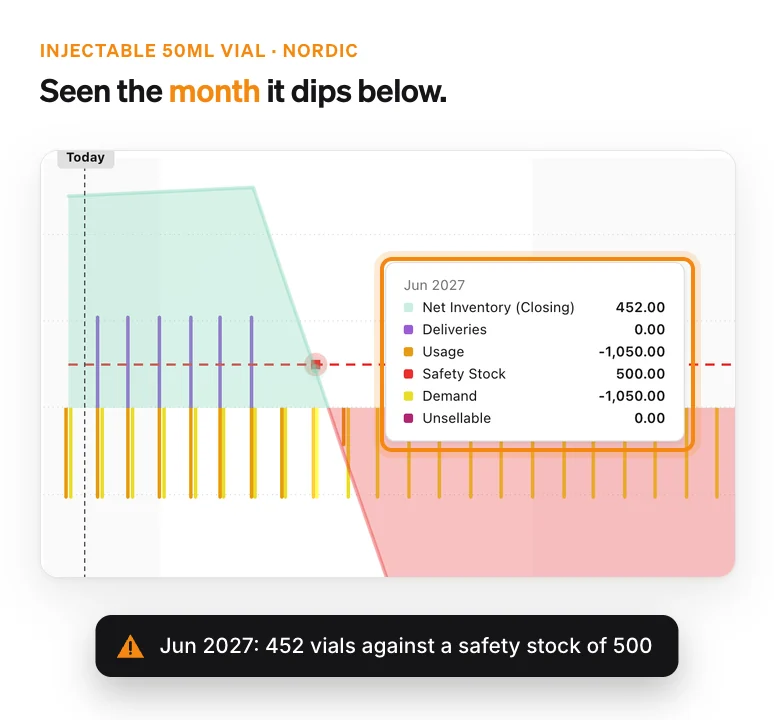
Safety stock per item and location
Some items need a fixed quantity. Others need cover in days, weeks or months that moves with demand. Any month a location is projected below its level gets flagged.
How pharma inventory planning works in PLAIO
Shelf life set per market
Give an item a minimum remaining shelf life and override it per stocking location, say six months for one market and four for another. PLAIO works out the day each batch stops being sellable there.
Short-dated stock stops counting
If a batch will be too short-dated by the time it is needed, it doesn’t count toward demand at that location. The plan orders or transfers the stock that is actually required.
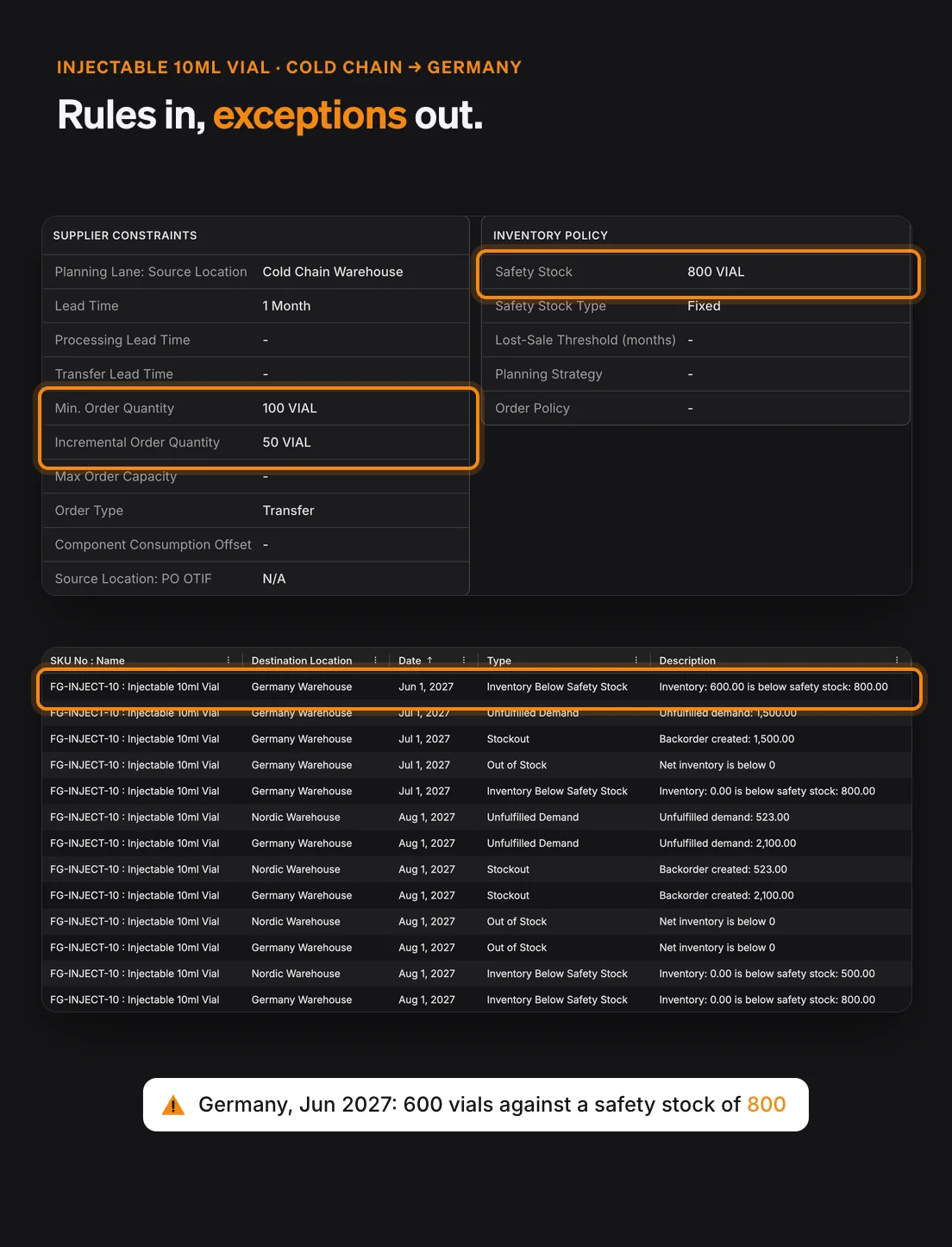
Orders that respect MOQs and lead times
Each supply lane carries its lead time, MOQ, order increment and maximum order size. Suggestions arrive already rounded and timed, and a planner approves each one before it goes back to the ERP.
One list of what is at risk
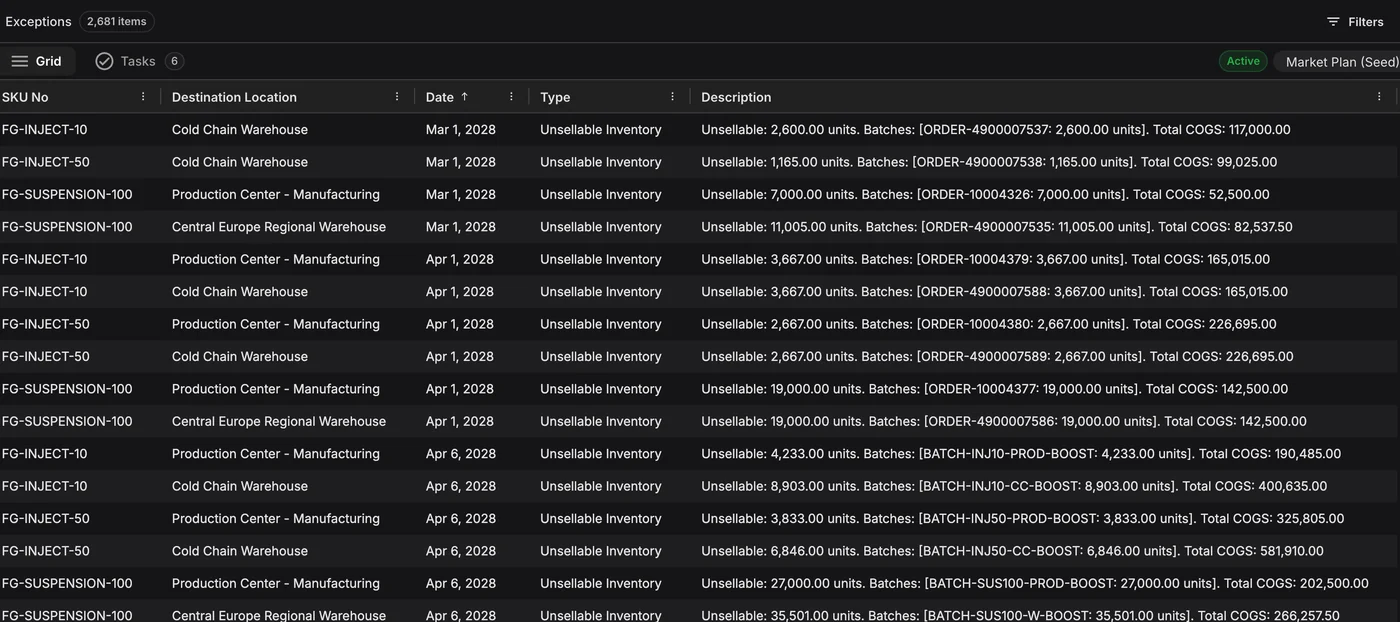
Stockouts, stock below safety stock and unsellable inventory all go on one exceptions list. Each line names the SKU, the location and the month.
Will you see the next write-off coming?
-
Can you see today which batches will expire before they sell, and in which warehouse?
-
Does your plan check each market’s minimum remaining shelf life, batch by batch?
-
Do you review the projected cost of expiry every month, before the quarterly close?
-
When a CMO’s minimum order forces a bigger purchase, can you see what it does to expiry risk before you place it?
-
Is safety stock set per item and location, and does it move with demand?
Answer the five questions
Two or more “no” answers means expiry is being found late. Either way, 30 minutes on a few of your SKUs shows what batch-level planning would flag.
See the next write-off while you can still prevent it
30 minutes on your own products: batches in expiry order, shelf life by market, and the cost of what is heading for expiry.
Book my 30-minute demo Prefer to read first? How can planners in pharma reduce stockouts without overstocking?