Demand Planning

Demand planning software built for pharmaceutical complexity

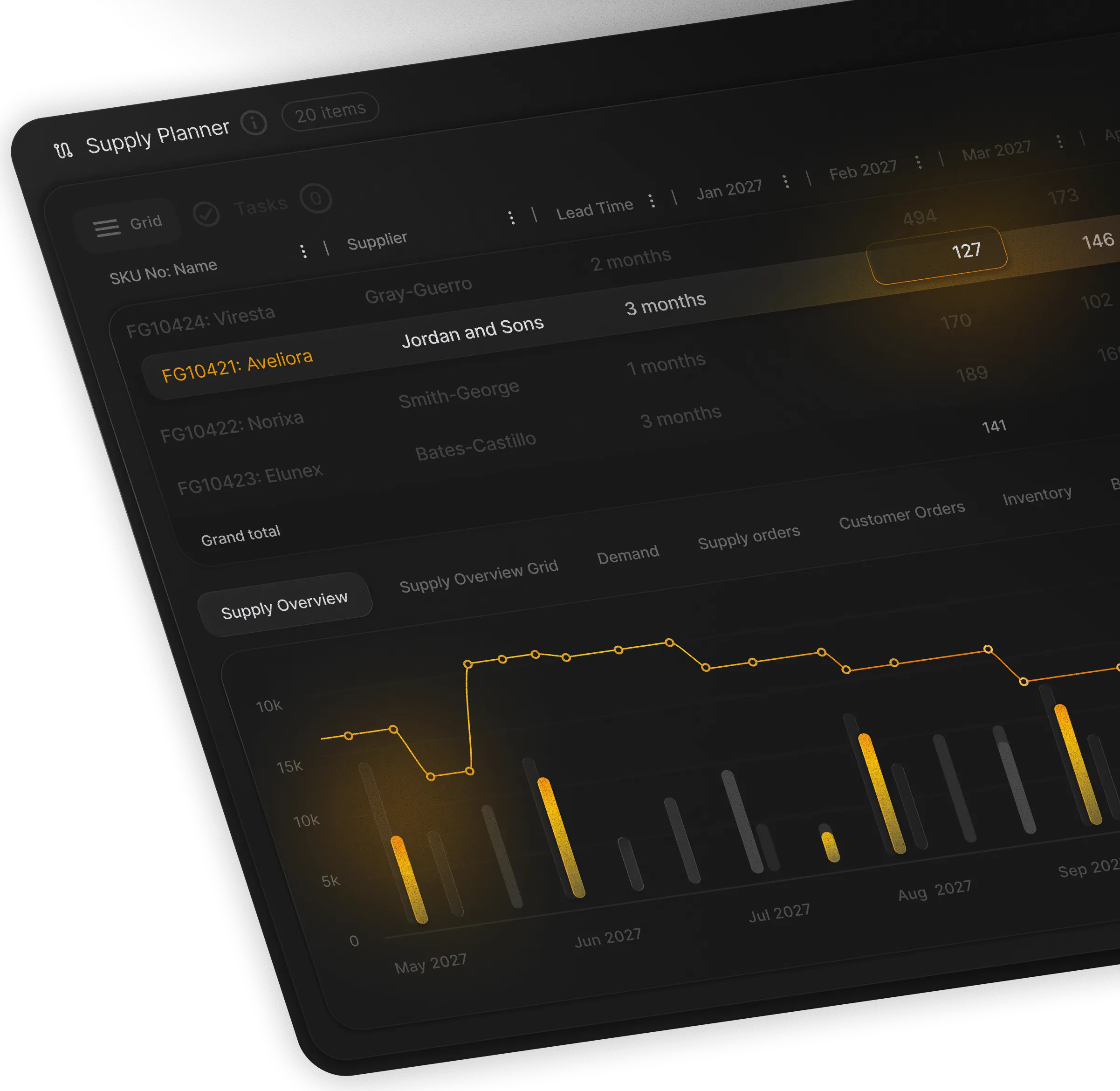
Forecast more accurately. Plan collaboratively. The ML forecast, open orders, tenders and the commercial plan become one demand plan. Supply plans against that number.

Book a demo

First thing Monday, see what moved

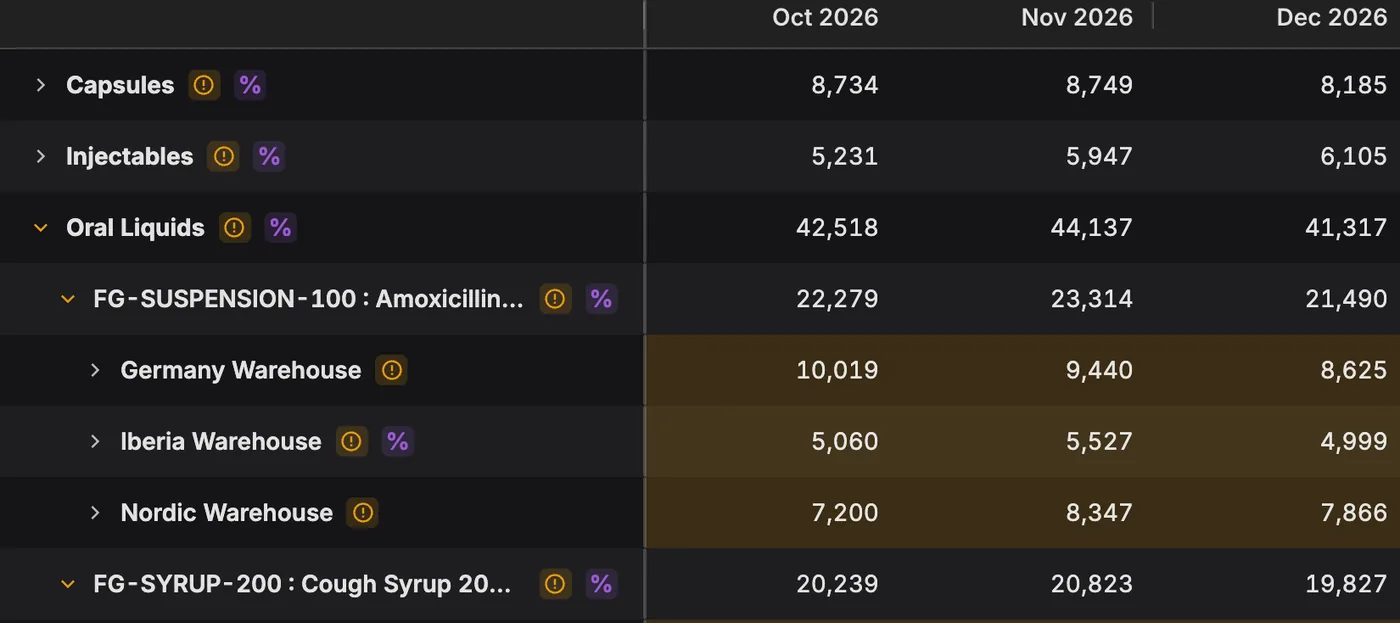
Before anyone opens the grid, PLAIO has already flagged whatever drifted from last cycle's plan.
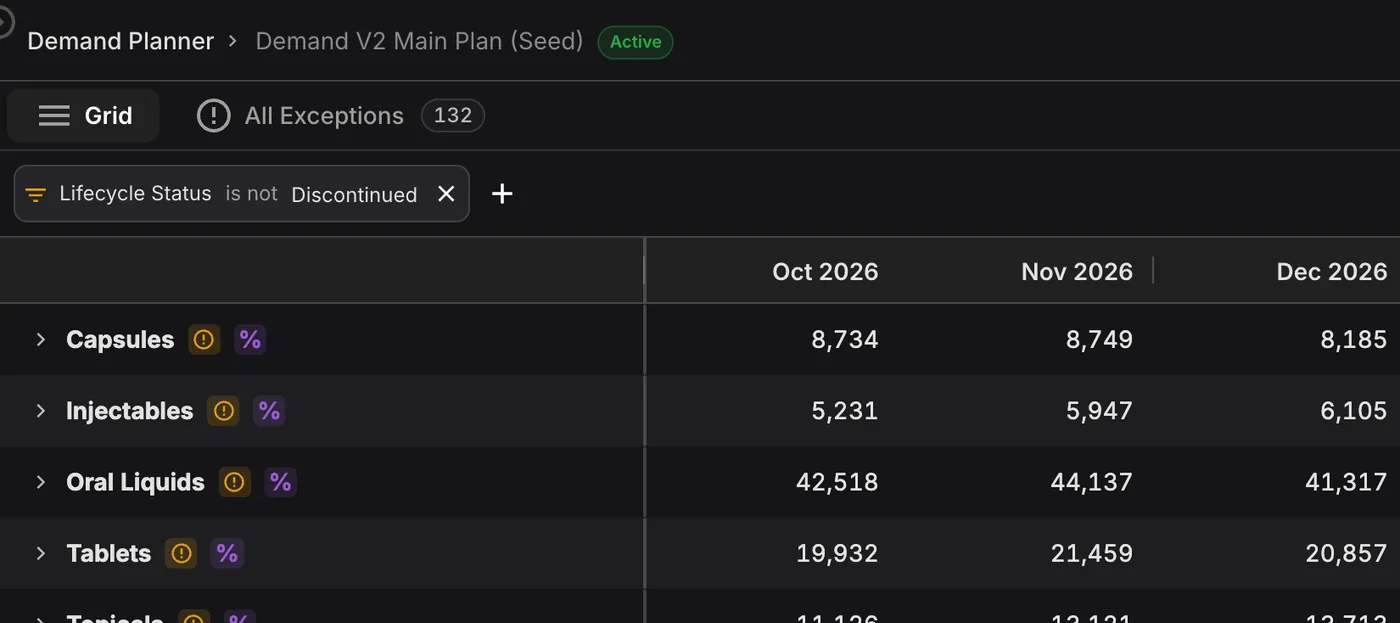
Start the week with what moved. PLAIO flags every product, market and month that drifted from last cycle's plan, before anyone opens the grid.

In their words

What planning teams say when the plan runs in PLAIO

Live in ten weeks, on the standard product

Standard product, real data, planners trained at go-live.

The Demand Builder makes one forecast

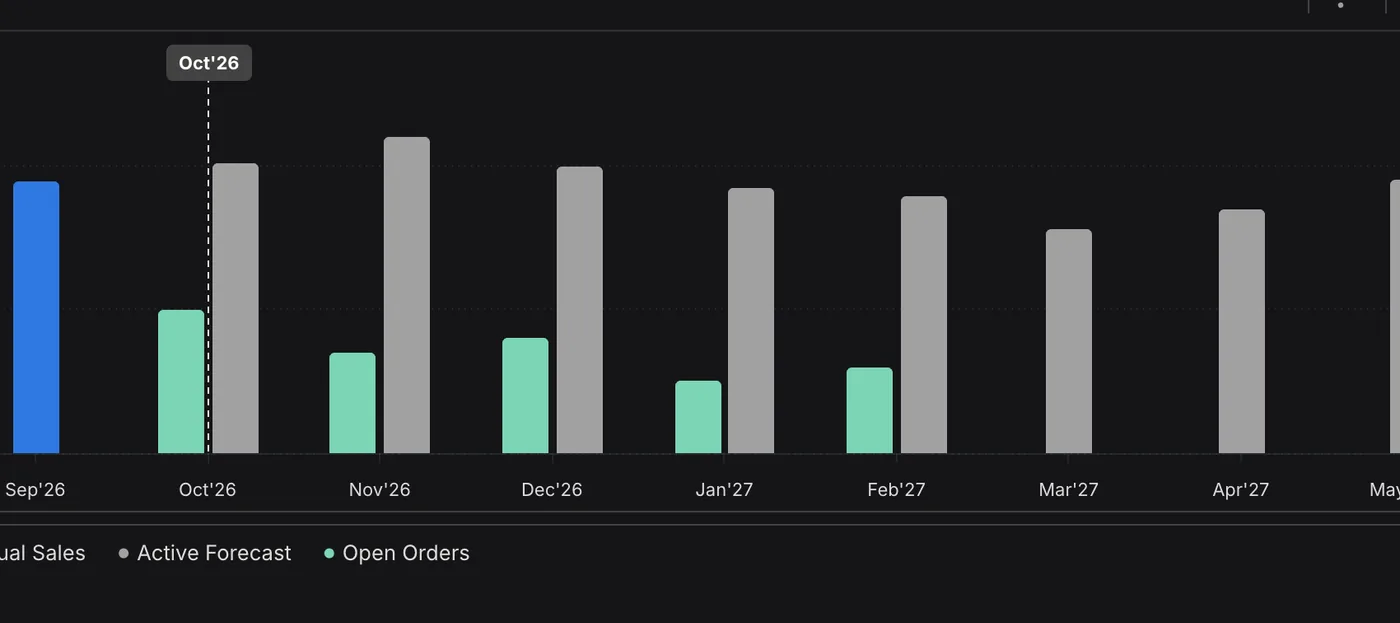
The forecast, commercial plan and tender usually live in three places. A manual merge turns errors into stockouts. The Demand Builder merges them in PLAIO.

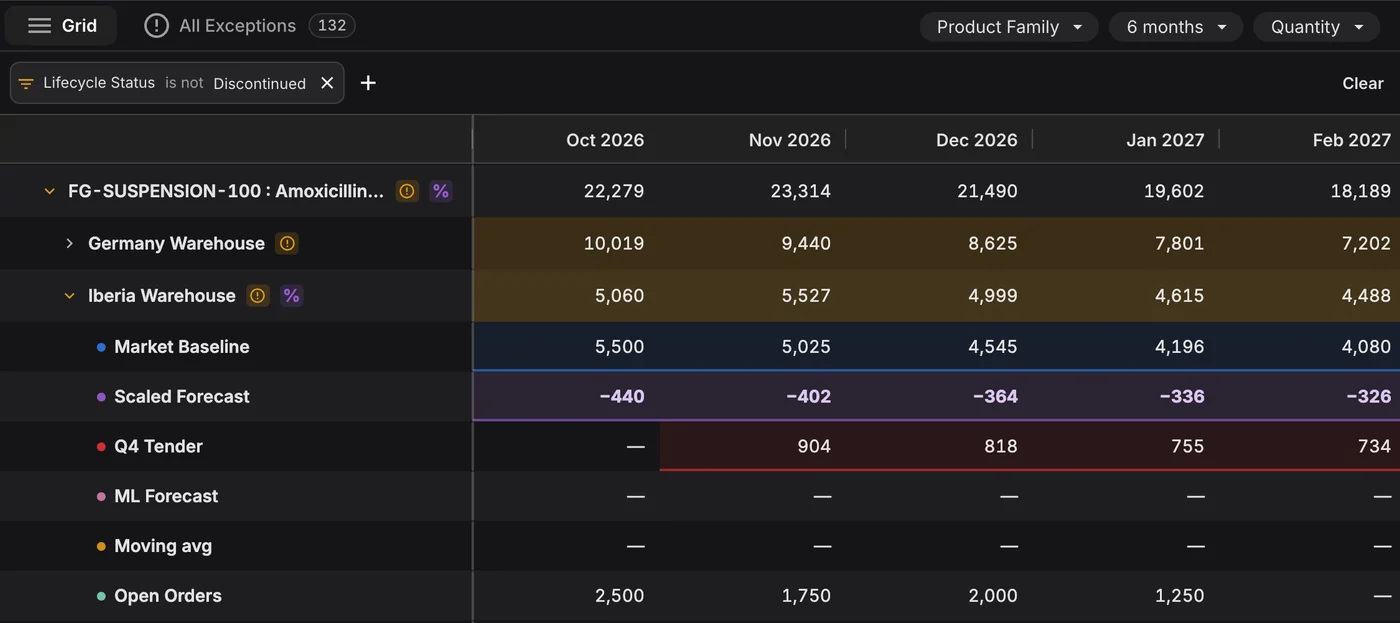
Pick a base for each part of the horizon, then adjust it.

Base it on the ML forecast, a moving average or open sales orders. Or use an uploaded commercial plan or your own demand lines.

Then add percentage scales, and overlays for a tender or a launch.

Why it matters:

Supply planning reads its result directly. If a launch slips, edit one line and the supply plan picks it up. No spreadsheets to redo.

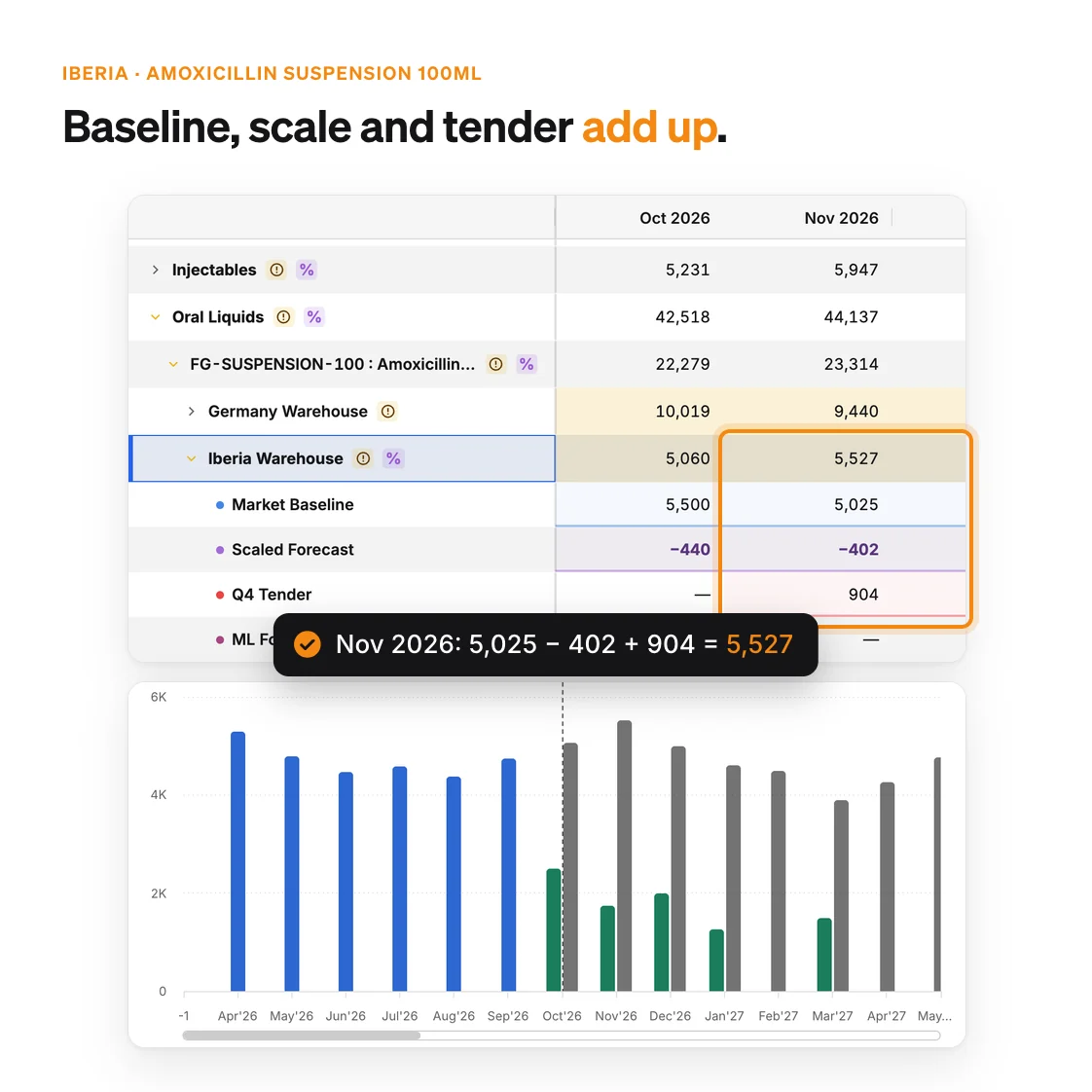
PLAIO demand lines for Amoxicillin in Iberia: a market baseline, an 8% cutback and a Q4 tender add up to the November forecast of 5,527

What you can do in PLAIO Demand Planning

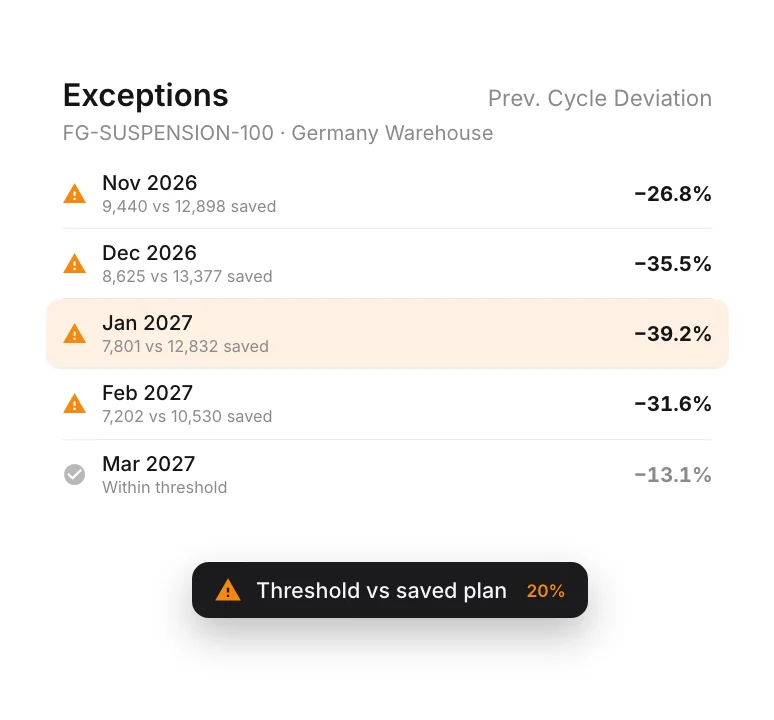
Exceptions for one product at Germany Warehouse: November to February each moved more than 20% against the last saved plan, with January down 39.2%

See what moved since the last plan

PLAIO compares the live plan with the last saved version. Changes above your threshold, 20% by default, are flagged. Better here than after supply orders.

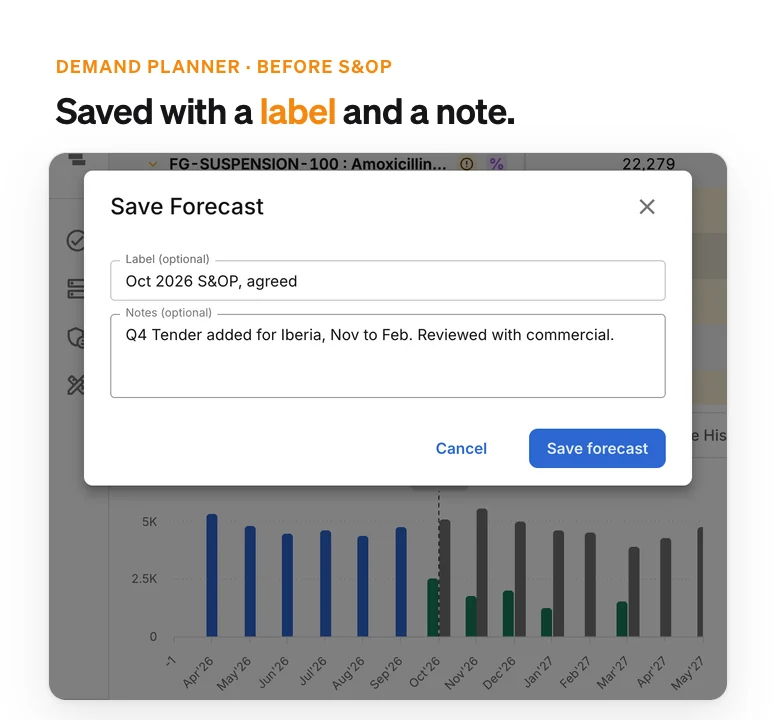
Saving a PLAIO demand forecast as a version with a label and a note before S&OP

Keep every version of the plan

Label each saved forecast with what changed and who reviewed it. When S&OP or an auditor asks what moved since last cycle, show them.

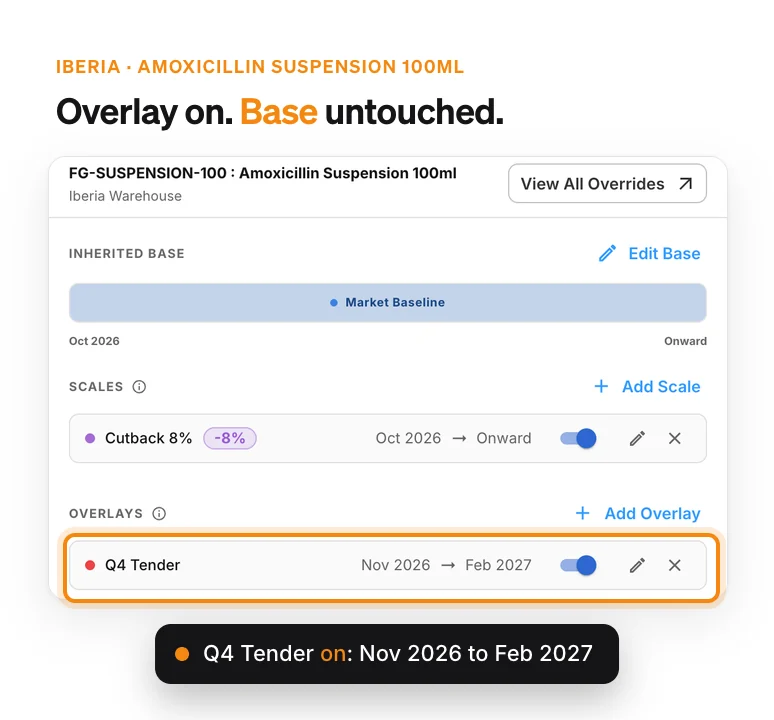
PLAIO Demand Builder with a Market Baseline base, an 8% cutback scale and a Q4 Tender overlay that switches on and off

Tenders and launches as overlays

A tender is its own demand line over the base, for its months only. Launches and market estimates too. Lose the tender? Switch it off.

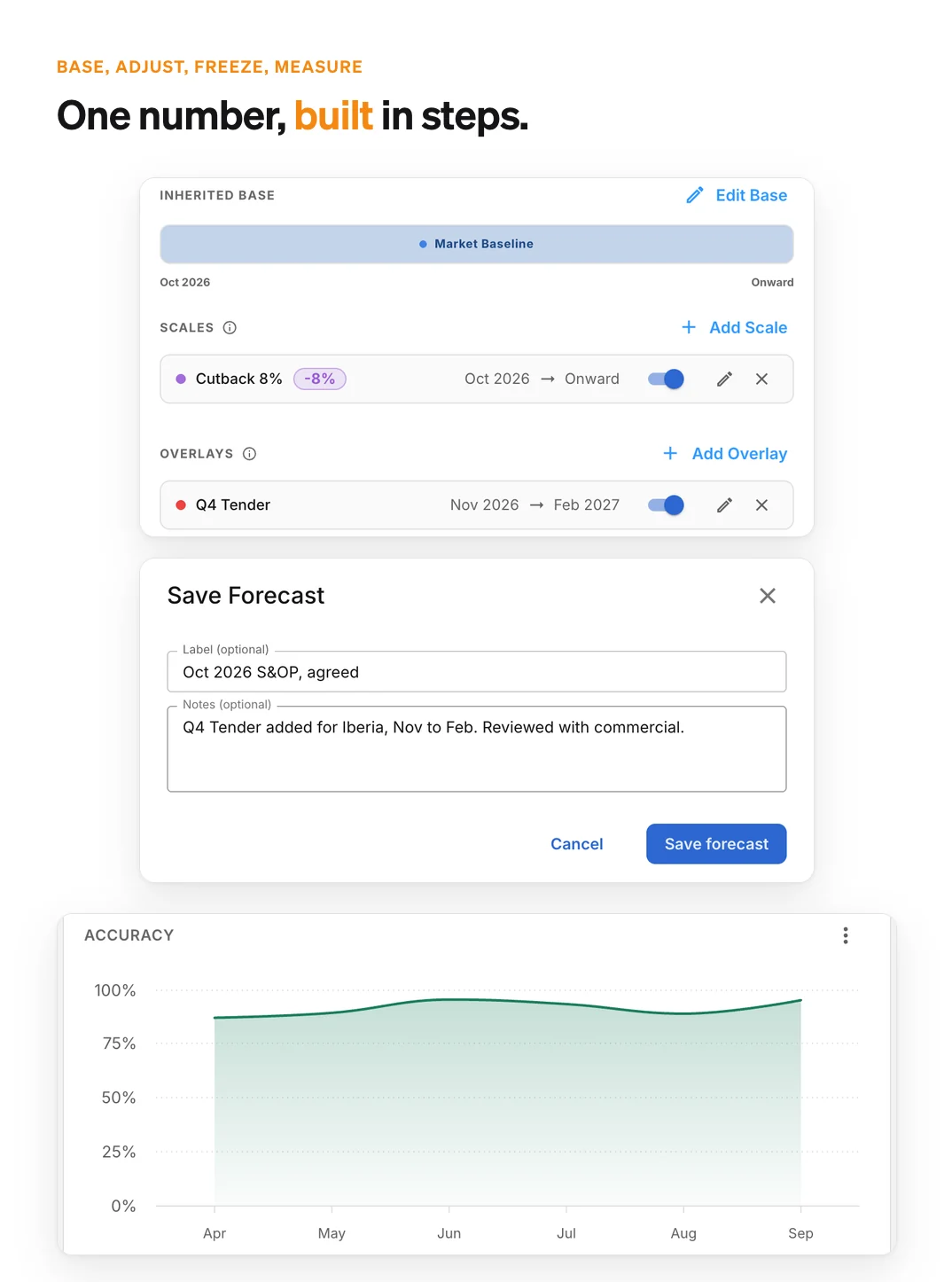
How demand planning works in PLAIO, step by step

PLAIO demand planning in three steps: set the base and adjustments, save the forecast as a version, measure accuracy over time

A forecast trained on your own sales

The ML forecast learns from monthly sales, per item and location. It handles seasonality and trend, and forecasts from an item's first sales month.

Try a what-if on a copy

Clone the active plan to test a lost tender or late launch. The active plan doesn't move. Activate the scenario and supply planning follows.

Accuracy at the lag you plan on

PLAIO measures accuracy, error and bias against actual sales. Lags run 1 to 12 months. Cut by product family, location or item, worst performers first.

If you run the planning team

Accuracy you can report upward

  • Accuracy, error and bias against actual sales, at the lag supply decisions use.
  • Saved forecasts keep date, author and notes. The change history shows who edited what, and by how much.
  • The team reviews the products that moved and skips re-reading the whole grid.

Why it matters:

See where the forecast runs high or low, then fix the cause. The usual alternative, more safety stock, ties up cash and sometimes expires.

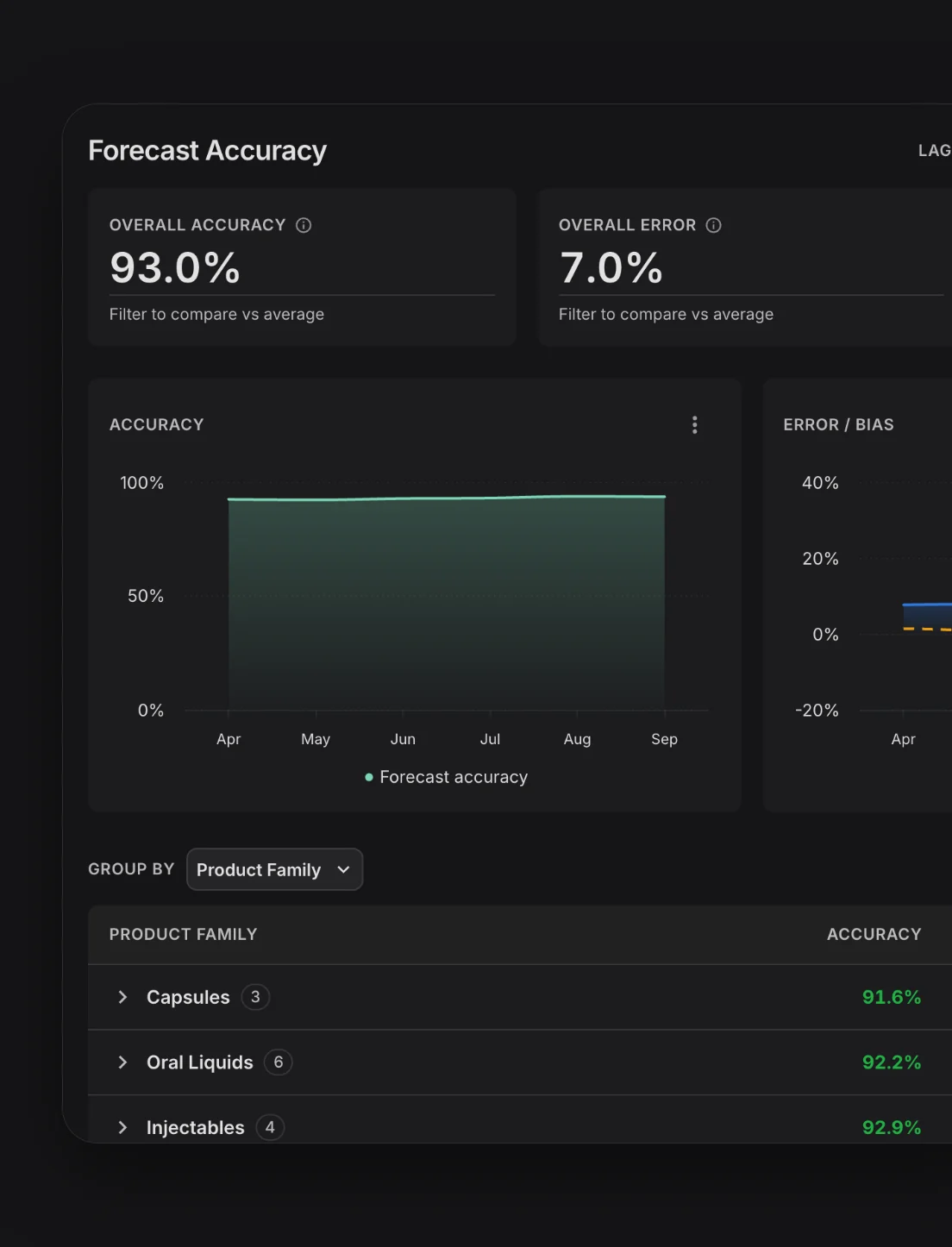
PLAIO's Forecast Accuracy dashboard at lag 3: 93.0% overall accuracy and 7.0% overall error, the accuracy trend from April to September, and accuracy by product family from Capsules at 91.6% to Injectables at 92.9%

Demand Planning FAQ

It predicts what customers will order per product, market and month. It uses sales history, open orders and what the commercial team knows. In PLAIO the forecast is built in the Demand Builder, checked against actual sales and saved as versions. That way supply planning works from a number the team agreed on.

It assembles the forecast. You pick a base for each part of the horizon. For example, the ML forecast for six months, then the commercial plan. Make-to-order items and single product locations can have their own base. Scales raise or lower the base, and overlays add a tender or launch.

The ML forecast is one demand line among several, next to a moving average, open orders and the commercial plan. You choose the base for each product and location and adjust it with scales and overlays. The accuracy dashboard measures it against actual sales. Planners keep the final say.

Yes, as their own demand lines. Sales, marketing or finance can upload a commercial plan, tender or market estimate from a spreadsheet. Use it as the base or as an overlay. Every edit is in the change history, so you see whose number moved.

No. Upload forecast values from a spreadsheet into a demand line. Export charts and tables to a spreadsheet or CSV. Many teams still collect input in spreadsheets and use PLAIO to combine and measure it.

Yes. Saved forecasts stay in the Forecast Library with date, author, label and notes. PLAIO also snapshots the plan every month. The change history shows who edited which demand line and month, with old and new values.

Yes. Demand can carry your own dimensions, such as channel or therapy area. Group the plan and accuracy reporting by them. Demand Segmentation has the details.

PLAIO is purpose-built for pharmaceutical supply chains. Demand is planned per item and location. It rolls up by product family, location, market, item or your own dimensions, in units or value. Each item keeps its lifecycle status, from Phase-in to Discontinued. The horizon runs 18 months by default, and accuracy is measured at every level.

Upgrade to Demand planning software made for pharma

In the demo we build a forecast from partner forecasts, a tender and a commercial plan. We look at what changed since the last cycle, then show what supply planning does with it.

Book a demo

Connect the Dots Across Your Planning Process

Optimize supply 
with precision.

Turn your forecast into feasible, constraint-ready plans with our

Supply Planning Software

Keep production on schedule.

Align supply with optimized, line-level schedules using

Production Scheduling Software

Cookie settings

To enhance your experience on our site and to analyze traffic, we use cookies. By clicking "Accept All," you agree to the storing of cookies on your device for analytics purposes. You can manage your settings or learn more in our Privacy Policy.

Manage Settings
  • Your Privacy Matters to Us

    We use cookies to improve your browsing experience and analyze how our website is used. These cookies allow us to understand trends, monitor website traffic, and gather insights to make the site better for you.

    We respect your privacy and are committed to transparent data usage.

    Why Do We Use Cookies?

    Necessary Cookies: These ensure that the website functions properly.

    Analytics Cookies: These help us track site traffic, user behavior, and performance metrics. The data collected is anonymous and allows us to continuously optimize the site.

    Preferences Cookies: We may use cookies to remember your preferences and tailor your experience.

    Marketing Cookies: We may use cookies for marketing purposes.

    Your Control, Your Choice

    By clicking "Accept All," you consent to the use of all cookies. If you prefer, you can customize your choices and opt out of certain cookies. You can learn more about how we handle data and cookies in our Privacy Policy.