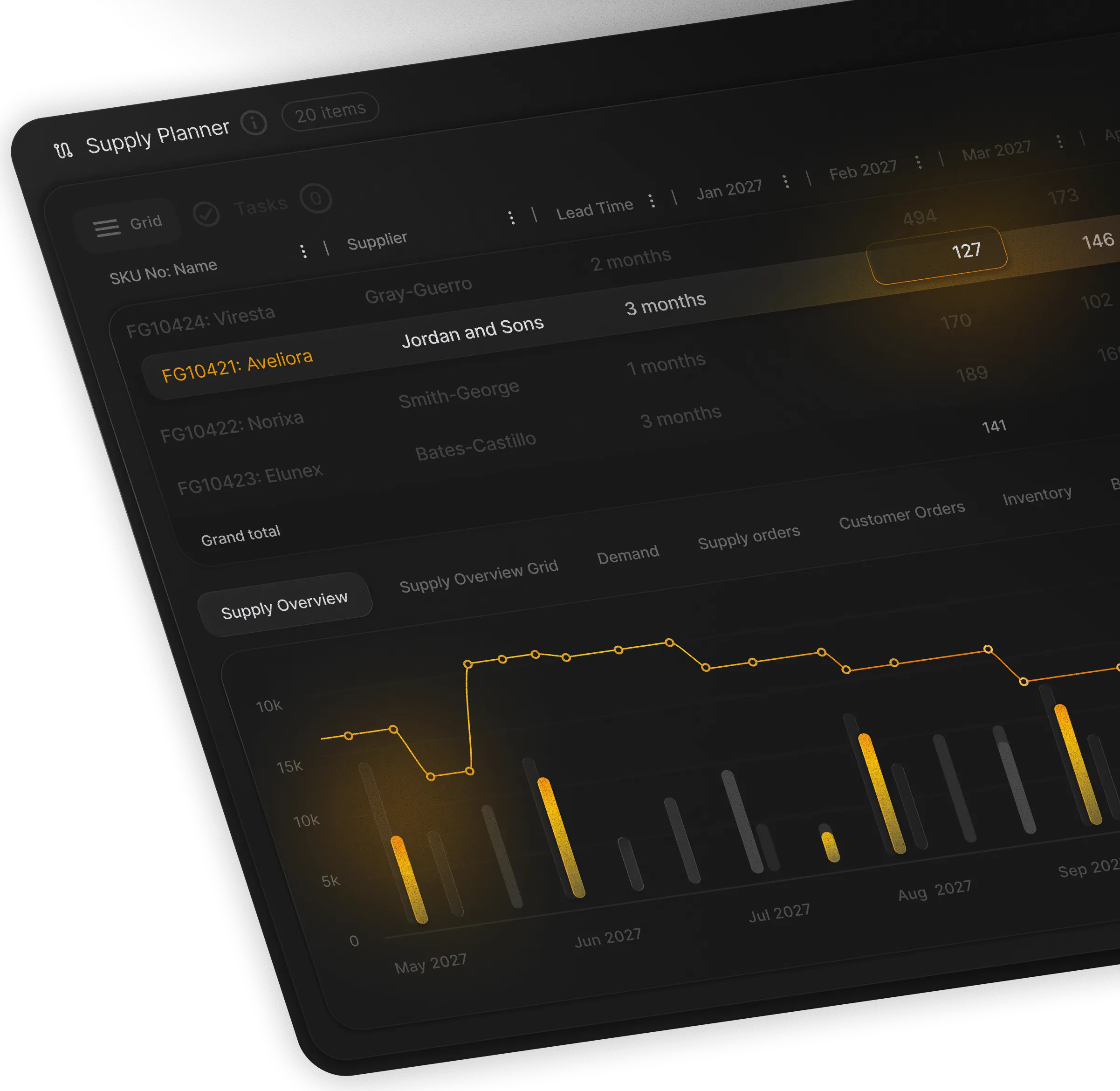
Pharma supply planning that spots the shortfall months out
Shelf life per market, batches, MOQs and CMO lead times shape every order suggestion. Planners approve the orders instead of rebuilding them.
Get a 30-minute review of your supply plan
Pick a time and we’ll show you what we’d change first.
Spot the shortfall months out
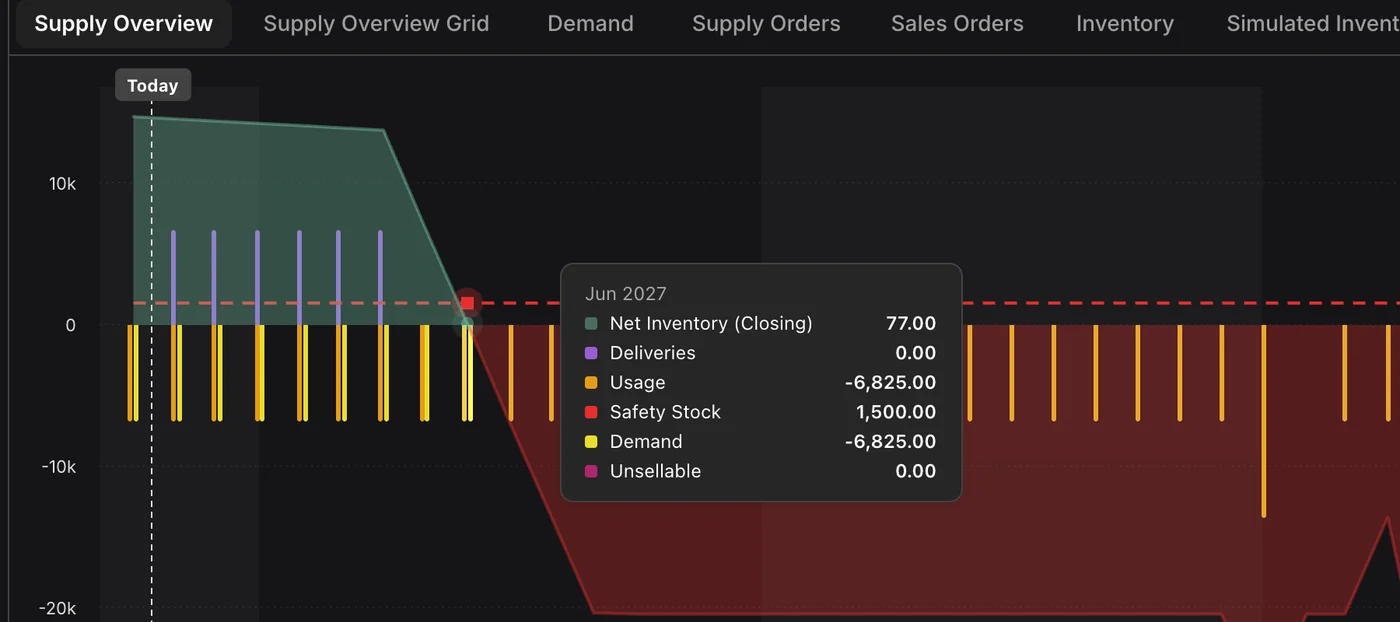
Cough Syrup 200ml in Iberia drops to 77 bottles in June 2027. Safety stock is 1,500, so that month gets flagged.
Leading pharmaceutical companies






In their words
What planning teams say when the plan runs in PLAIO
PLAIO quickly became our most mission‑critical system. Everyone works according to the same plan, and there is no ambiguity.
3 months to go live, ERP data flows included
Your next acquisition joins the plan, not a new set of spreadsheets
Acquisitions and new SKUs drop into the plan you already run.
- Specialty pharma company 1 planner runs supply for four markets, forecast to purchase order
- Specialty pharma company 400+ SKUs in one plan after an acquisition, up from about 300
- Specialty pharma company ~100 SKUs acquired and added to the plan, planned by the same team
Most supply plans are rebuilt by hand
Every week, planners round orders to MOQs and count back lead times by hand.
Markets still run short.
A market warehouse falls below safety stock in June. When someone notices, the bulk and API should already be ordered.
Batches too short-dated for a market still count as stock. So the plan looks covered.
Why it matters:
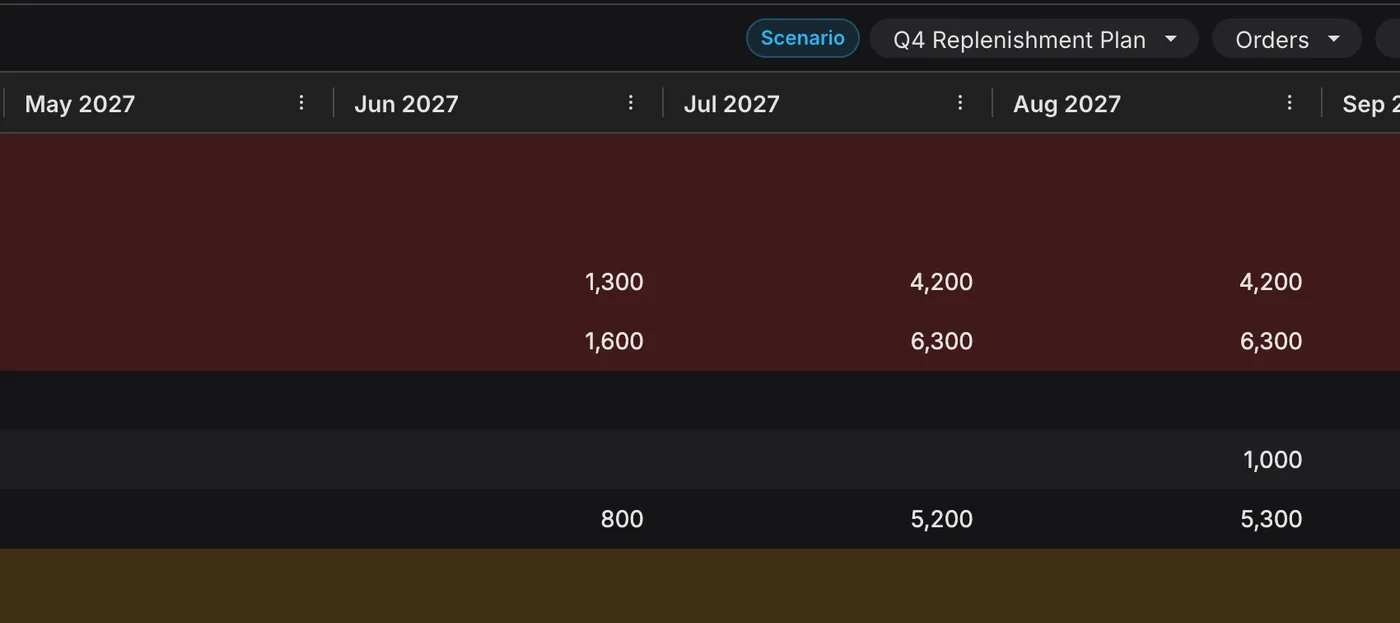
PLAIO runs that loop for every SKU and location at once. A warehouse needs 6,748 bottles; PLAIO suggests 6,800, placed a month ahead, for approval.
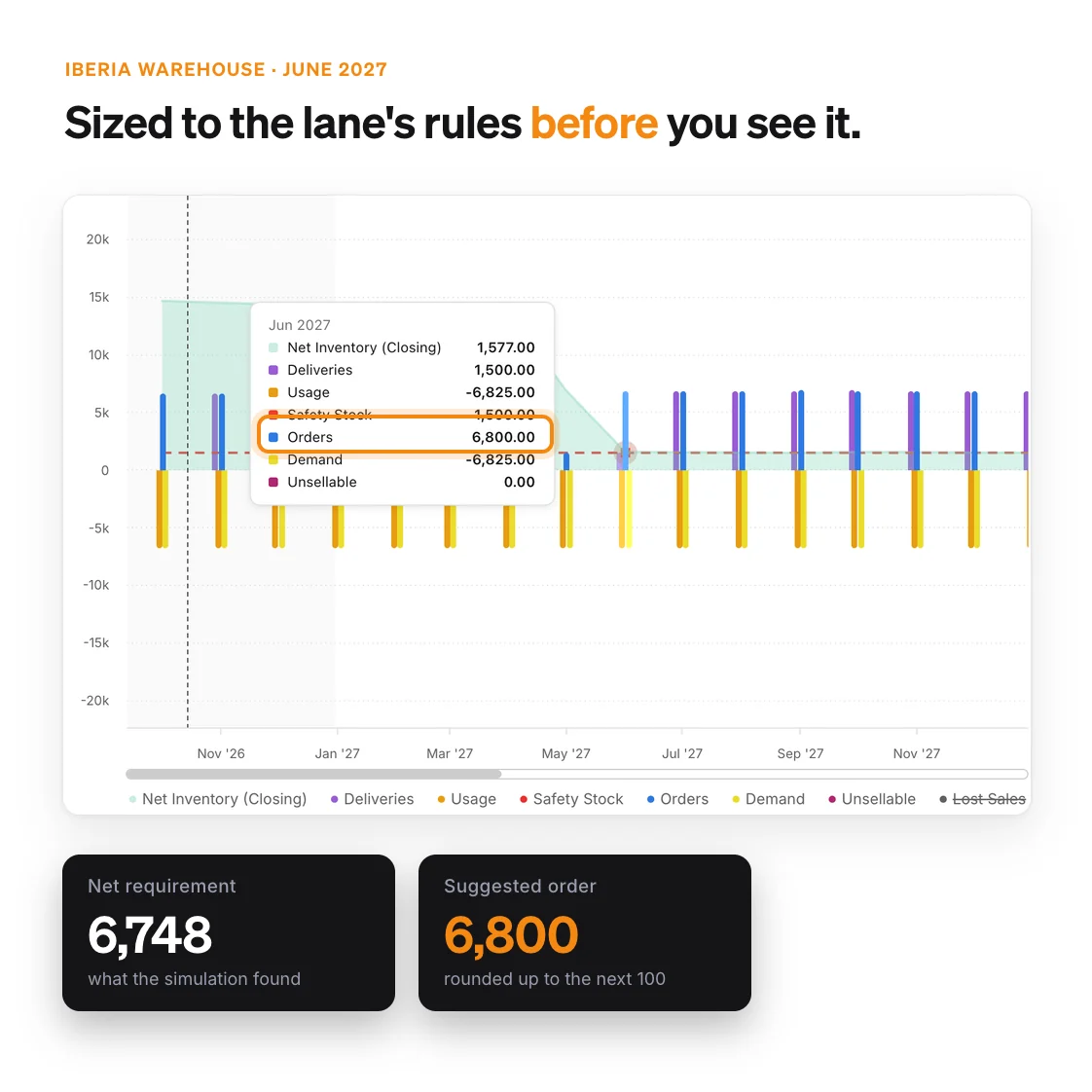
Inside PLAIO’s Supply Planner
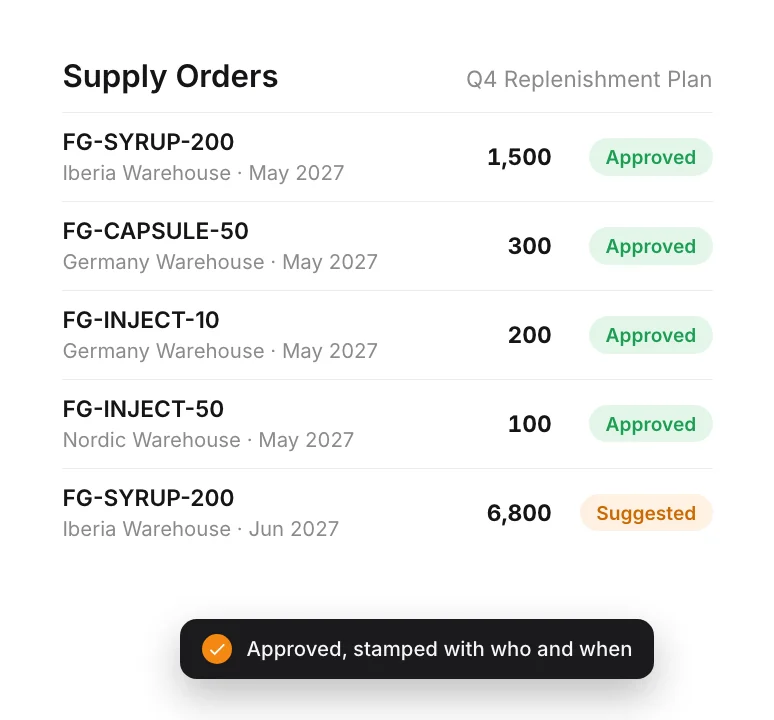
Review and approve suggestions
Suggestions and firm orders share one list. When a planner approves one, PLAIO records who and when. Your ERP collects it from there.
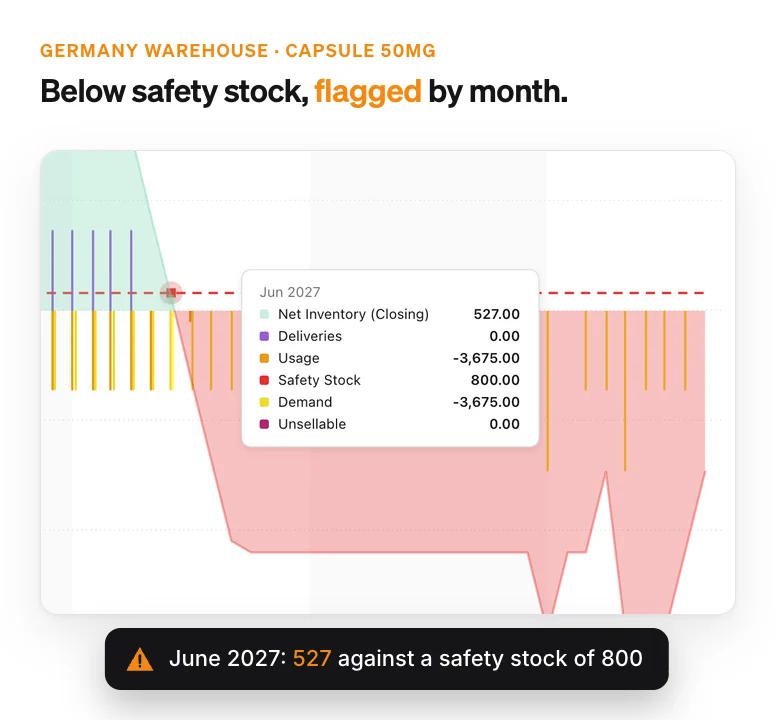
Safety stock per item and location
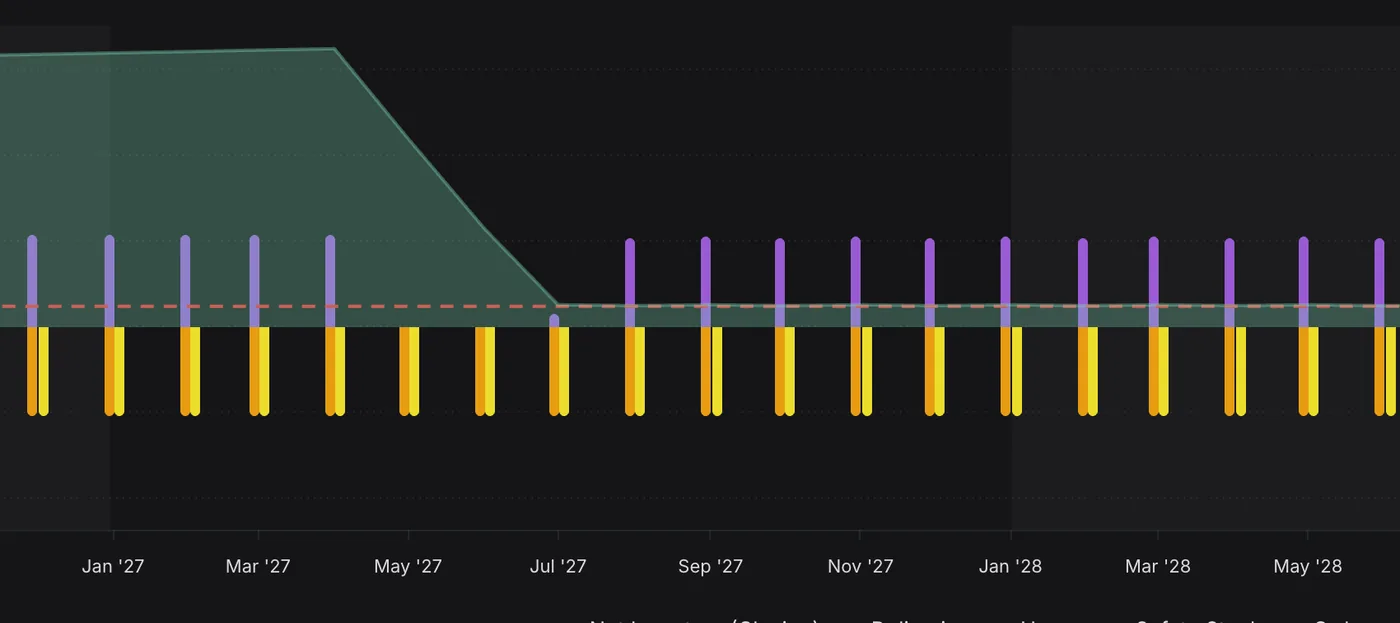
Use a fixed quantity or cover in days, weeks or months. Cover moves with demand. Any month a location is projected below it gets flagged.
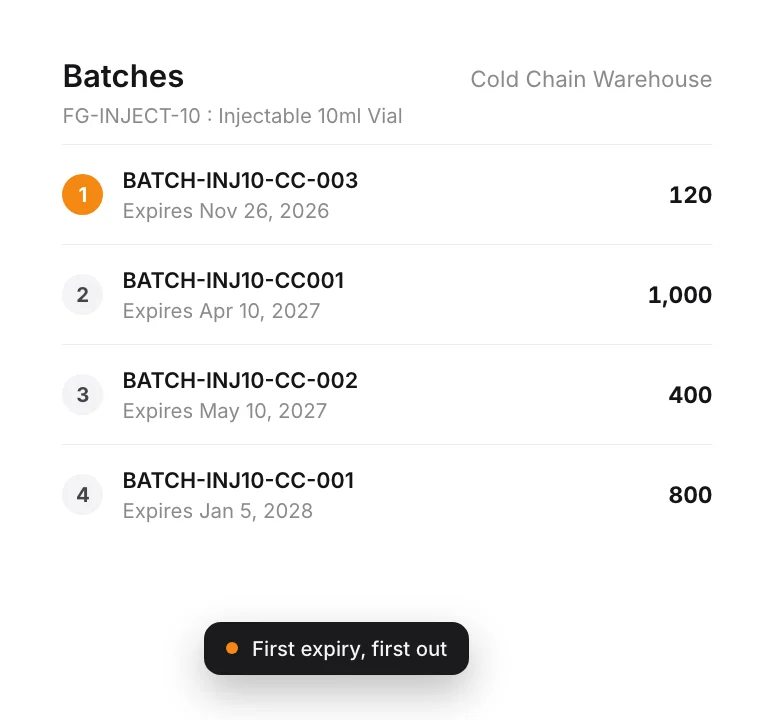
Batches and expiry
Stock is planned by batch, first expiry, first out. Set a minimum remaining shelf life per item or location. Stock expiring unsold shows as unsellable.
How PLAIO builds the supply plan
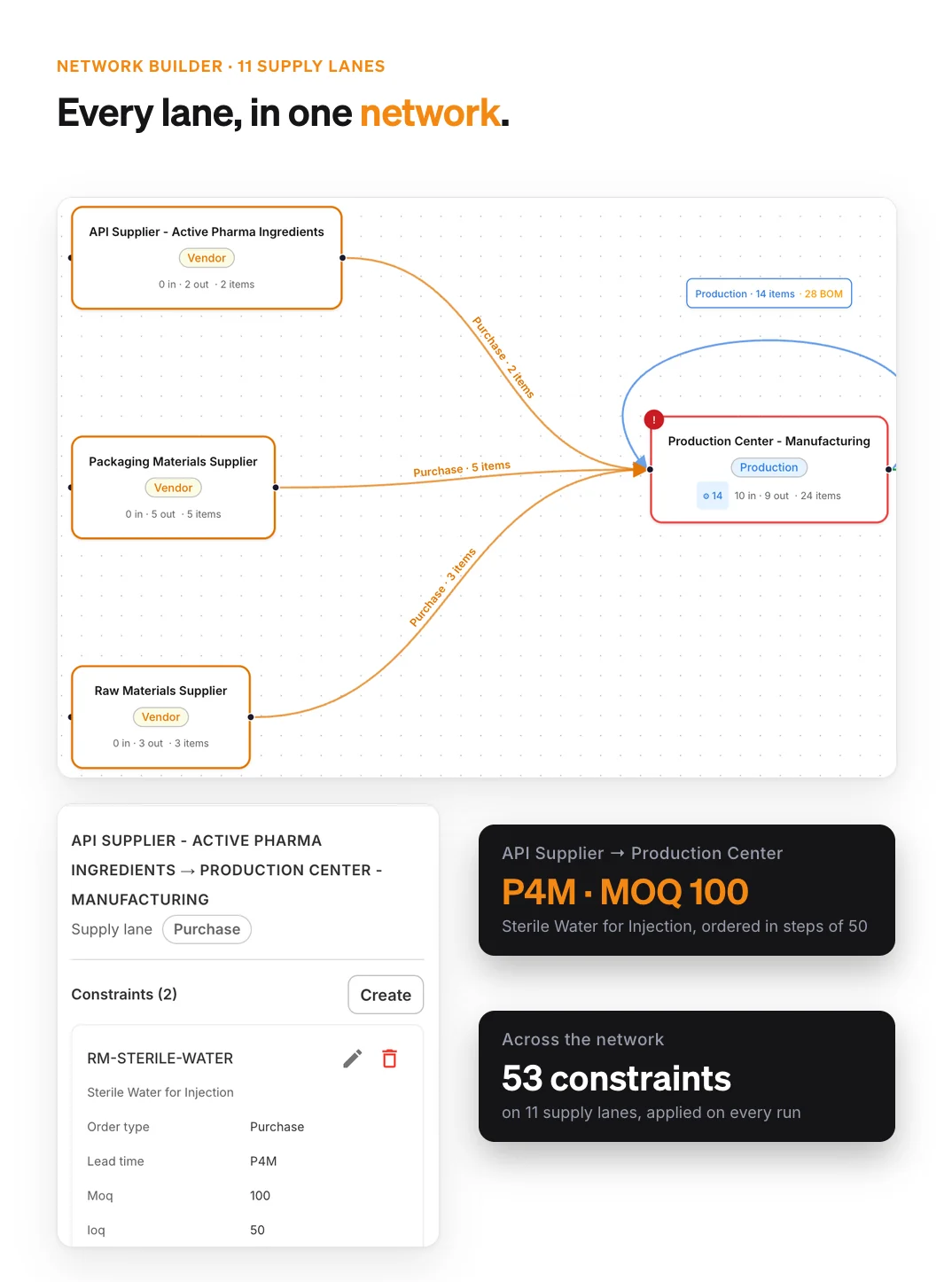
Lanes as your ERP has them
Each lane mirrors your ERP: source, destination, lead time, MOQ, increment and capacity. CMO purchases, production and transfers share one network.
Market demand reaches the API
Each month is checked against demand, inventory, firm orders and safety stock. A market shortfall carries back to the bulk and API.
CMO purchases plan their components
A CMO purchase can consume a bill of materials. Its components then get planned too.
A list to start the week
Shortages, safety stock breaches and unfulfilled demand share one exceptions list. Broken MOQ rules and unsellable stock land there too.
Is your supply plan still built by hand?
-
Do order suggestions arrive already rounded to each lane’s MOQ and order increment?
-
Can you see, months ahead, which market will fall below safety stock?
-
Does a market shortfall reach the bulk and API orders by itself?
-
Does your plan stop counting stock that will be too short-dated for its market?
-
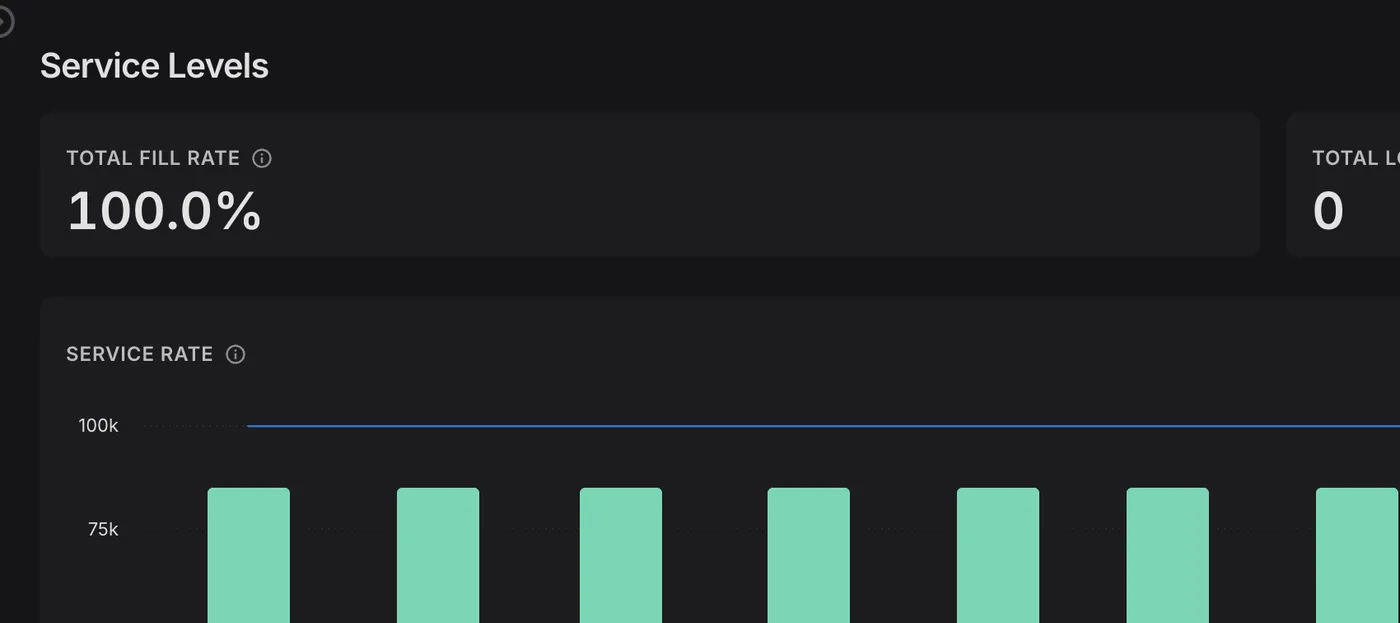
Can you compare the fill rate of two supply plans before S&OP?
Answer the five questions
Two or more “no” answers means planners are rebuilding orders by hand. 30 minutes on a few of your SKUs shows what PLAIO would suggest.
See the next shortfall while there’s still time to order
30 minutes on your own products. See orders sized per lane, months below safety stock and your plan’s fill rate.
Book my plan review Prefer to read first? How to align demand, supply and procurement in pharma